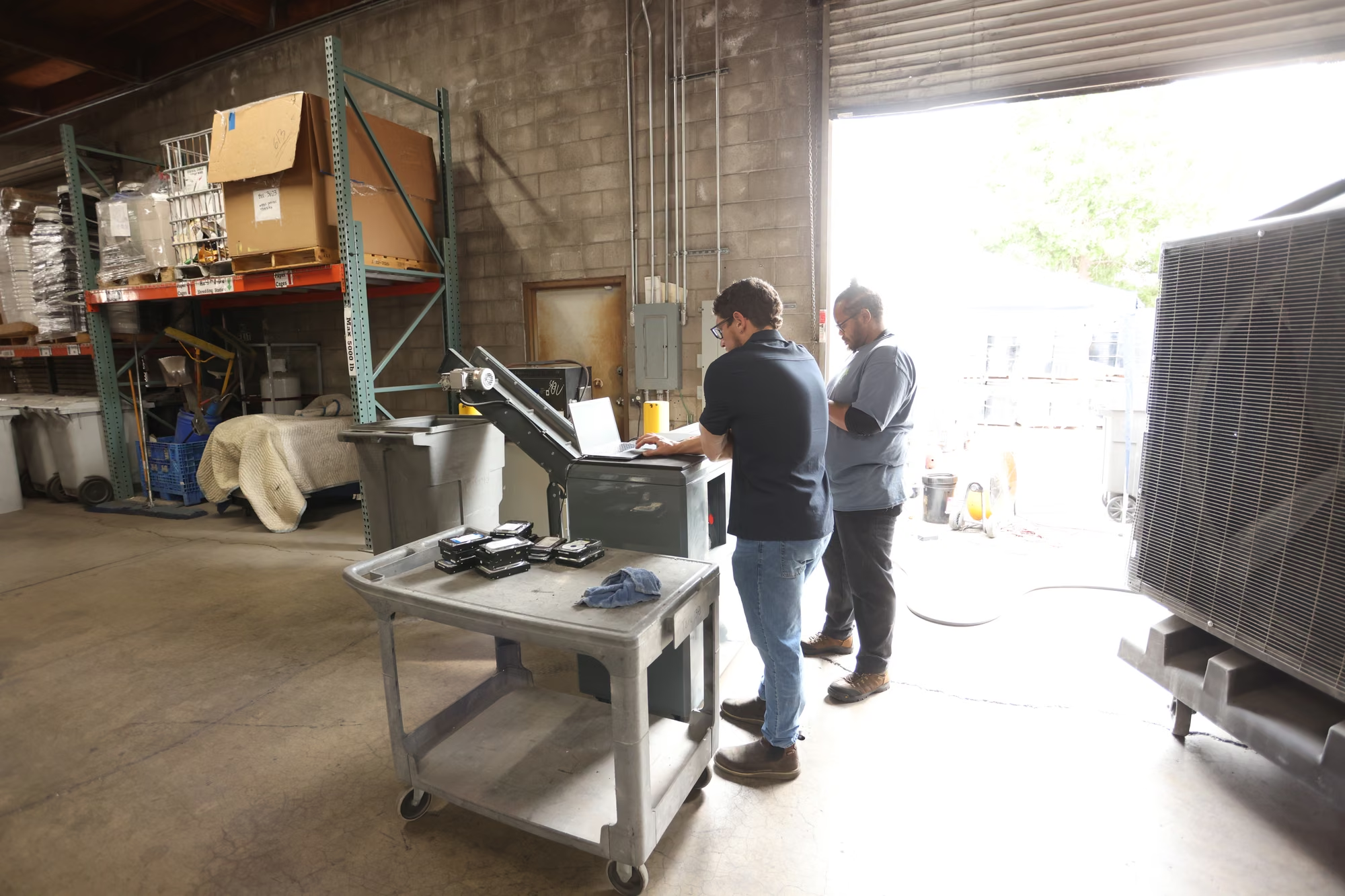
How a Hard Drive Wiping Service Works

A hard drive wiping service erases the data on storage media using software or firmware commands, while keeping the drive fully functional. Deleting files or running a quick format does not do this: the data stays recoverable with tools anyone can download. A proper wipe applies an approved sanitization method across the entire drive and then confirms that the method finished successfully.

Wiping is the right choice for devices that will be used again, whether that means internal redeployment, resale, donation or a return to the lessor. Drives that are damaged, unsupported or fail verification are moved to physical destruction instead. Modern Waste Solutions has offered data destruction from its Sacramento facility since 1999, and we operate wiping and destruction as linked workflows, so a drive that fails always has a defined next step.

Wipe or Destroy: Choosing the Right Outcome

The decision comes down to where the device is headed and how sensitive its data is. NIST SP 800-88 approaches the choice in the same way.

Scenario Typical choice Why
Laptops or desktops headed for resale or donation Wipe The device remains usable and holds its resale value
Leased equipment going back to the lessor Wipe Lease returns require working hardware plus a sanitization record
Servers or drives reused within the organization Wipe The equipment stays in service
A drive that fails verification or cannot be read Destroy An unverified wipe cannot be trusted
Drives with physical damage Destroy The drive may not respond to wipe commands
Data your policy requires to be physically destroyed Destroy Policy takes priority over resale value

If destruction is the right outcome, use our hard drive destruction service, or choose on-site hard drive shredding if your team prefers to witness it at your location.

NIST SP 800-88 and Data Wiping

NIST Special Publication 800-88, Guidelines for Media Sanitization, defines three sanitization outcomes:

  • Clear overwrites all user-addressable storage and defeats simple recovery tools.
  • Purge relies on methods such as a firmware sanitize command or cryptographic erase to make laboratory-grade recovery infeasible, while the device stays reusable.
  • Destroy uses shredding, disintegration or comparable methods and leaves the media unusable.

A wiping service delivers either Clear or Purge. Solid-state drives call for extra attention, since an overwrite may miss remapped or overprovisioned cells; for SSDs a supported sanitize command or cryptographic erase is usually the stronger option. Your organization defines the required outcome for each class of data, and we document which outcome was applied. NIST does not certify vendors or individual jobs, so a trustworthy record states "NIST 800-88 aligned" and names the technique that was used.

Drives and Devices We Can Wipe

Whether a device can be wiped depends on its interface, its physical condition and whether it supports the commands the selected method requires. Before quoting, we ask about:

  • The drive types in the batch: spinning hard drives, SATA or NVMe SSDs, and drives still mounted in laptops, desktops or servers.
  • Drives sitting behind RAID controllers, which may have to be handled individually.
  • Self-encrypting drives, where cryptographic erase may be an option.
  • BIOS passwords, firmware locks or device-management enrollment that can block a wipe until the owner clears them.
  • Physical damage, missing drive caddies or drives that will not spin up.

Any device that cannot be wiped follows the exception path described below.

Verification and Recordkeeping for Every Wipe

We record each drive's serial number before the wipe begins, then log the method, the NIST outcome and the verification result against that serial. Drives that fail, freeze or return errors are separated at once and labeled so they can never be confused with sanitized assets. With your approval, they go to physical destruction and receive a certificate of destruction.

A standard erasure record contains:

Field Purpose
Asset tag and drive serial number Links the result to one specific device
Media type and capacity Shows which technique was suitable
Technique and NIST outcome Records what was done, Clear or Purge
Verification result Confirms the technique completed without errors
Date and workstation or operator ID Shows who did the work and when
Exception reference Connects any failed drive to its destruction record

Our article on certificates of data destruction outlines the record fields auditors request most often.

Choosing a Data Wiping Provider
Area What to confirm Red flag
Technique selection Separate techniques for HDDs and SSDs, mapped to Clear or Purge A single overwrite pass for every device
Verification A pass or fail result for each individual drive Reports that show only a batch total
Failed drives A documented route to physical destruction with its own certificate Failed drives returned to the resale pile
Custody Tracking from pickup through wiping to final disposition No record of where drives are held between steps
Management systems Valid ISO 9001, ISO 14001 and ISO 45001 certificates Claims of "NIST certification"

Of our three ISO certifications, ISO 9001 is the most relevant to wiping, because the program relies on the same procedure being carried out and recorded for every single drive.

Ordering Hard Drive Wiping in Sacramento, CA

Include these details in your request:

  1. The number of devices of each type, and whether drives stay installed or are removed.
  2. The required NIST outcome for each data class, plus any drives that must be destroyed regardless.
  3. Whether passwords, firmware locks and management profiles have been cleared.
  4. The report format and fields your team needs.
  5. Pickup address, access details and deadline.

Request a quote or call (916) 339-3676. Wiping pickups are available to businesses and organizations throughout California, depending on route availability.

What You Receive at Completion

You receive an erasure report listing each drive by serial number, along with its technique and verification result. Drives that failed and were destroyed are listed on a separate certificate of destruction. When wiped equipment is resold within an ITAD program, the erasure report becomes part of the asset-level closeout.

Service Areas We Cover

Hard drive wiping pickups are available across California and in parts of Nevada, including Sacramento, Bakersfield, Fresno, Modesto, Clovis, Carmichael, Rocklin, Placerville, Orinda, Pleasant Hill, Los Banos, Goleta, and Sparks, NV. Check the complete Service Areas list to confirm coverage in your location.
Google reviews

4.8 out of 5

The average of 123 reviews our customers have left on Google.

This was our first time working with MWS and they were amazing! Quick response time, efficient, and friendly. Ivan was the team member who was on site for the pickup, and he was great. He worked quickly, is very knowledgeable, and is so kind. It was so easy working with him. We are looking forward to using MWS for our E-waste and Universal waste needs in the future. - Sacramento City College Sustainability

Sophie Wheeler on Google
  • Josh Bardet

    A little bit off the beaten track in Natomas, but Modern Waste quickly and efficiently helped me recycle my broken Lithium Iron Phosphate batteries at a reasonable $/lb fee (Sac county e-waste will not accept these items). Ramiro and Vincent were very friendly and helpful.

  • Gretchen Langevin

    We had another vendor cancel on us last minute & Modern Waste jumped into action & was able to help us with ewaste & critical document shredding overnight. Team was helpful, professional & got the job done quickly & efficiently. We were able to complete an office move out/shut down in a day with their help! Highly recommend this business!

    Response from Modern Waste Solutions ·

    Thank You Gretchen! We are happy to make a difference.

  • Shawnna Borremans

    Chris was awesome! He came in and picked up all of the e-waste we had ready for him. He was polite and professional throughout the entire process. He handled the equipment with care, including the site equipment that was already in place. I am very happy with his service and appreciate the great job he did.

  • E O

    I needed hard drives on some old laptops destroyed so any old personal information can't be stolen. The guys there were friendly and helpful and fast. Thanks Pavel and Vincent. Thanks Modern Waste for doing a helpful fast service to us.

    Response from Modern Waste Solutions ·

    We truly appreciate your generous review! 😊 It's fantastic to know our team was able to assist you with your hard drive destruction needs efficiently. We are so glad to hear you had a pleasing experience with us. Our door is always open for all your future recycling needs!

Got questions?
We have answers.

A hard drive wiping service uses controlled software or hardware commands to sanitize data on supported storage media while preserving the device for possible reuse. It differs from ordinary file deletion or reformatting because the process applies an approved sanitization method and verifies the result. Media that is damaged, unsupported, or unable to pass verification may need physical destruction instead.

A professional NIST 800-88-aligned data wiping project defines what is accepted, who authorizes release, how material is collected, what treatment will be used, and which records will be returned. That makes the service an accountable disposition process instead of simple removal.

We confirm the scope before scheduling so equipment, data, regulated components, and documentation follow the correct path from the start.

Nist 800-88-Aligned Data Wiping is intended for organizations that need more control than an ordinary trash or scrap pickup can provide. The need may come from data sensitivity, safety, regulated components, project scale, or audit requirements.

  • Businesses preparing functional devices for internal reuse, resale, donation, or redeployment.
  • IT teams that need verifiable erasure records for retired drives and systems.
  • Organizations balancing data protection with equipment reuse and asset recovery goals.

A project does not need to be large to justify a documented service. A small load with confidential data or special handling can carry more risk than a large load of ordinary recyclable material.

A structured NIST 800-88-aligned data wiping program closes the gaps that appear when obsolete material is stored indefinitely or released without a defined treatment plan. It assigns responsibility for custody, safety, processing, and closeout.

  • Deleted or reformatted data remaining recoverable on retired devices.
  • Inconsistent wiping tools and missing verification evidence.
  • Reusable equipment being destroyed because no approved sanitization workflow exists.

The result is a traceable business process with fewer last-minute surprises. It also gives facilities, IT, safety, and compliance teams a common record of what left the site and what happened next.

NIST Special Publication 800-88 provides guidance for selecting sanitization outcomes based on media, data sensitivity, and reuse plans. We use NIST 800-88-aligned wiping where appropriate, verify the result, and route failed or unsupported media to the approved exception path. The customer remains responsible for defining the required sanitization category and approving destruction when wiping is not sufficient.

We define accepted materials, custody points, treatment, downstream path, exceptions, and required records before the job begins.

Certification is useful because it connects service claims to audited management systems and documented operating controls. Our current framework combines quality, environmental management, and worker-safety standards.

  • ISO 9001:2015 for documented and repeatable quality-management processes.
  • ISO 14001:2015 for environmental-management controls and continual improvement.
  • ISO 45001:2018 for occupational health and safety management.

The certification set does not replace a project scope, but it gives procurement and compliance teams a stronger basis for reviewing handling, downstream accountability, and reporting. Customers should still define the material, data, access, and documentation requirements for each job.

Certifications support a controlled process, but they do not transfer every legal or operational responsibility from the customer. The written scope should identify the exact materials, facility duties, and documentation required for the project.

Trust in NIST 800-88-aligned data wiping comes from trained field work, clear custody, documented processing, and records that match the approved scope. We connect collection and treatment rather than treating pickup as the end of the service.

Technician perspective: Our technicians recommend capturing the media serial number before wiping and recording both the selected method and verification result. Failed, locked, damaged, or unsupported devices should be isolated immediately so they cannot be mistaken for successfully sanitized assets.

That preparation reduces exceptions and protects both the customer's operations and the integrity of the final report. Any material outside the approved scope is reviewed before it moves forward.

Choose a NIST 800-88-aligned data wiping provider by asking how the proposed workflow handles the actual material, risks, and records. A useful proposal explains more than collection date and price.

CriterionWhat to verifyWarning sign
Service fitA documented plan specific to NIST 800-88-aligned data wipingGeneric hauling with no material review
CertificationsCurrent ISO management-system certificatesLogos without verifiable scope or dates
Security and safetyDefined custody, hazards, trained personnel, and exception handlingNo written controls for sensitive or unusual items
ProcessingClear treatment and downstream pathway for every approved materialDestination or method is not explained
ReportingAgreed certificates, inventory fields, and delivery timingDocumentation discussed only after pickup

Ask for current certification evidence and make the provider explain the exception path for material that cannot be processed as expected. That discussion shows whether the service is operationally ready for the project.

Before ordering NIST 800-88-aligned data wiping, create a practical scope that separates routine logistics from data, safety, environmental, and facility decisions. The inventory can be preliminary, but unusual items and unknowns should be visible before scheduling.

  • Media type, interface, capacity, condition, encryption, and device accessibility.
  • Data sensitivity, intended reuse, and the customer's approved NIST 800-88 outcome.
  • Serial-level tracking, verification evidence, certificate format, and turnaround.
  • Exception handling for failed, damaged, or unsupported drives.

Share photos and the required completion date with the quote request. We can then confirm acceptance, identify exclusions, and choose the correct collection and processing plan.

Our NIST 800-88-aligned data wiping offering is assembled around the customer's approved material and required outcome. It can connect collection, secure handling, treatment, responsible recycling, and closeout records in one coordinated scope.

Service elementTypical scope
Media intakeInventory, custody, serial capture, and disposition instructions.
SanitizationApproved wiping method selected for supported media.
VerificationResult validation and separation of passed and failed devices.
Exception handlingApproved escalation to physical destruction or another disposition path.
ReportingErasure results and certificate fields defined in the work order.

The proposal states which elements are included and which conditions require separate approval or pricing. Customers should verify the final scope rather than assume that every possible material or report is included automatically.

Start a NIST 800-88-aligned data wiping request by describing the material, location, quantity, condition, access, deadline, and required documentation. Our Sacramento operation coordinates business service across California, subject to route availability and project scope.

  • Prepare an inventory or representative list with quantities, labels, models, dimensions, and photos.
  • Identify sensitive data, hazardous characteristics, damage, special access, or deinstallation requirements.
  • Define the approved treatment, pickup or drop-off preference, timeline, and reporting fields.
  • Submit the quote request so our team can review acceptance, logistics, exceptions, and pricing.
  • Approve the written scope and prepare the site or material according to the confirmed instructions.

Do not wait until collection day to disclose unknown, damaged, leaking, data-bearing, unusually heavy, or regulated items. Early disclosure allows the correct containers, crew, transport, and downstream process to be assigned.

We organize NIST 800-88-aligned data wiping as a documented six-step workflow. The exact equipment, schedule, and reporting fields are adjusted to the customer's material stream and compliance needs.

  1. Equipment: We provide or specify the containers, carts, pallets, labels, or other collection equipment needed for the approved material.
  2. Training: We explain what belongs in each container, how to identify special items, and which materials must remain separate.
  3. Pick-up: Our team coordinates the business collection or accepts an approved facility drop-off under the agreed schedule.
  4. Tracking: We record the load and agreed data points, such as material type, weight, serial numbers, dates, or customer-specific fields.
  5. Processing: We triage, wipe, shred, dismantle, recycle, recover, or route materials according to the approved disposition plan.
  6. Reports: We issue the applicable recycling or destruction certificates and processing reports for accountability and audits.

Planning the scope before the first collection keeps these steps connected. It also prevents equipment, data media, batteries, and other regulated materials from entering the wrong workflow.

Do Not Sell or Share My Personal Information