

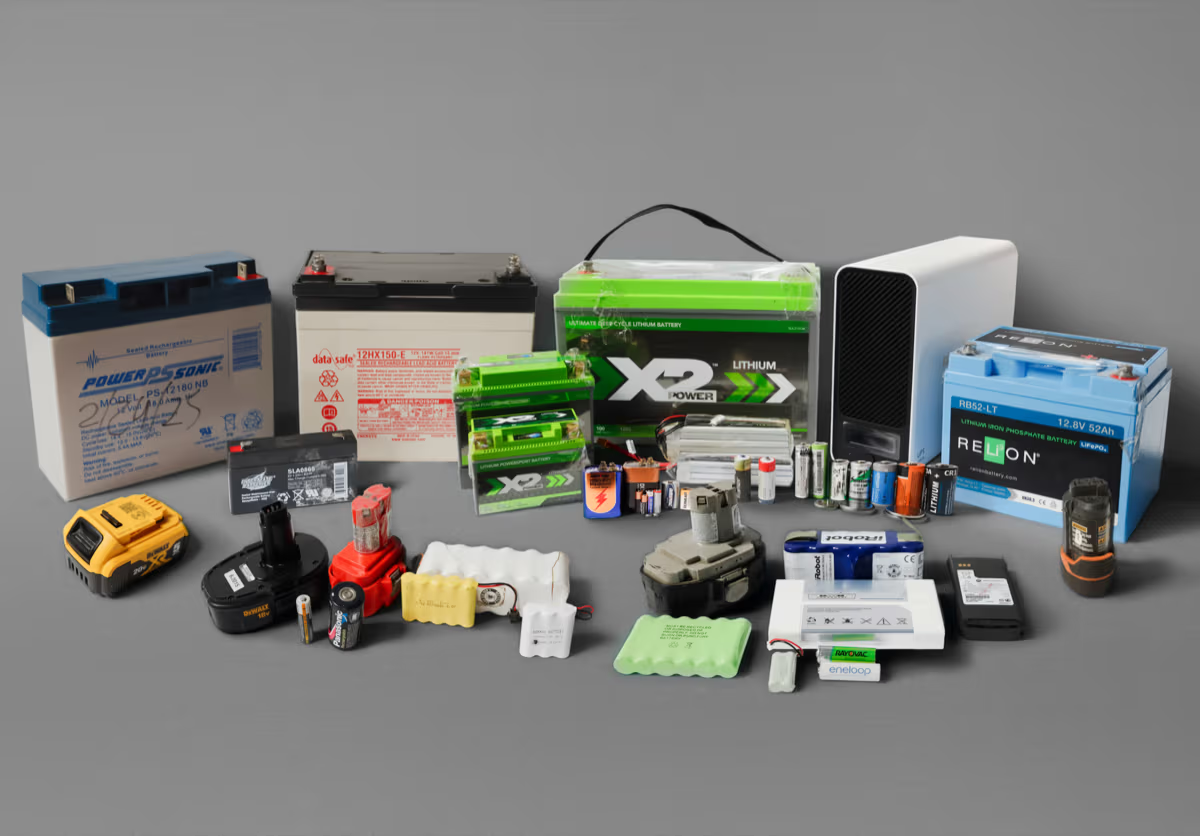

We can recycle virtually all types of batteries. In most cases, it is either best practice or required to separate batteries by chemistry type.
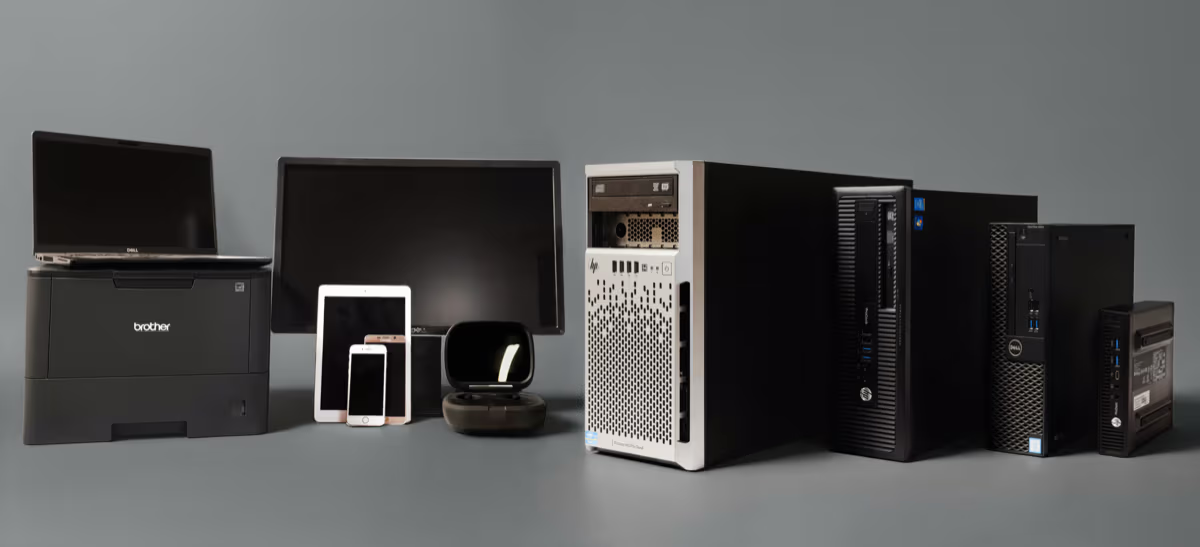
Our electronic waste recycling services prioritize security, and compliance, ensuring responsible disposal while also boosting your bottom line.
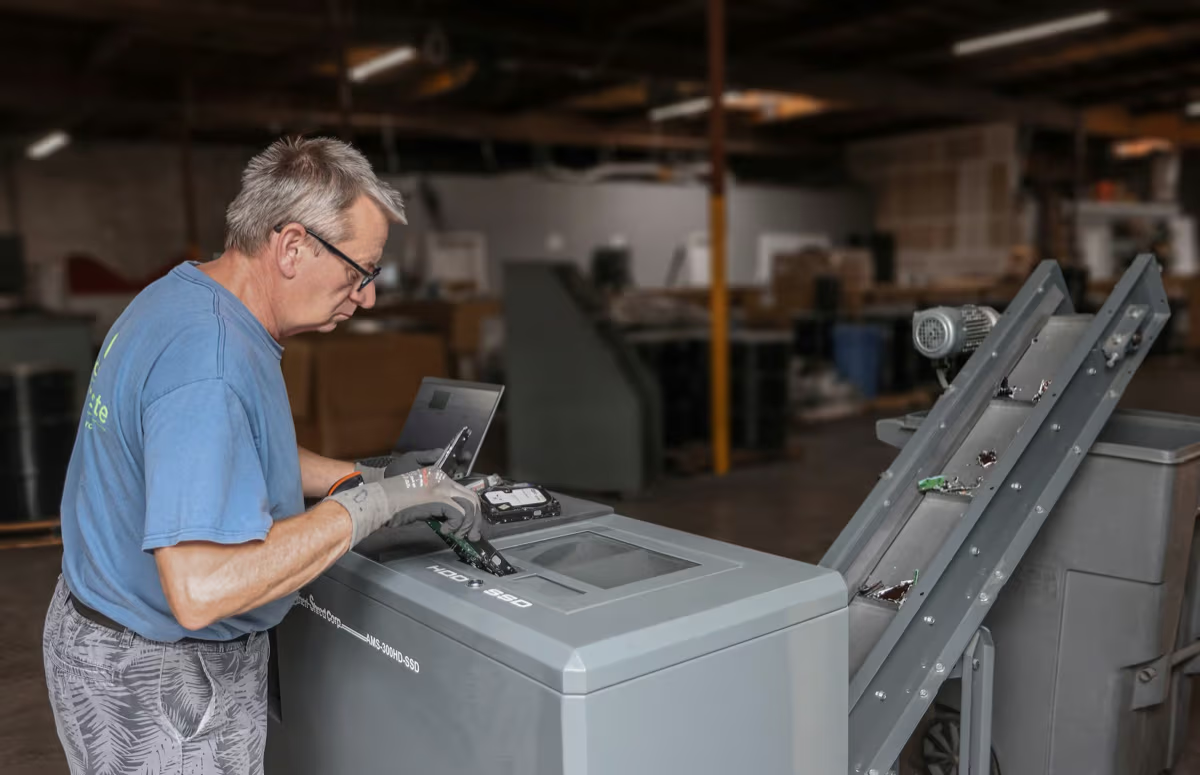
Our data destruction services meet or exceed the most stringent industry standards, providing peace of mind and full compliance.
Secure, compliant hard drive destruction performed on-site or at our facility — protecting sensitive data, ensuring peace of mind, and meeting industry standards.
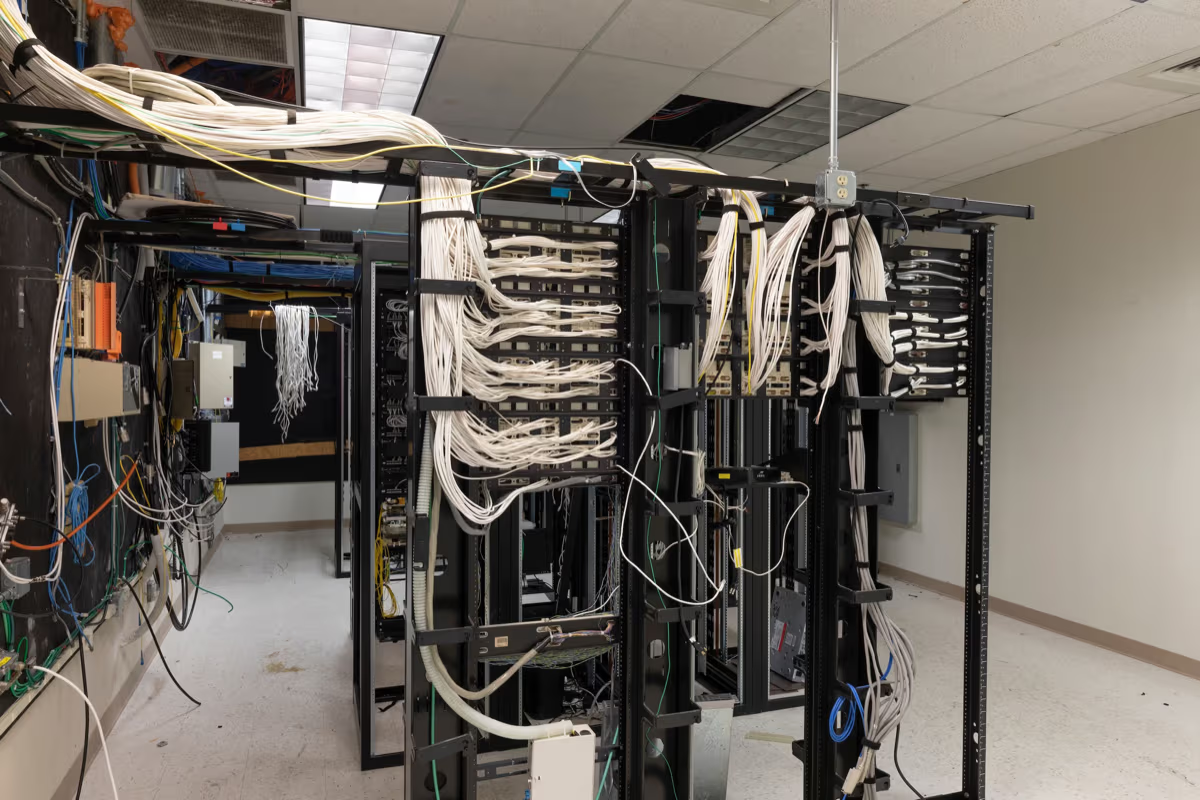
Complete decommissioning of data centers and UPS systems, including equipment removal, data sanitization, and compliant recycling.
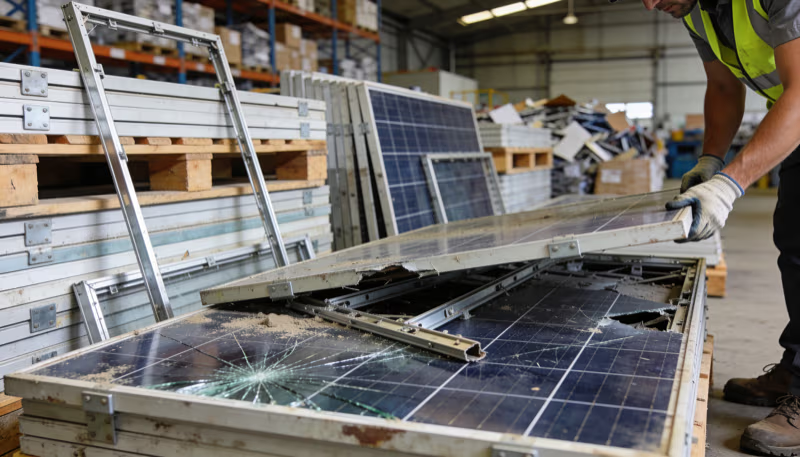
Compliant solar panel recycling in California. We safely process decommissioned, damaged, and end-of-life solar equipment with certified environmental handling and documentation.
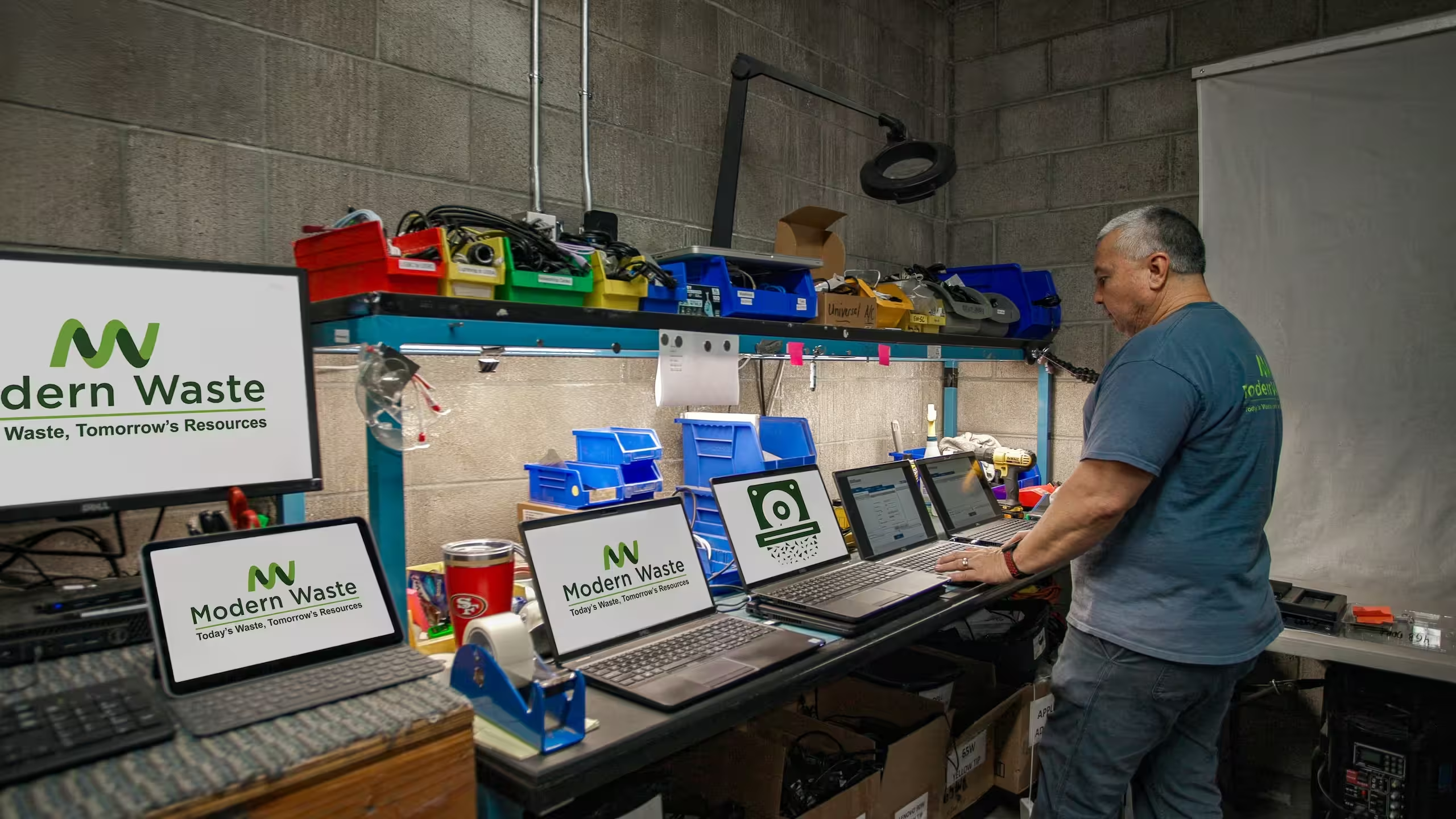
Enterprise IT asset disposition: inventory, secure data treatment, reuse evaluation, and documented recycling for retired IT equipment.
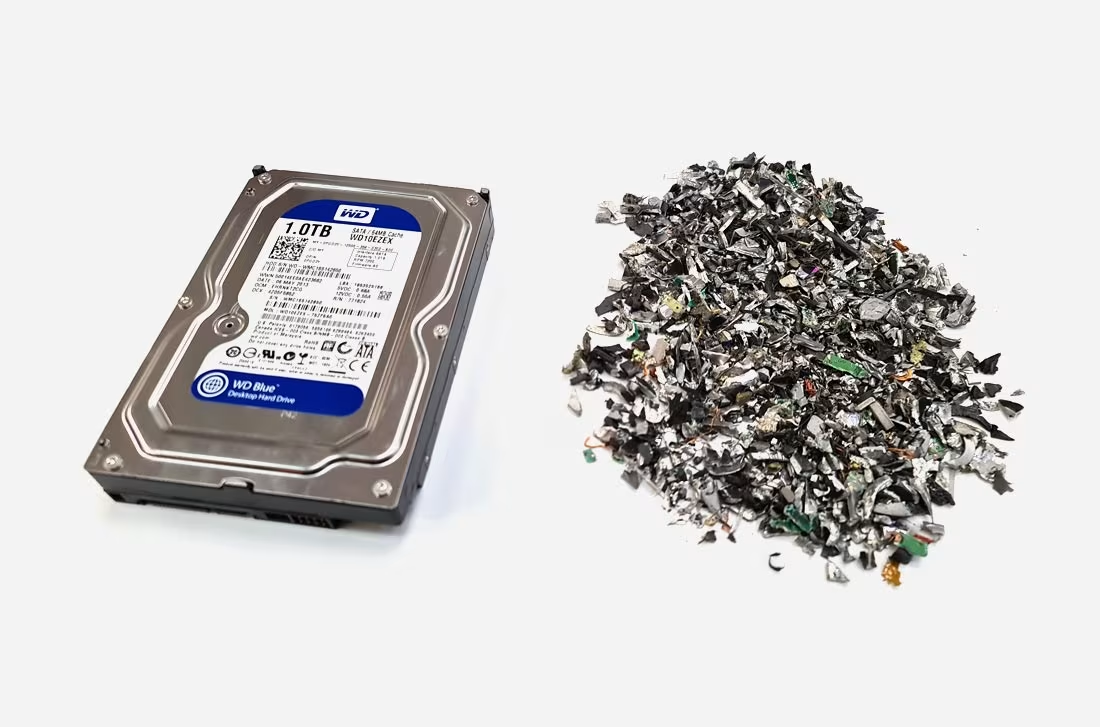
NIST 800-88-aligned data wiping with verification records for drives and devices headed for reuse, resale, or redeployment.
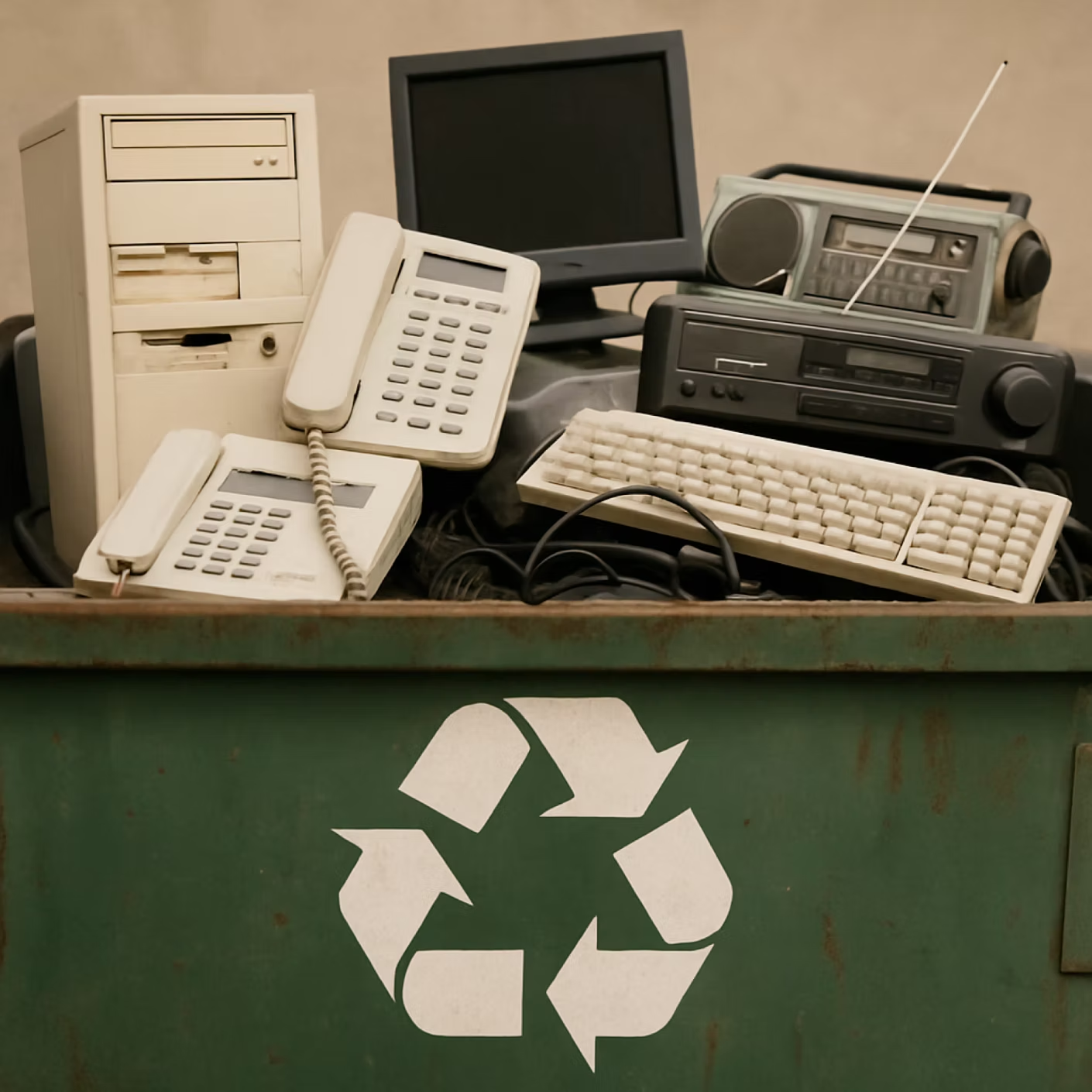
CRT and flat-panel monitor recycling with separate handling for leaded glass, lamps, and electronic components.
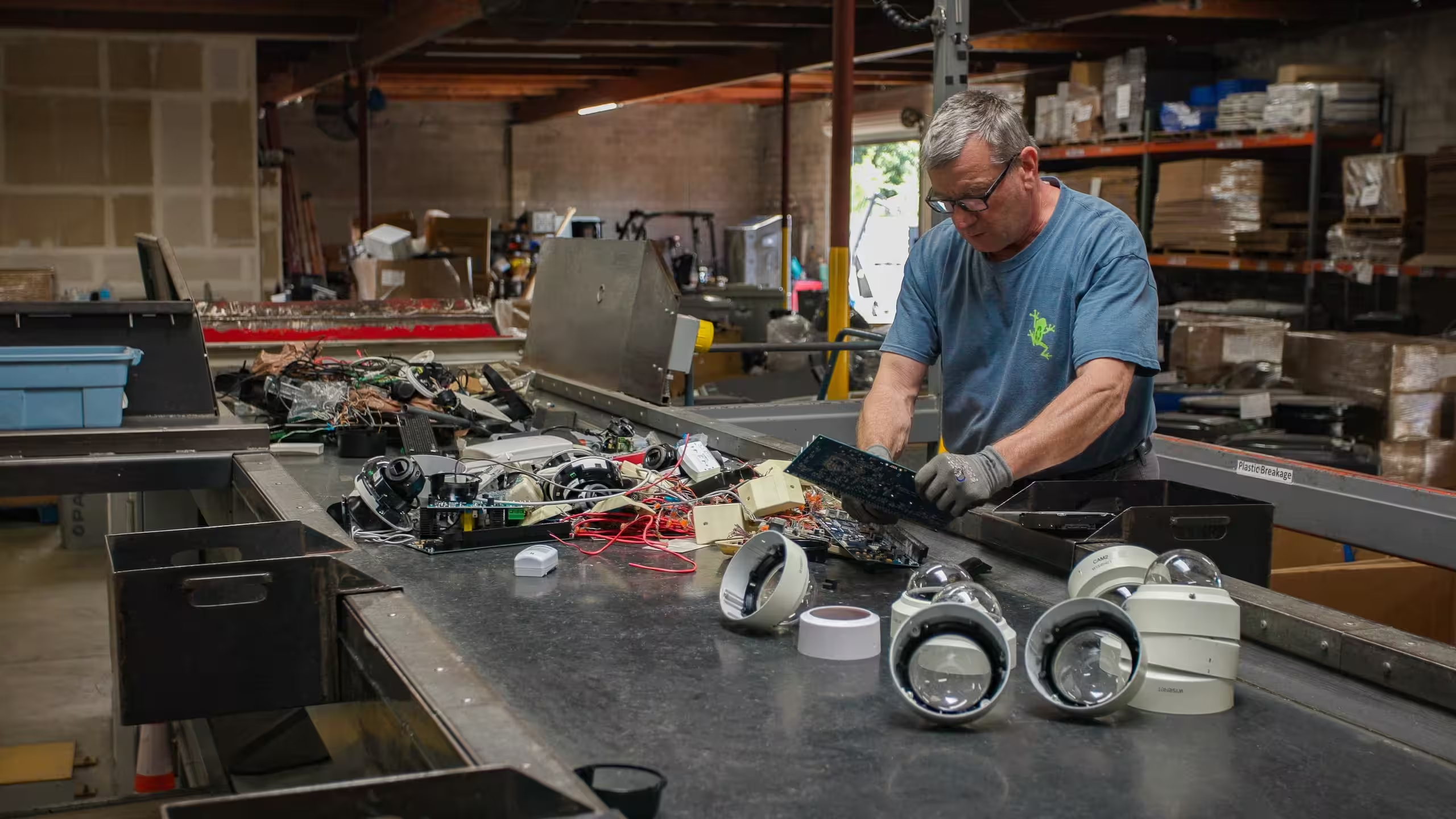
Server, storage, and network equipment disposal with secure data treatment, deinstallation, and responsible recycling.
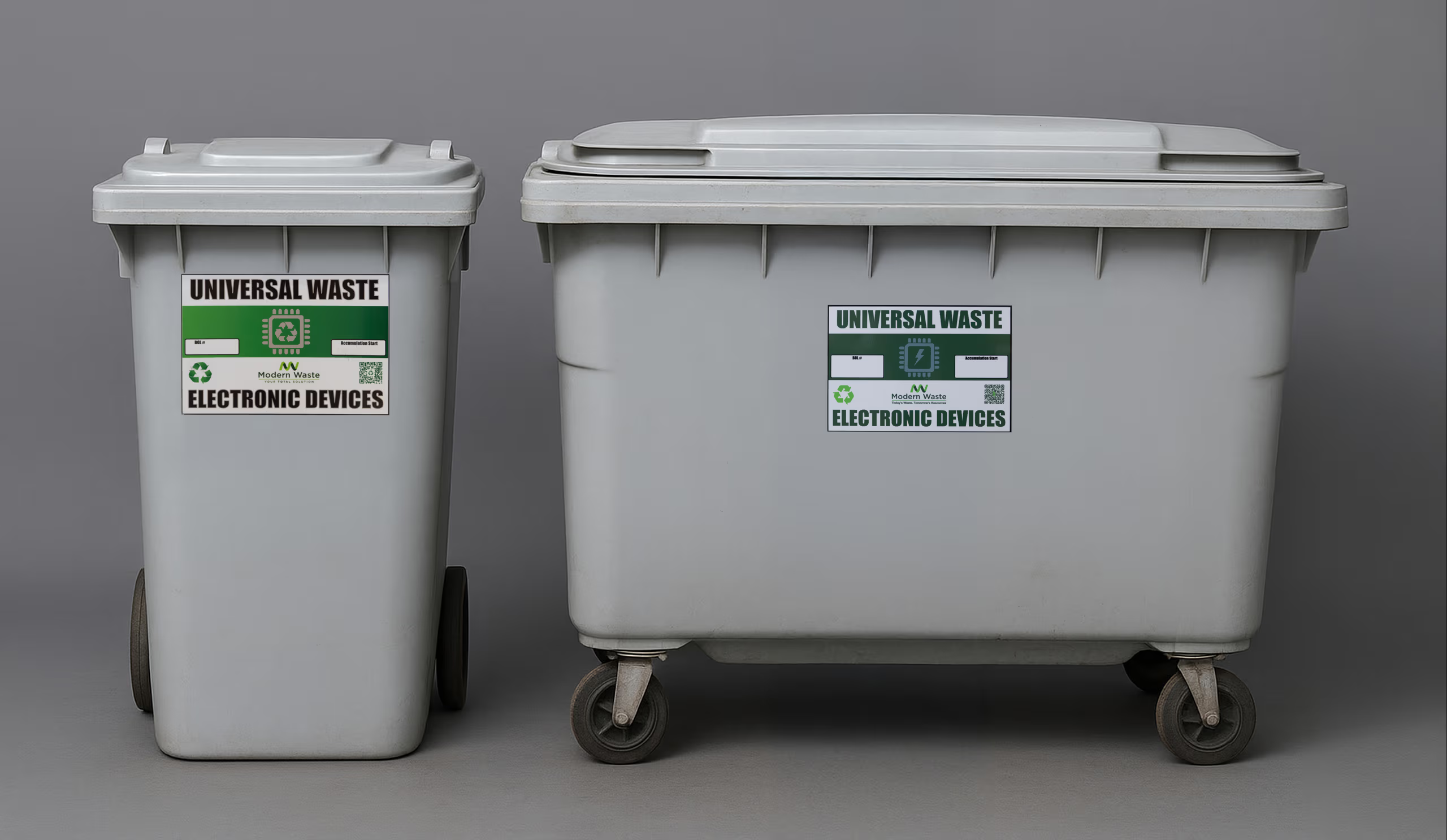
Fluorescent lamp and ballast recycling with separate handling for non-PCB, suspect, and damaged units.
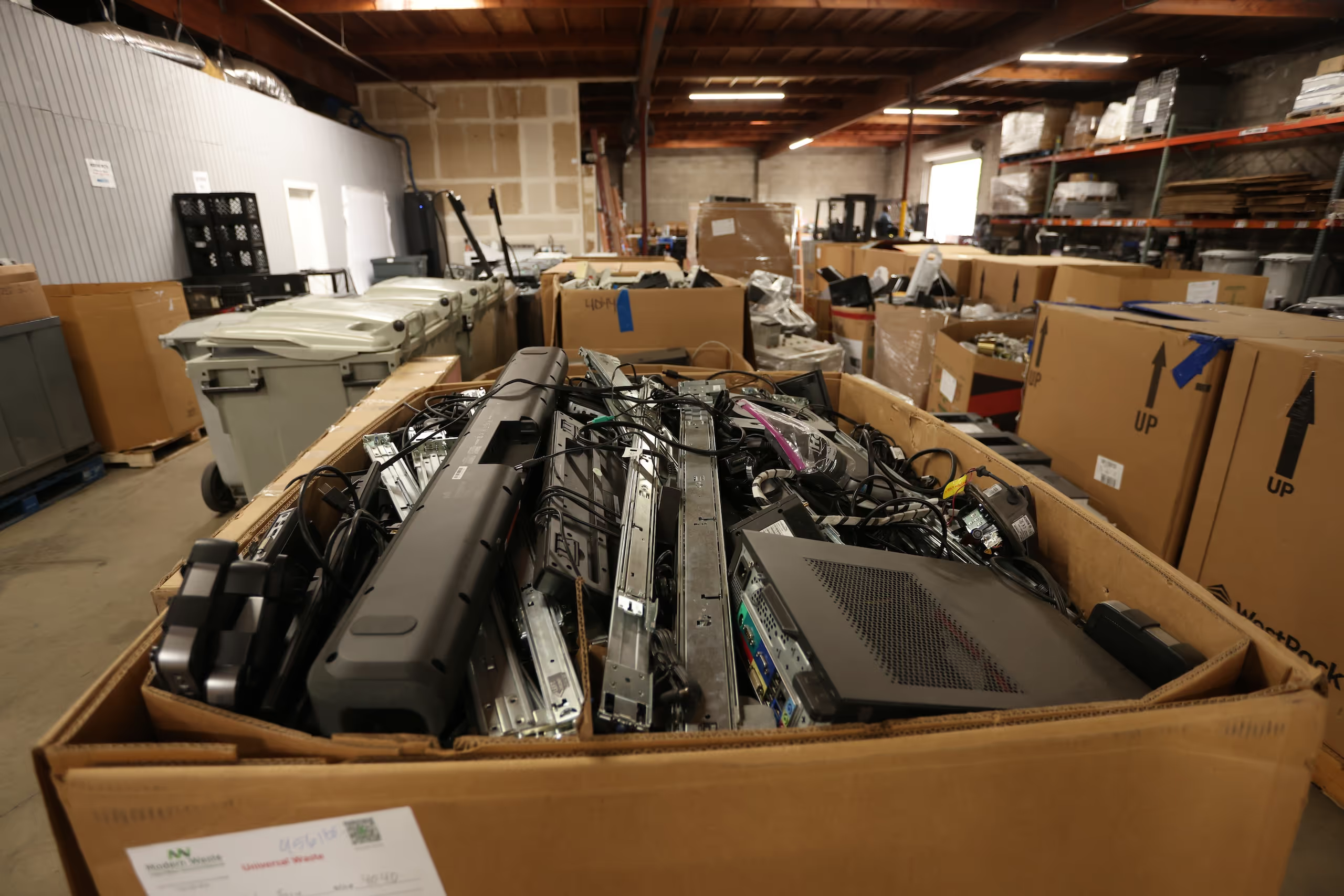
Businesses can deliver electronics and batteries to our Sacramento facility at 3921 Pell Circle. Households recycle through our sister company, Secure Recycle.

Reviews
A little bit off the beaten track in Natomas, but Modern Waste quickly and efficiently helped me recycle my broken Lithium Iron Phosphate batteries at a reasonable $/lb fee (Sac county e-waste will not accept these items). Ramiro and Vincent were very friendly and helpful.

Chris was awesome! He came in and picked up all of the e-waste we had ready for him. He was polite and professional throughout the entire process. He handled the equipment with care, including the site equipment that was already in place. I am very happy with his service and appreciate the great job he did.

Aaron and Vincent were awesome, excellent customer service!

Great guys, excellent customer service, highly recommend!

Polite, quick and easy.

Chris from modern waste was the most outstanding respectful person I ever met my life when he was done he offered to sweep the floors. He offered so much even though he was limited on time he went out of his way and he’s over beyond best guy I ever met thank you so much for your service services Dan ITG.

We have answers.

When a company talks about "recycling services," the phrase can mean very different things depending on who you ask. For Modern Waste, it covers the full range of managed waste streams a business generates outside ordinary trash pickup: computers, monitors, and printers; every chemistry of battery from alkaline to lithium-ion; and servers, UPS units, and data center hardware. Since 1999, the company has built its process around one idea — that a business shouldn't need five different vendors to stay compliant. Instead, recycling services bundle collection, sorting, secure processing, and documentation into a single, trackable workflow. That matters because most of what falls under "e-waste" is legally classified as Universal or hazardous waste in California, so simply putting it in the dumpster isn't an option. A proper recycling service picks up where ordinary waste management stops: it identifies what's hazardous, what can be reused, and what needs certified destruction, then closes the loop with a paper trail proving it was handled correctly. For a business, that's the real value — not just getting rid of old equipment, but getting rid of it in a way that protects data, meets regulatory requirements, and keeps hazardous material out of landfills.
Commercial recycling services are built for organizations. Pickups, recurring routes, and on-site work are for businesses, public agencies, and institutions. We don't provide residential services; a household with a single laptop can take it to our sister company, Secure Recycle, at the same Sacramento address. In practice, commercial customers include IT departments retiring a batch of workstations, office managers clearing out old printers and monitors, property managers handling tenant turnover, and facilities teams decommissioning entire floors of equipment. Retailers, healthcare clinics, financial institutions, schools, and government agencies are also common clients, each with their own mix of compliance requirements. What connects them is a recurring need: equipment ages out, regulations change, and someone has to be responsible for making sure disposal doesn't create a liability. If your business generates electronics, batteries, or other regulated waste in its normal operations, commercial recycling services are the right fit, whether that means a single pickup or a recurring schedule.
Four problems tend to come up again and again when businesses think about electronics and waste disposal. The first is compliance risk — California treats most electronics and batteries as Universal Waste, and getting caught disposing of them incorrectly can mean fines and regulatory scrutiny. The second is data security: a retired laptop or server is still a hard drive full of client records, financial data, or proprietary files until someone destroys or wipes it properly. The third is environmental harm, since batteries and circuit boards contain materials that can leach into soil and water if they end up in a landfill instead of a certified recycling stream. And the fourth, less dramatic but very real, is simply office clutter — old equipment piling up in storage rooms, taking up space that could be used for something productive. A structured recycling service addresses all four at once: it removes the equipment, documents the chain of custody, destroys or sanitizes any data, and routes materials to certified downstream partners for recovery or disposal. That's the difference between getting rid of stuff and actually solving the underlying risk.
Certifications aren't just a badge on a website footer — they're the framework that governs how every load of equipment is actually handled once it arrives at the facility. Modern Waste maintains three ISO certifications (9001, 14001 and 45001), each covering a different part of the operation, and each requiring regular third-party audits.
| Certification | Scope | What It Verifies |
|---|---|---|
| ISO 9001/14001/45001 | Responsible electronics recycling | Downstream tracking, data protection standards, reuse and recovery practices |
| ISO 9001:2015 | Quality Management | Consistent, well-documented business processes |
| ISO 14001:2015 | Environmental Management | Reduced environmental impact and legal compliance |
| ISO 45001 | Occupational Health & Safety | Employee safety and safe handling procedures |
Together, these standards mean the company's environmental health and safety management system — first built in 2013 and continuously updated since — isn't self-reported. It's checked. On top of the ISO framework, Modern Waste operates under oversight from California's Department of Toxic Substances Control, Cal EPA, and Cal OSHA, along with municipal agencies in Sacramento. For a business evaluating a recycling partner, that combination is what turns a subjective claim of responsible recycling into something you can actually verify and cite in your own compliance documentation.
Data security is where IT asset recycling gets serious, because a retired hard drive is only "waste" from a hardware standpoint — the information on it is still very much alive. Modern Waste addresses this in two ways: on-site hard drive shredding for equipment that needs to be destroyed at your location, and secure data destruction at the facility for equipment that's picked up and transported under chain-of-custody tracking. Every load is logged with a ticket number the moment it arrives, so there's a documented trail from your office to final processing. Drives that are wiped rather than destroyed are sanitized to NIST 800-88 standards, the federal benchmark for media sanitization, which distinguishes between simple deletion and actual data destruction. Experts from our company recommend treating every data-bearing device — not just obvious ones like laptops and servers, but also copiers, phone systems, and multifunction printers — as a security risk until it's been through this process, since many of these devices store data most businesses don't think to check. The result is a paper trail that holds up if a client, auditor, or regulator ever asks how a specific device was handled.
Not every recycling vendor operates at the same level, and the differences usually show up exactly when you need them most — during an audit, a data breach investigation, or a compliance review. A few criteria are worth checking before signing on with any provider.
| Criteria | Why It Matters |
|---|---|
| Certifications (ISO 9001/14001/45001) | Confirms independently audited processes, not just self-reported claims |
| Statewide coverage | One vendor can serve every location instead of juggling regional providers |
| Documentation and reporting | Certificates of destruction or recycling protect you in an audit |
| Track record | Longevity signals the vendor has weathered regulatory changes and stayed compliant |
| Service scope | Bundled services reduce the overhead of managing multiple vendors |
Modern Waste checks each of these boxes: full ISO certification, statewide routes from San Diego to Redding with coverage extending into Nevada, and a track record going back to 1999. But the table above applies regardless of which provider you're evaluating — it's a useful checklist for any business handing over equipment that could contain sensitive data or regulated materials.
Before scheduling a pickup, it helps to have a rough picture of four things: volume, equipment types, documentation needs, and pricing structure. Volume and frequency determine whether a one-time pickup makes sense or whether a recurring route — weekly, monthly, or quarterly — would actually save time and money. Equipment types matter because batteries, monitors, servers, and general e-waste often require different handling protocols, and knowing what you're disposing of in advance speeds up scheduling and quoting. If your organization operates under specific regulations — healthcare data rules, financial compliance requirements, or internal sustainability reporting — it's worth flagging that upfront so the right certificates are included from the start. And because pricing depends on the mix of volume, material type, and whether drop-off or pickup is used, having even a rough inventory ready makes it easier to get an accurate quote rather than a wide estimate. None of this needs to be perfectly organized before reaching out — a general sense of what's being disposed of and how often is usually enough to start the conversation.
Office and computer recycling covers more than just hauling equipment away. A complete service typically includes several coordinated steps, each documented along the way.
| Step | What Happens |
|---|---|
| Containers | Secure, labeled bins delivered for staging equipment before pickup |
| Pickup | Scheduled or on-demand collection from your location |
| Data wiping or destruction | Hard drives sanitized to NIST 800-88 or physically destroyed on-site |
| Sorting | Equipment separated by category, material, and reuse potential |
| Reporting | Certificates of recycling or destruction issued for your records |
For most offices, this covers desktops, laptops, monitors, printers, copiers, phone systems, and networking equipment — anything that's aged out of active use but still needs to leave the building responsibly. Because batteries are often embedded in this same equipment, from UPS units to cordless phones, battery recycling is typically bundled into the same pickup rather than requiring a separate vendor.
Getting started is more straightforward than most businesses expect. The first step is filling out a business service request with a general description of what needs to be recycled and roughly how much of it there is. From there, Modern Waste's team coordinates a collection window that fits your operations, whether that's a single pickup at your Sacramento office or a recurring route across multiple locations. Because service coverage runs statewide, from San Diego up through the Bay Area and into Redding, businesses anywhere in California — and parts of Nevada — can work with the same single point of contact rather than juggling regional vendors. For companies with multiple sites, this is often the biggest practical advantage: one recycling partner, one set of documentation standards, and one team to call when a new site needs service.
Every pickup, regardless of size, follows the same six-step framework.
| Step | Description |
|---|---|
| 1. Equipment | Secure, labeled containers are provided for staging materials |
| 2. Training | Staff are trained on what can go in each container and how |
| 3. Pick-up | Scheduled collection, or drop-off if that's more convenient |
| 4. Tracking | Every load is logged with a ticket number in a secure database |
| 5. Process | Materials are shredded, wiped, recycled, or disposed of as appropriate |
| 6. Reports | Certificates and compliance reports are issued as needed |
The structure exists so that nothing gets handled inconsistently between pickups — a load collected in January follows the exact same chain of custody as one collected in December. For businesses managing compliance across multiple departments or locations, that consistency is often more valuable than speed, since it means every certificate issued traces back to the same documented process.
Sacramento businesses have plenty of recycling options, but three things tend to set Modern Waste apart. The first is longevity — the company has operated in the recycling and data destruction industry since 1999, meaning it's navigated more than two decades of changing state and federal regulations without losing its certifications. The second is reach: statewide routes covering California from San Diego to Redding, plus coverage extending into Northern Nevada, mean a single Sacramento-based partner can realistically serve a business with locations across the region. The third is the certification stack itself — ISO 9001, ISO 14001, and ISO 45001 together, which is a fairly high bar in the recycling industry. Add to that a local Sacramento facility subject to direct oversight from the California Department of Toxic Substances Control and Cal EPA, and the result is a provider that's both close by and independently verified.
After a pickup is completed, the paperwork is where a lot of the real value shows up. Every load is tracked from the moment it's collected, so businesses receive documentation confirming what was picked up, when, and how it was processed — whether that's a certificate of destruction for data-bearing devices or a certificate of recycling for general e-waste and equipment. For companies that need to demonstrate compliance to auditors, clients, or internal sustainability reporting, this documentation is often the actual deliverable, more than the physical pickup itself. Depending on the service, businesses may also receive an environmental impact summary showing how materials were diverted from landfill and routed toward reuse or recovery. All of it ties back to the same tracking system used from intake through final processing, so there's a consistent, auditable record rather than a one-off receipt.