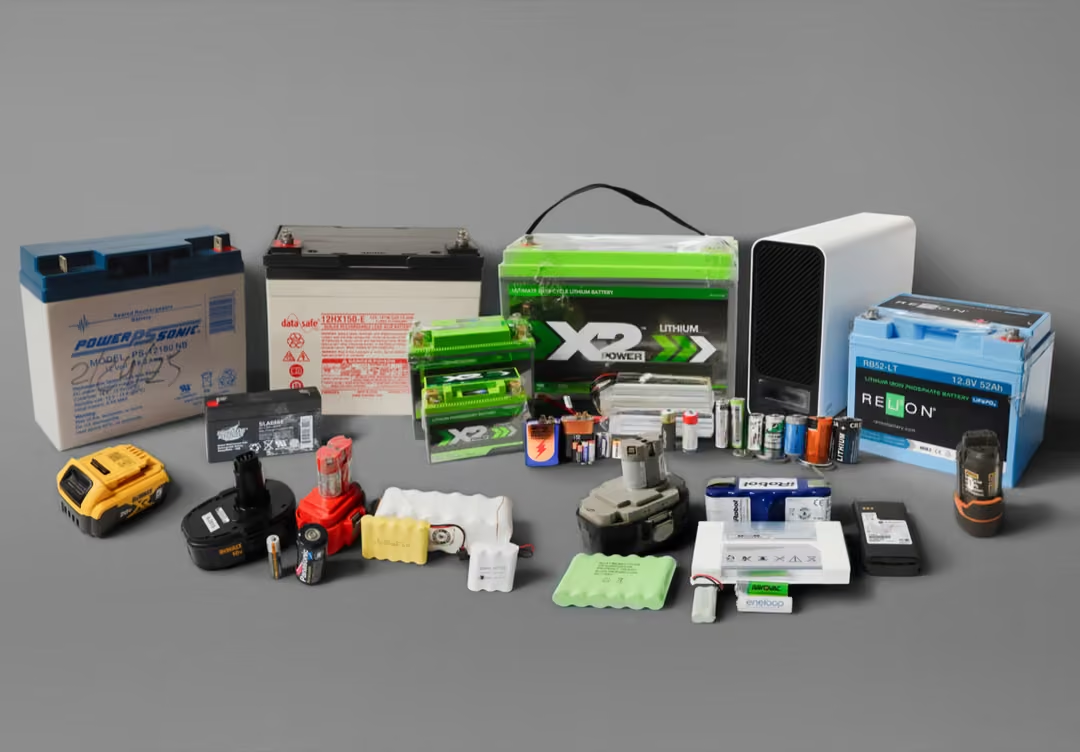
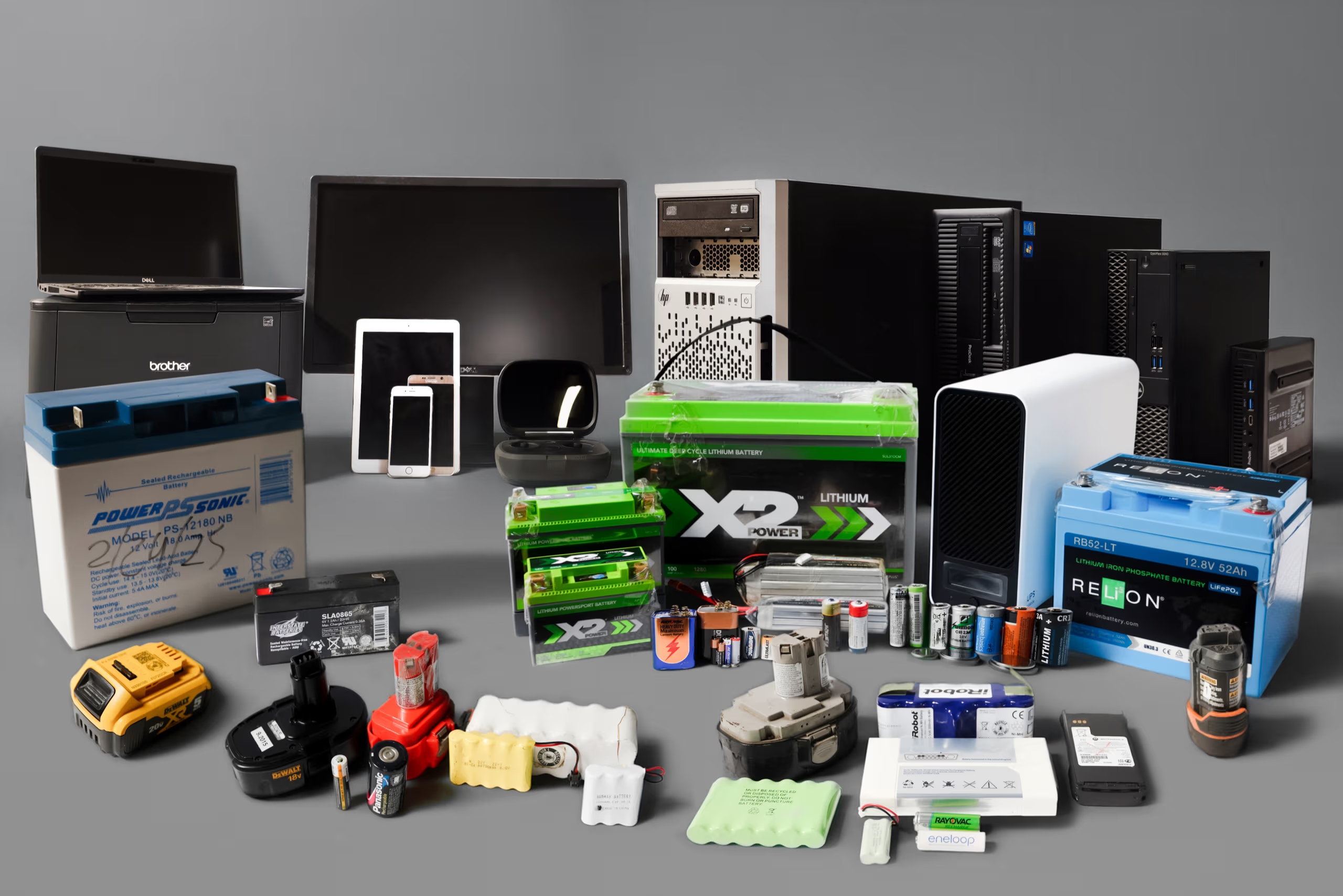
A little bit off the beaten track in Natomas, but Modern Waste quickly and efficiently helped me recycle my broken Lithium Iron Phosphate batteries at a reasonable $/lb fee (Sac county e-waste will not accept these items). Ramiro and Vincent were very friendly and helpful.
Data Center Recycling in Sacramento, CA
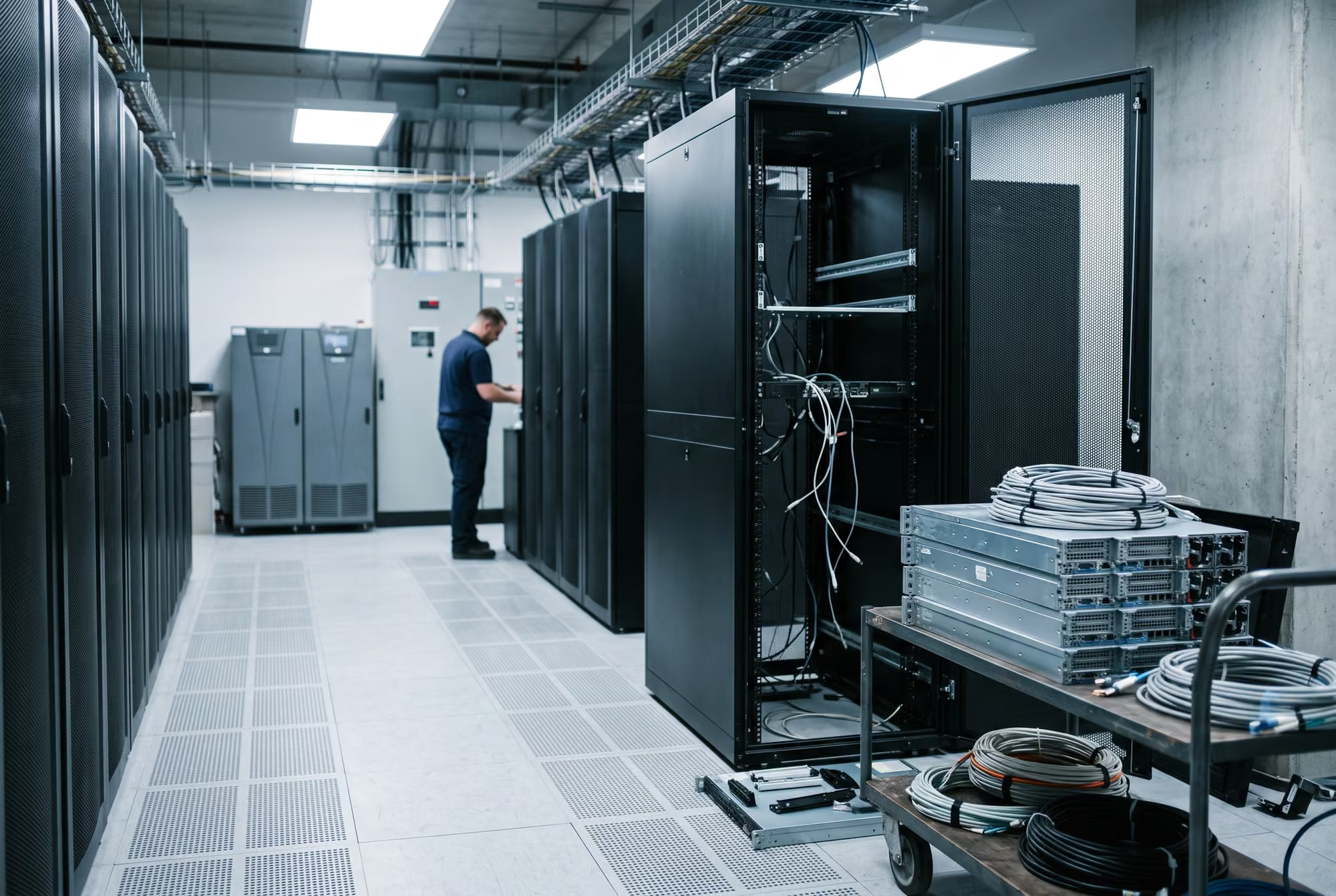
Data center and tech equipment recycling: servers, storage, network gear, UPS batteries and cabling, with drive wiping or shredding and reconciled closeout records.
- 4.8 on Google · 123 reviews
- ISO 9001 · 14001 · 45001 certified
- In the industry since 1999
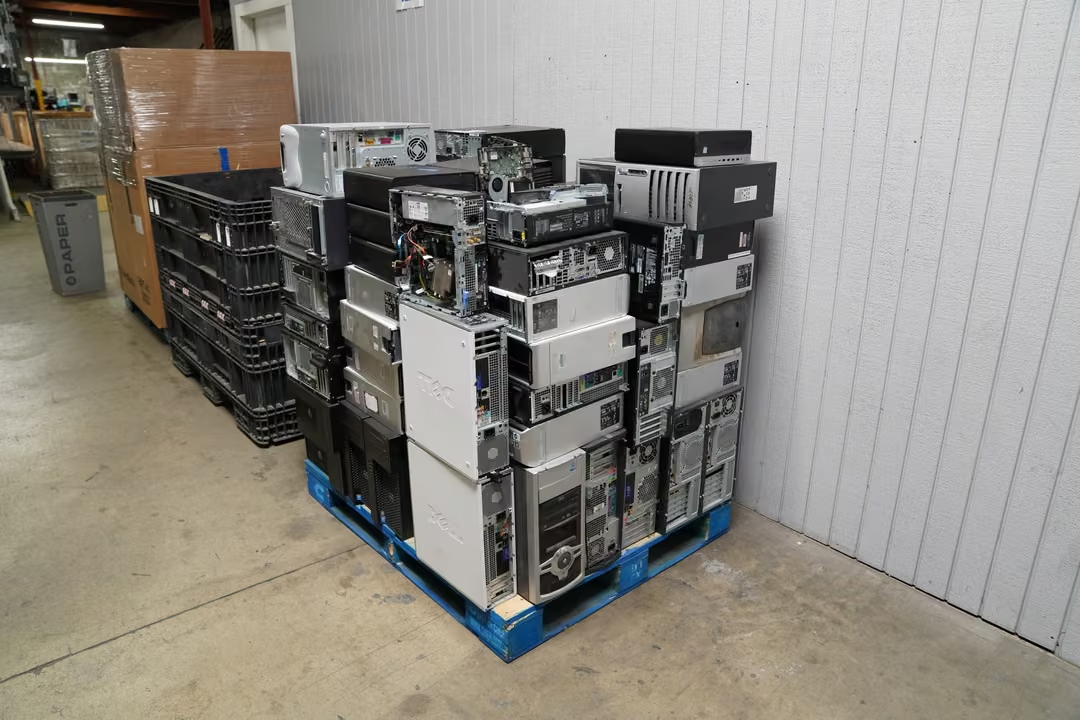
- Rack, tower and blade servers and storage arrays
- Switches, routers, firewalls and patch panels
- Racks, cabinets, PDUs and busway components
- UPS units and their lead-acid or lithium-ion battery strings
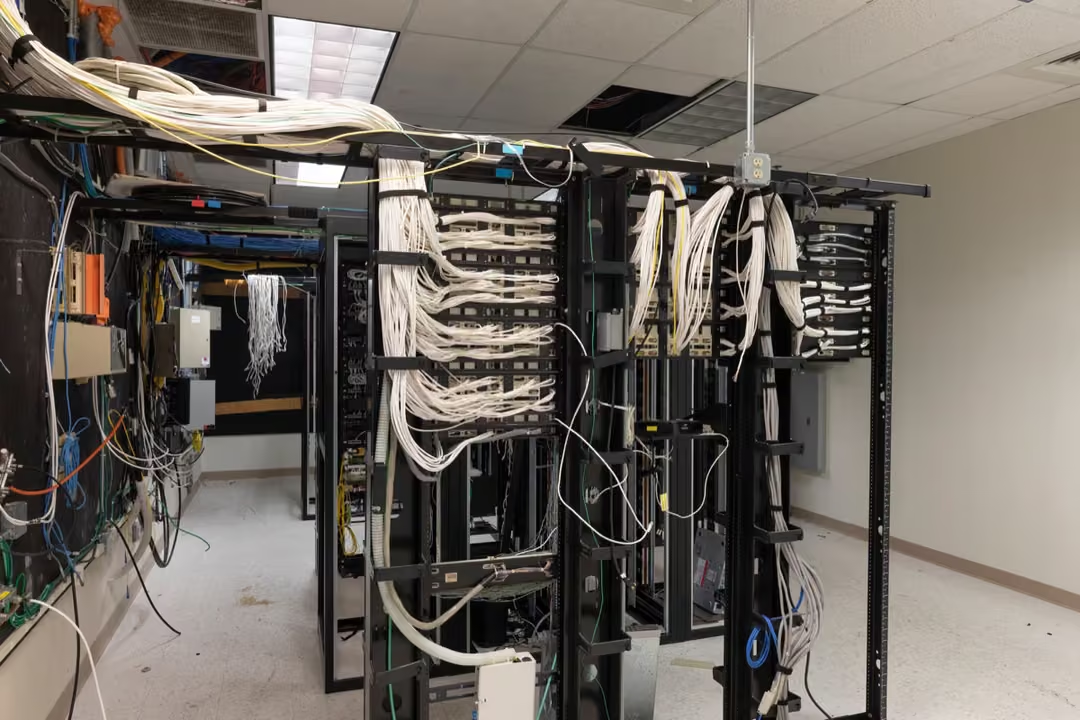
- Structured cabling and cooling tied to the retired footprint
- PBX phone systems, handsets and laptops from the same refresh
Front-bay drives get the attention, but boot drives, M.2 modules and SD cards on motherboards, RAID cache, and the saved configurations and credentials on network devices all need a decision too. Before pickup, each asset class gets a code (redeploy, evaluate for reuse, wipe, destroy or recycle), and anything without a code is held for review. See server disposal for where to look inside a chassis.
Retired battery strings are removed, sorted by chemistry and packed in battery containers. They go through our battery recycling process, apart from the general electronics, and the quantities appear on your closeout records.
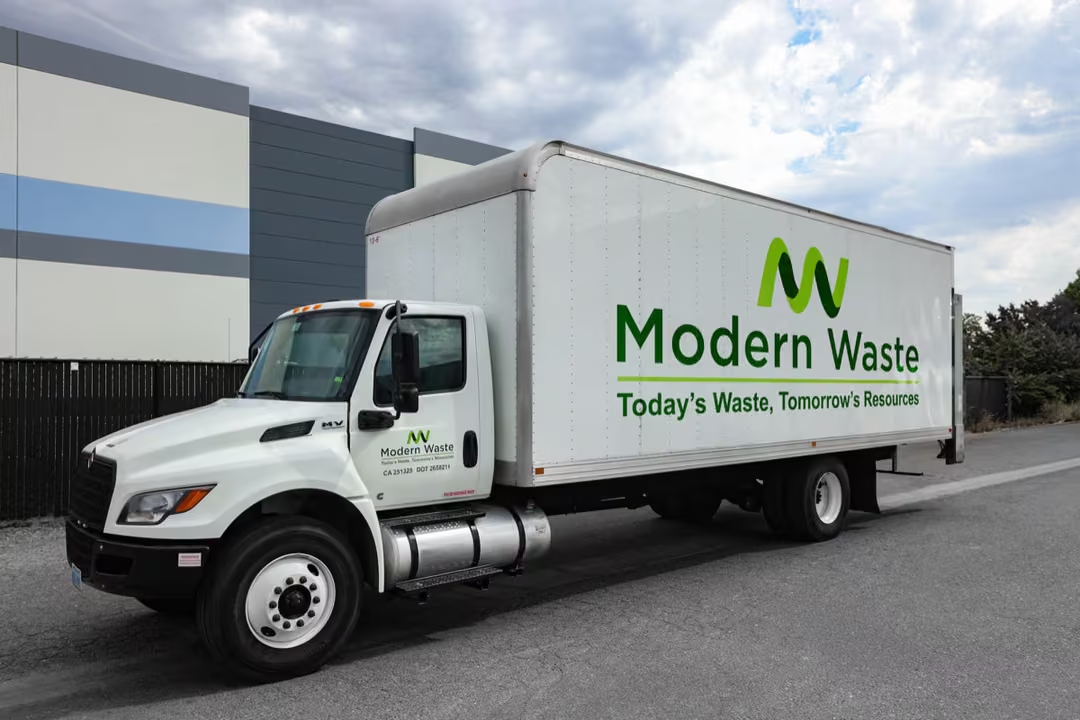
Our technicians disconnect, de-rack and palletize the equipment and haul it on our own trucks, working within your change-control windows. Newer servers and network gear may carry resale value after testing, and any recovery is reported on its own line. Larger exits are handled as data center and UPS decommissioning projects.
Data halls, server rooms and tech offices retire servers, storage arrays, switches, racks, PDUs, UPS units and their battery strings, and structured cabling. Our technicians map every drive before de-racking, wipe or shred the media, and send UPS batteries through our battery process instead of the e-waste stream. Each project closes with an inventory reconciled against your release list.
-
Electronic Waste Recycling
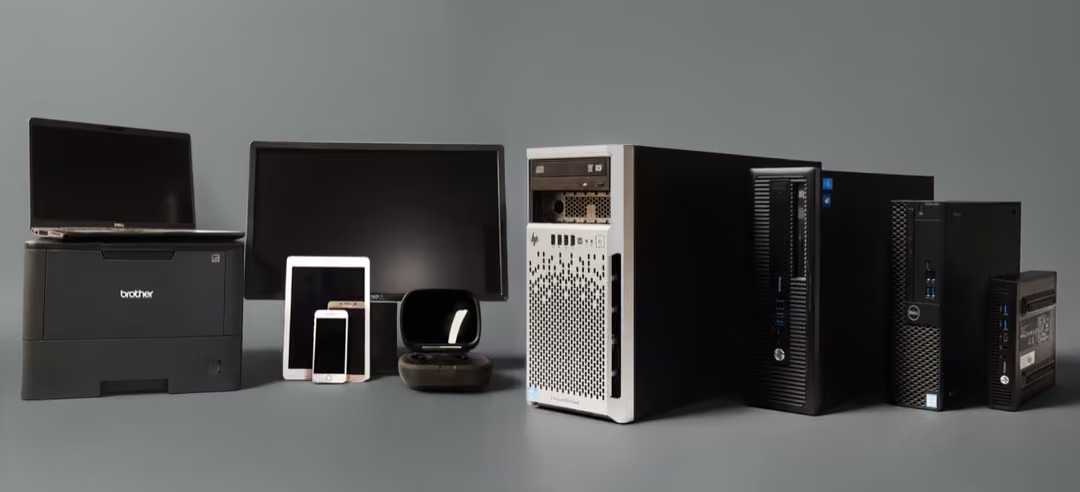
Our electronic waste recycling services prioritize security and compliance, ensuring responsible disposal while also boosting your bottom line.
-
Battery Recycling
We can recycle virtually all types of batteries. In most cases, it is either best practice or required to separate batteries by chemistry type.
-
Secure Data Destruction
Our data destruction services meet or exceed the most stringent industry standards, providing peace of mind and full compliance.
-
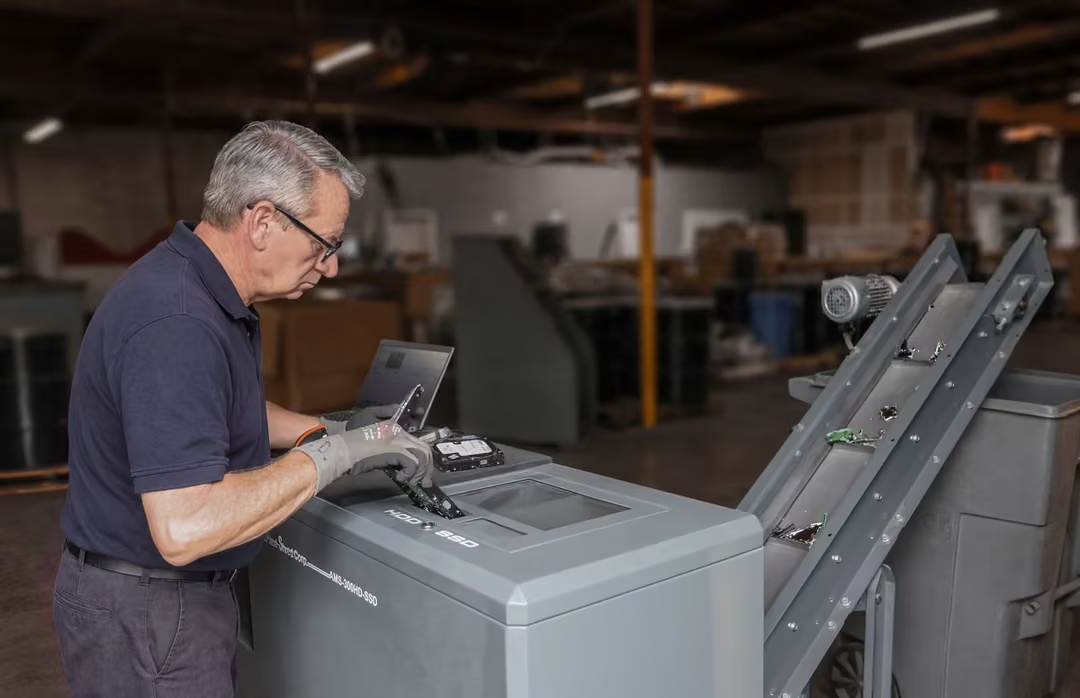
On-Site Hard Drive Shredding
Secure, compliant hard drive destruction performed at your location — protecting sensitive data, ensuring peace of mind, and meeting industry standards.
-
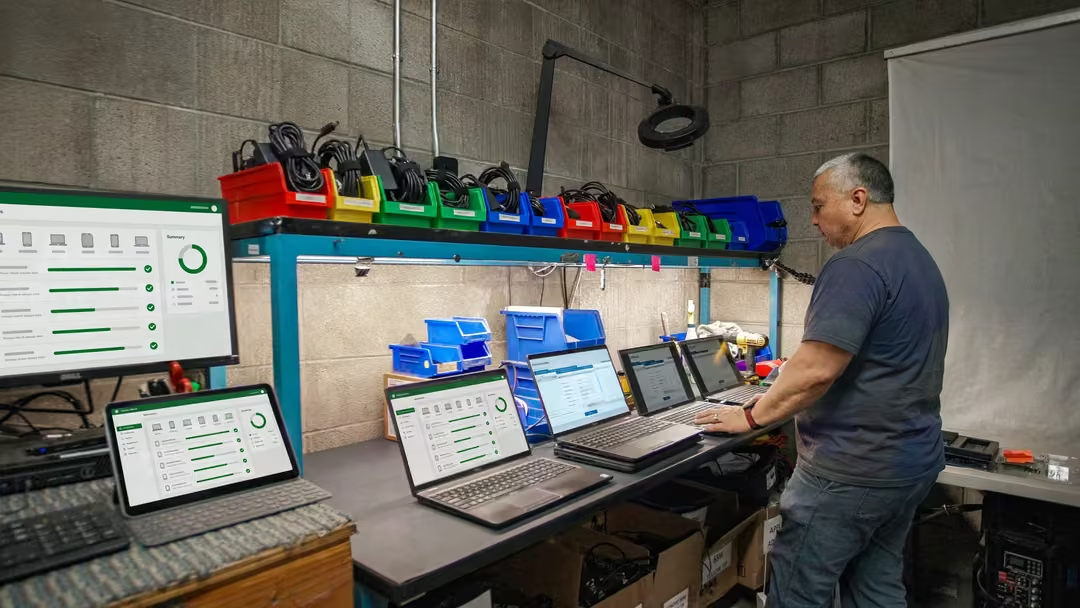
ITAD Services
Enterprise IT asset disposition: inventory, secure data treatment, reuse evaluation, and documented recycling for retired IT equipment.
-
Monitor Recycling
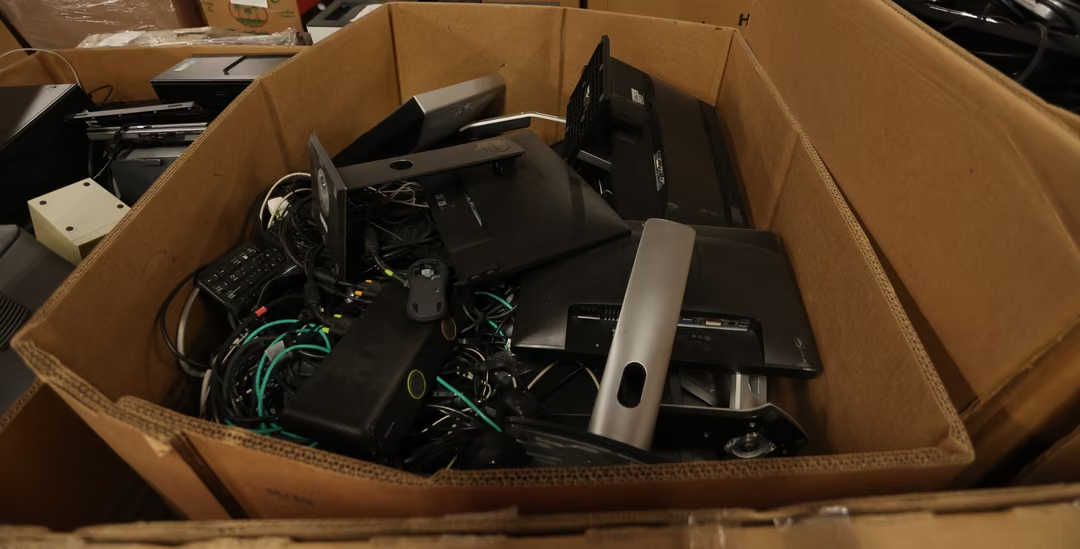
CRT and flat-panel monitor recycling with separate handling for leaded glass, lamps, and electronic components.
-
Server Disposal
Server, storage, and network equipment disposal with secure data treatment, deinstallation, and responsible recycling.
-
Data Center & UPS Removal
Complete decommissioning of data centers and UPS systems, including equipment removal, data sanitization, and compliant recycling.
-
Equipment
We provide the equipment you need.
-
Training
We train you on what you need to know.
-
Pick-up
We come pick up or you can drop off.
-
Tracking
We record and log everything in our secure database.
-
Process
We shred, wipe, recycle or dispose of your waste.
-
Reports
We provide certificates and reports as needed.
-
One-Stop Recycling for E-Waste & Batteries
Simplify your compliance and disposal process with bundled recycling services that handle both electronic devices and batteries in one streamlined solution.
See our services
-
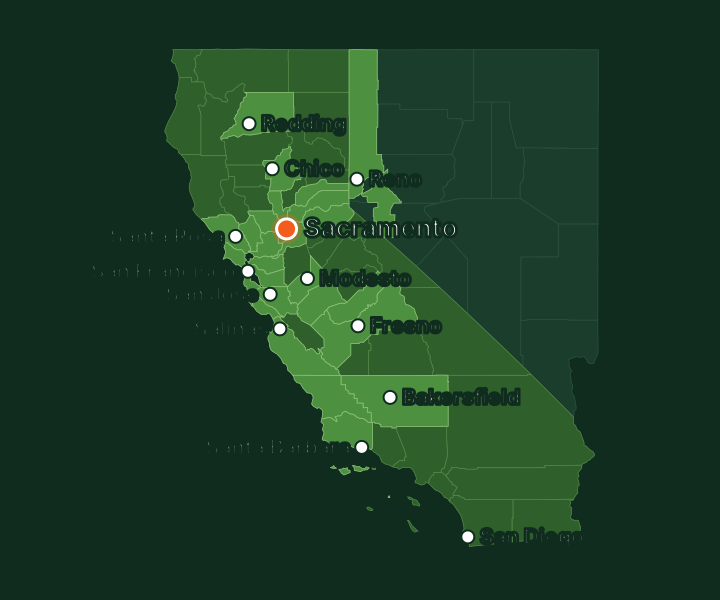
Statewide Pickup Routes from San Diego to Redding Our scheduled, route-based pickups cover all major regions of California—ensuring efficient, on-time service no matter where you operate. See where we serve
-
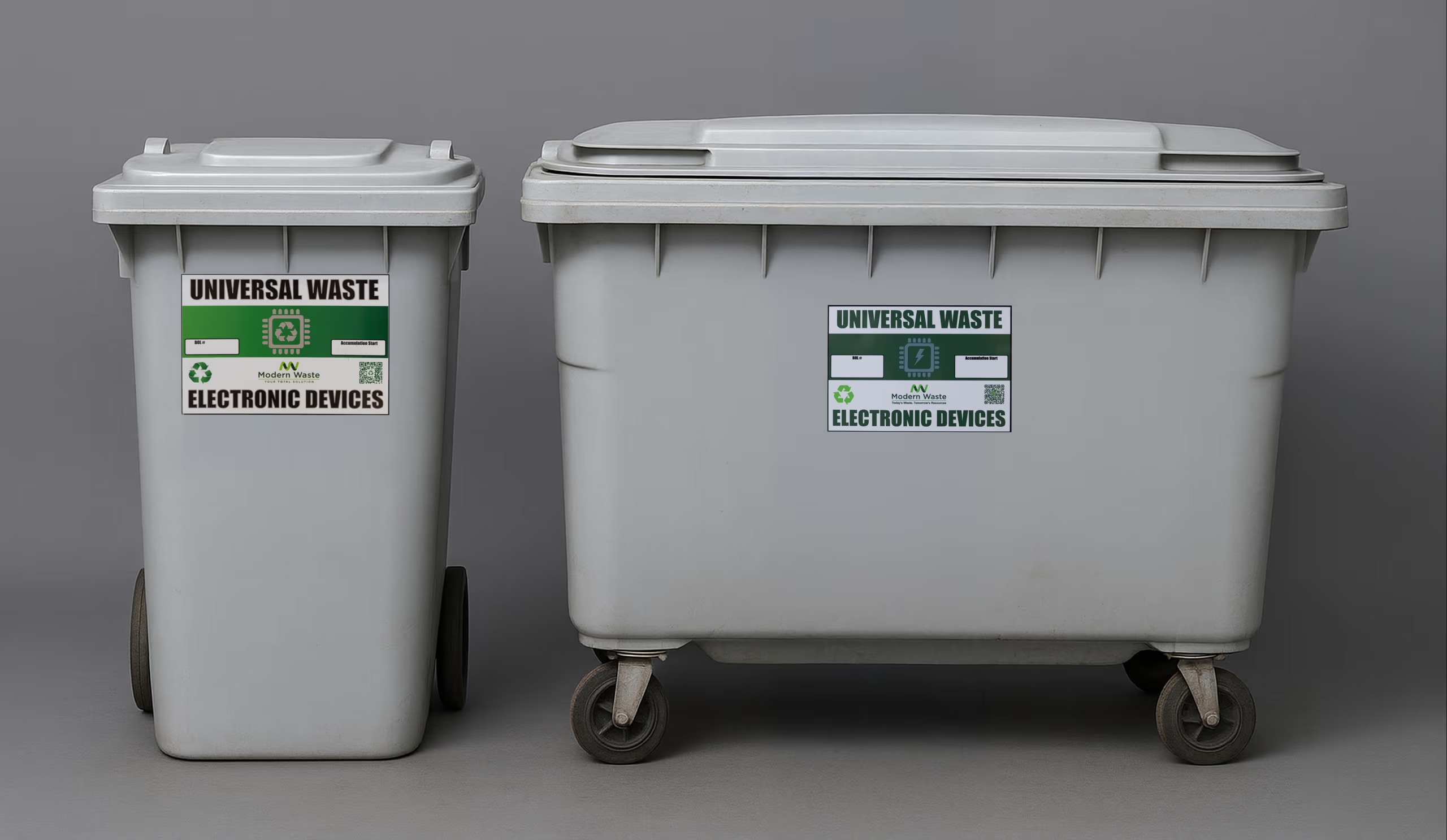
Secure, Labeled Containers Included
We provide clearly labeled, tamper-resistant containers to ensure safe and compliant collection of electronic waste and batteries at your location.
See the equipment we provide
-
Trusted by Californians for Over 20 Years
Modern Waste Solutions has served businesses and communities across California with dependable, environmentally responsible recycling solutions for over two decades.
Read our reviews
This was our first time working with MWS and they were amazing! Quick response time, efficient, and friendly. Ivan was the team member who was on site for the pickup, and he was great. He worked quickly, is very knowledgeable, and is so kind. It was so easy working with him. We are looking forward to using MWS for our E-waste and Universal waste needs in the future. - Sacramento City College Sustainability
-
Josh Bardet
-
Gretchen Langevin
We had another vendor cancel on us last minute & Modern Waste jumped into action & was able to help us with ewaste & critical document shredding overnight. Team was helpful, professional & got the job done quickly & efficiently. We were able to complete an office move out/shut down in a day with their help! Highly recommend this business!
-
Shawnna Borremans
Chris was awesome! He came in and picked up all of the e-waste we had ready for him. He was polite and professional throughout the entire process. He handled the equipment with care, including the site equipment that was already in place. I am very happy with his service and appreciate the great job he did.
-
E O
I needed hard drives on some old laptops destroyed so any old personal information can't be stolen. The guys there were friendly and helpful and fast. Thanks Pavel and Vincent. Thanks Modern Waste for doing a helpful fast service to us.
We have answers.
Data center recycling is the planned removal and disposition of servers, storage, racks, network equipment, PDUs, UPS systems, batteries, cabling, and related infrastructure after reuse and data-security decisions are made.
A complete data center equipment, UPS battery, cable, and electronics recycling program looks at physical equipment, data, access, safety, reuse potential, and final documentation as connected decisions. Simply moving an item off-site does not establish that data was destroyed or the material reached an approved recycling path.
We begin by confirming the inventory and the organization's required disposition outcomes. That scope determines collection equipment, labor, destruction methods, processing, and reports.
Data Center Equipment, Ups Battery, Cable, And Electronics Recycling is intended for organizations that need a controlled process rather than an informal equipment removal. It is especially relevant when assets contain sensitive data, regulated components, or specialized handling requirements.
- Data centers replacing servers, storage, network gear, UPS systems, or battery banks.
- Technology companies consolidating offices, labs, or infrastructure rooms.
- IT and facilities teams that need removal, data destruction, recovery, and reporting in one project.
The program can support a one-time cleanout, a phased decommissioning, or recurring service. Volume alone does not determine the need; data risk, safety, accountability, and documentation can make a smaller project equally important.
A structured data center equipment, UPS battery, cable, and electronics recycling program reduces the operational and compliance gaps that appear when equipment is stored indefinitely or released without a documented plan. It assigns a clear path to data, reusable assets, hazardous components, and recyclable material.
- UPS batteries creating fire, handling, and storage risks after retirement.
- Data-bearing hardware leaving the facility without an approved sanitization or destruction record.
- Racks, cable, and mixed equipment delaying a shutdown or consuming valuable floor space.
The result is a defensible process rather than a simple removal. Organizations also gain clearer closeout records for internal review, audits, sustainability work, or future planning.
Our certified process combines equipment removal, data treatment, tracking, and responsible recycling. Project controls are tailored to the facility's safety rules, uptime requirements, and documentation needs.
We define the inventory, custody points, treatment method, downstream path, and required records before work begins. Loads are tracked, triaged, processed under documented controls, and matched to the appropriate reports or certificates.
Certification is useful because it connects service claims to audited management systems and documented operating controls. Our current framework combines quality, environmental management, and worker-safety standards.
- ISO 9001:2015 for documented and repeatable quality-management processes.
- ISO 14001:2015 for environmental-management controls and continual improvement.
- ISO 45001:2018 for occupational health and safety management.
The certification set does not replace a project scope, but it gives procurement and compliance teams a stronger basis for reviewing handling, downstream accountability, and reporting. Customers should still define the material, data, access, and documentation requirements for each job.
No certification automatically resolves every industry-specific obligation. The customer and our team should agree on access, data, environmental, safety, and documentation requirements for the exact project.

Our certified process combines equipment removal, data treatment, tracking, and responsible recycling. Project controls are tailored to the facility's safety rules, uptime requirements, and documentation needs.
Technician perspective: Our certified technicians recommend matching the asset list to rack, room, and disposition before deinstallation begins. That prevents live, reusable, and destruction-only equipment from being mixed during a time-sensitive shutdown.
The exact service plan is confirmed before collection so the customer's security, safety, access, and reporting requirements are reflected in the work order. Unconfirmed activities or regulated materials should never be assumed to be included.
Select a data center equipment, UPS battery, cable, and electronics recycling partner by testing whether the provider can translate your requirements into an operational plan. A strong proposal explains collection, custody, treatment, downstream processing, exceptions, and closeout records.
| Criterion | What to verify | Warning sign |
|---|---|---|
| Relevant scope | Documented experience with the equipment and risk profile | Generic hauling with no technical review |
| Certifications | Current ISO 9001, 14001 and 45001 certificates | Unverified or out-of-scope certification claims |
| Data controls | Inventory, custody, approved wipe or destruction methods | No clear media-identification process |
| Safety and access | Site plan, trained personnel, and hazard disclosure | Work starts before access or hazards are reviewed |
| Reporting | Agreed fields, certificates, and closeout timing | Documentation discussed only after pickup |
Ask for current certification evidence and a sample description of the reporting workflow. Industry experience is most useful when it produces better questions, safer planning, and records your organization can actually use.
Before ordering data center equipment, UPS battery, cable, and electronics recycling, create a scope that separates ordinary logistics from security, safety, and compliance decisions. A good inventory does not need to be perfect, but it should identify unusual equipment and unknowns before the pickup crew arrives.
- Inventory live and retired equipment before the shutdown window.
- Identify data-bearing devices, battery chemistries, rigging needs, cable scope, and access restrictions.
- Choose wipe, shred, reuse, and recycling paths before equipment is removed.
- Build project phases around uptime, safety, and facility change-control requirements.
Share photos, quantities, location details, deadlines, and documentation requirements when requesting a quote. We can then identify exclusions, special handling, and any information still needed before scheduling.
Our data center equipment, UPS battery, cable, and electronics recycling offering is assembled around the customer's approved inventory and required outcomes. It can connect pickup, secure handling, treatment, responsible recycling, and documentation without forcing the customer to coordinate separate vendors for each stage.
| Service element | Typical scope |
|---|---|
| Assessment | Audit equipment, power systems, batteries, cable, access, and timeline. |
| Deinstallation | Disconnect and remove approved racks, servers, UPS units, PDUs, network gear, and cabling. |
| Data treatment | Wipe or destroy data-bearing devices under the agreed chain of custody. |
| Battery and material processing | Sort batteries and recover recyclable metals, cable, and electronic components. |
| Project closeout | Deliver agreed inventory results, reports, and destruction or recycling certificates. |
The final proposal states which elements are included, which materials require separate approval, and which records will be delivered. That distinction is important for specialized equipment, regulated components, or projects with detailed asset-level reporting.
Start a data center equipment, UPS battery, cable, and electronics recycling request with enough information to evaluate logistics, data, safety, and documentation. Our Sacramento operation coordinates business service across California, subject to route availability and project scope.
- Prepare an inventory or representative item list with quantities, models, and photos.
- Identify data-bearing equipment and the required wiping or destruction outcome.
- Describe pickup access, loading conditions, deinstallation needs, and the preferred timeline.
- State any industry, facility, reporting, or certificate requirements that must appear in the proposal.
- Submit the business quote request so our team can review the scope and schedule the next assessment step.
Do not wait until pickup day to disclose batteries, heavy equipment, contamination, restricted access, or unusual components. Early disclosure allows the correct crew, containers, and handling plan to be assigned.
We organize data center equipment, UPS battery, cable, and electronics recycling as a documented six-step workflow. The exact equipment, schedule, and reporting fields are adjusted to the customer's material stream and compliance needs.
- Equipment: We provide or specify the containers, carts, pallets, labels, or other collection equipment needed for the approved material.
- Training: We explain what belongs in each container, how to identify special items, and which materials must remain separate.
- Pick-up: Our team coordinates the business collection or accepts an approved facility drop-off under the agreed schedule.
- Tracking: We record the load and agreed data points, such as material type, weight, serial numbers, dates, or customer-specific fields.
- Processing: We triage, wipe, shred, dismantle, recycle, recover, or route materials according to the approved disposition plan.
- Reports: We issue the applicable recycling or destruction certificates and processing reports for accountability and audits.
Planning the scope before the first collection keeps these steps connected. It also prevents equipment, data media, batteries, and other regulated materials from entering the wrong workflow.