


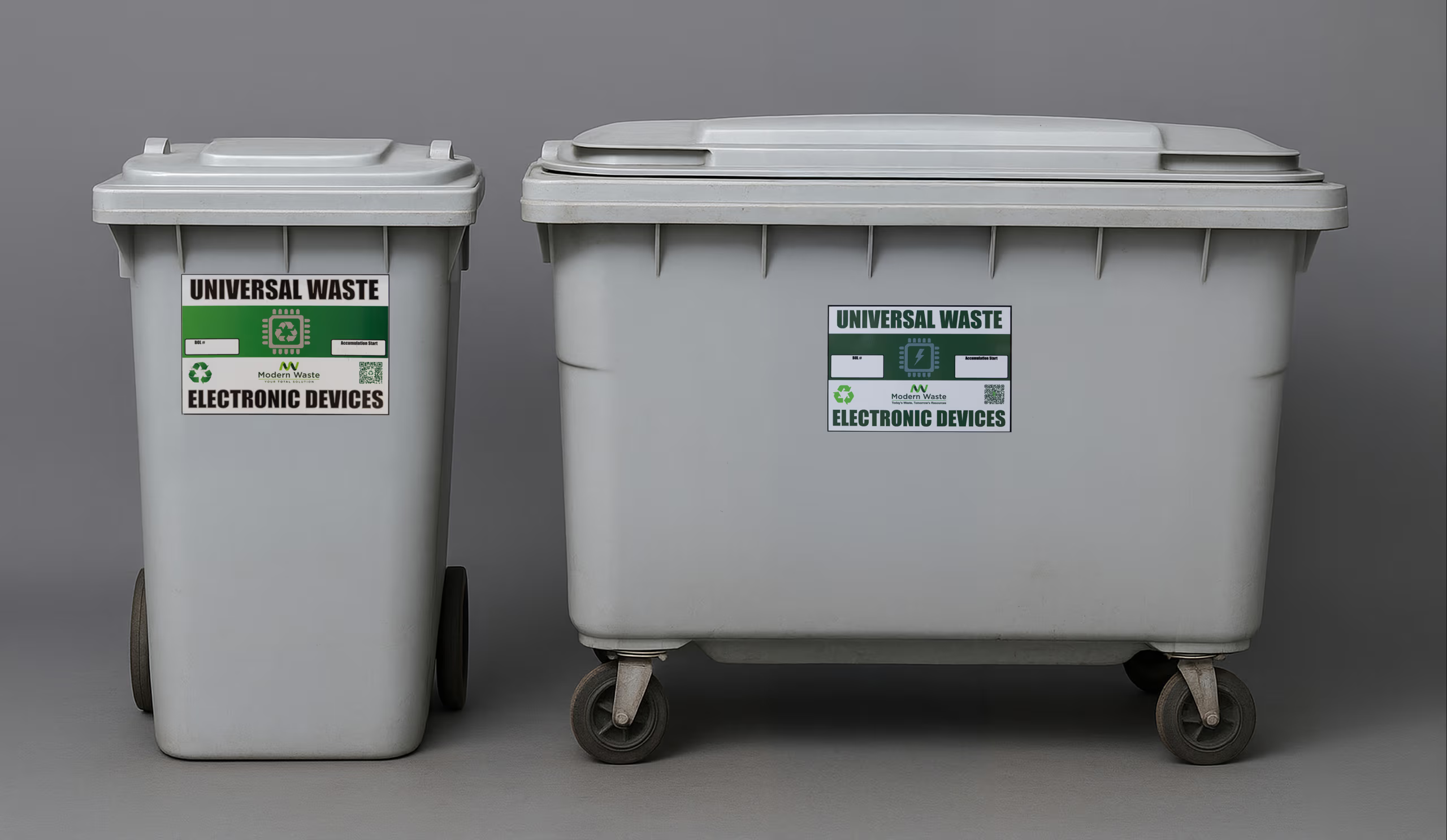
A compliant recycling program starts where material is first set aside. When a retired laptop, a spent battery or a burned-out lamp has no proper place to go, it ends up in a drawer, a storage room or the trash. Equipment is step one of our six-step program: every material your business generates gets a container that suits it and a label that meets California's requirements.
Modern Waste Solutions has been in business since 1999, working from its Sacramento facility. We supply the bins, carts, boxes and labels as part of the service and size them to what your site actually produces.
Most excess, obsolete or waste material can be reused or recycled when it's handled correctly. These materials carry different risks, though, and one mixed bin can't manage all of them:
- Some equipment still has resale value, and it keeps that value only if it's stored so it doesn't get damaged.
- Computers, phones, drives and copiers can hold confidential data, so they need a container you can account for until pickup.
- Batteries, fluorescent lamps and CRT monitors have hazardous properties that call for special handling and storage.
Batteries show why separation matters. Each chemistry goes through a different recovery process, and certain combinations are a safety hazard when they share a container. Lithium cells can short and ignite if they're damaged or stored badly. Our intake process sorts by chemistry as well, but the safest place to start is your own storage area.
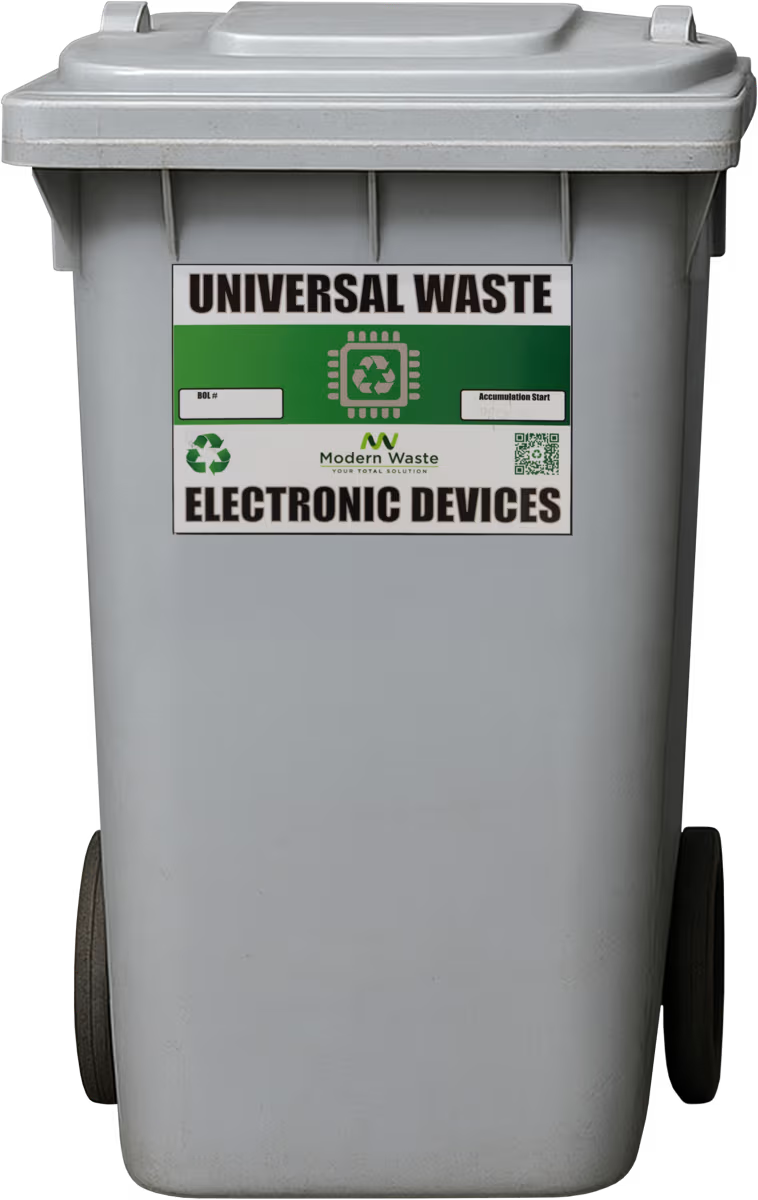
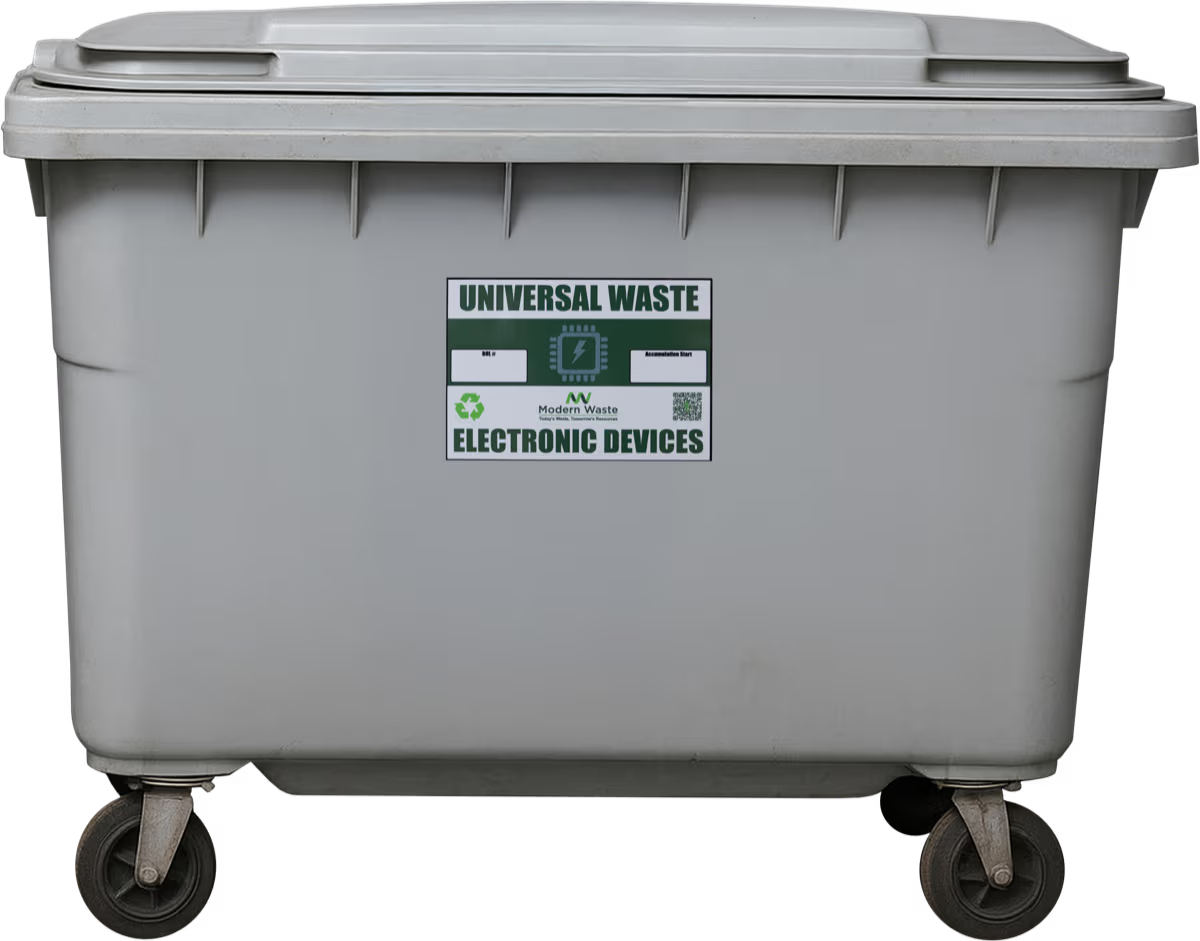
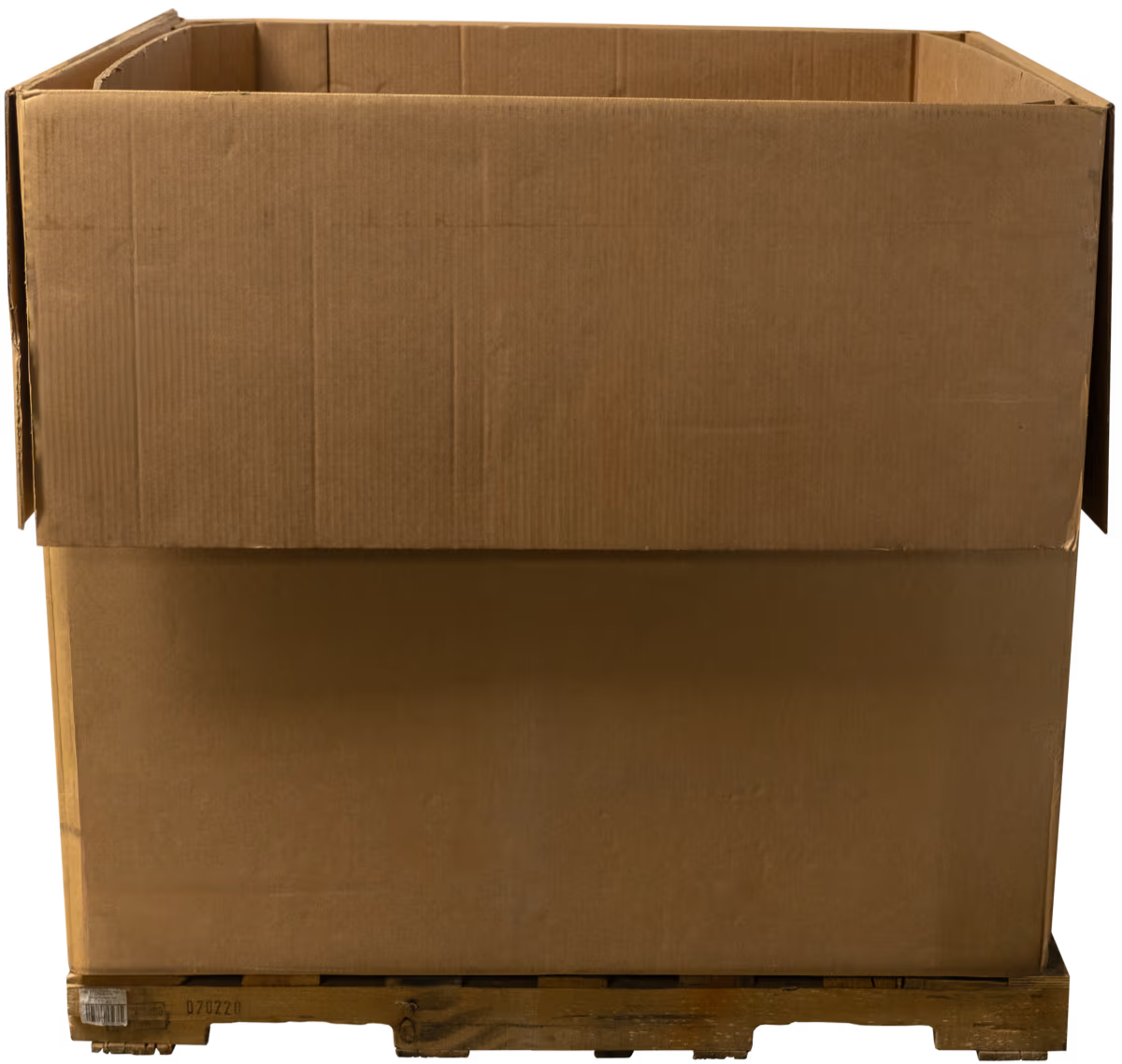
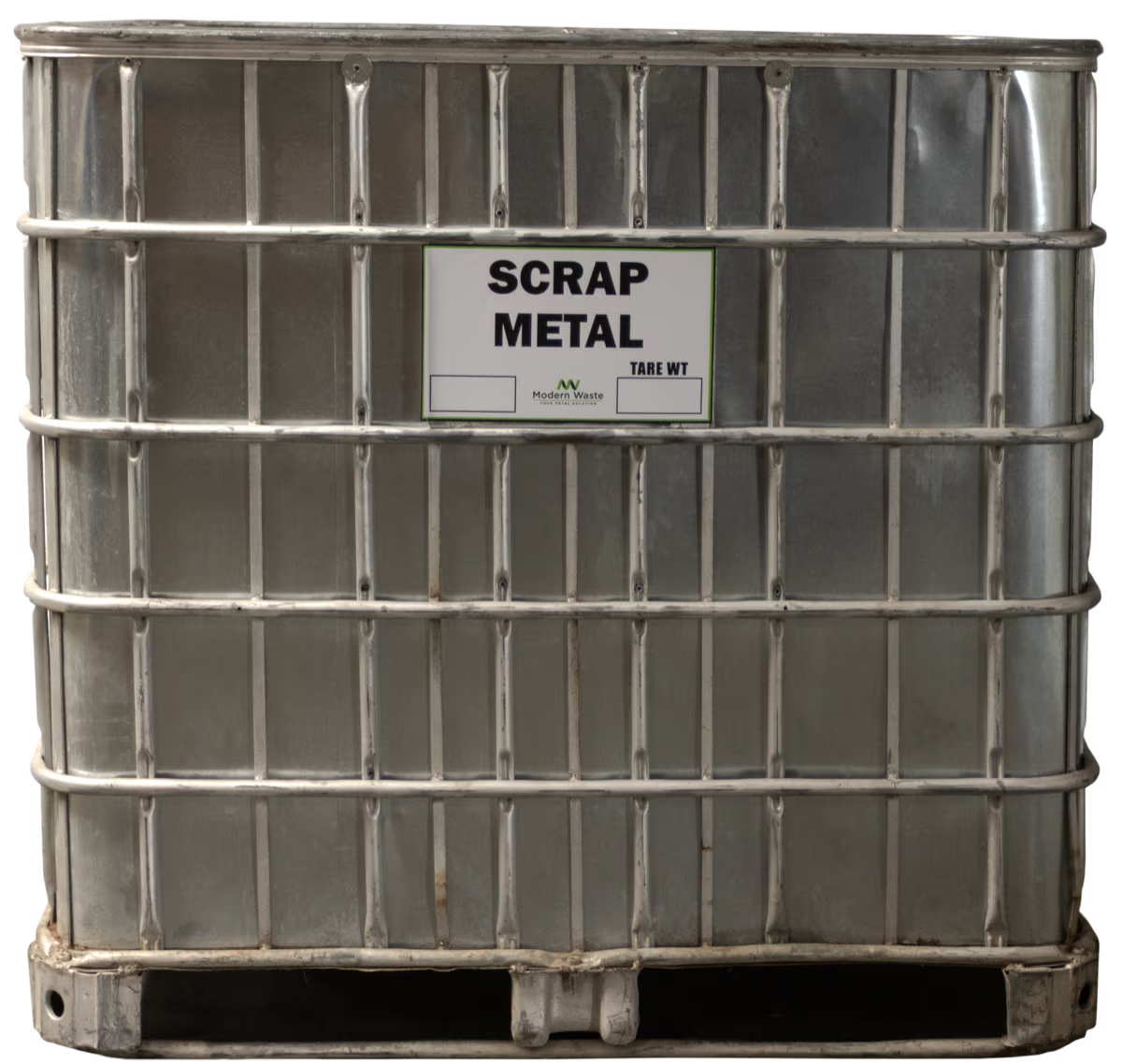
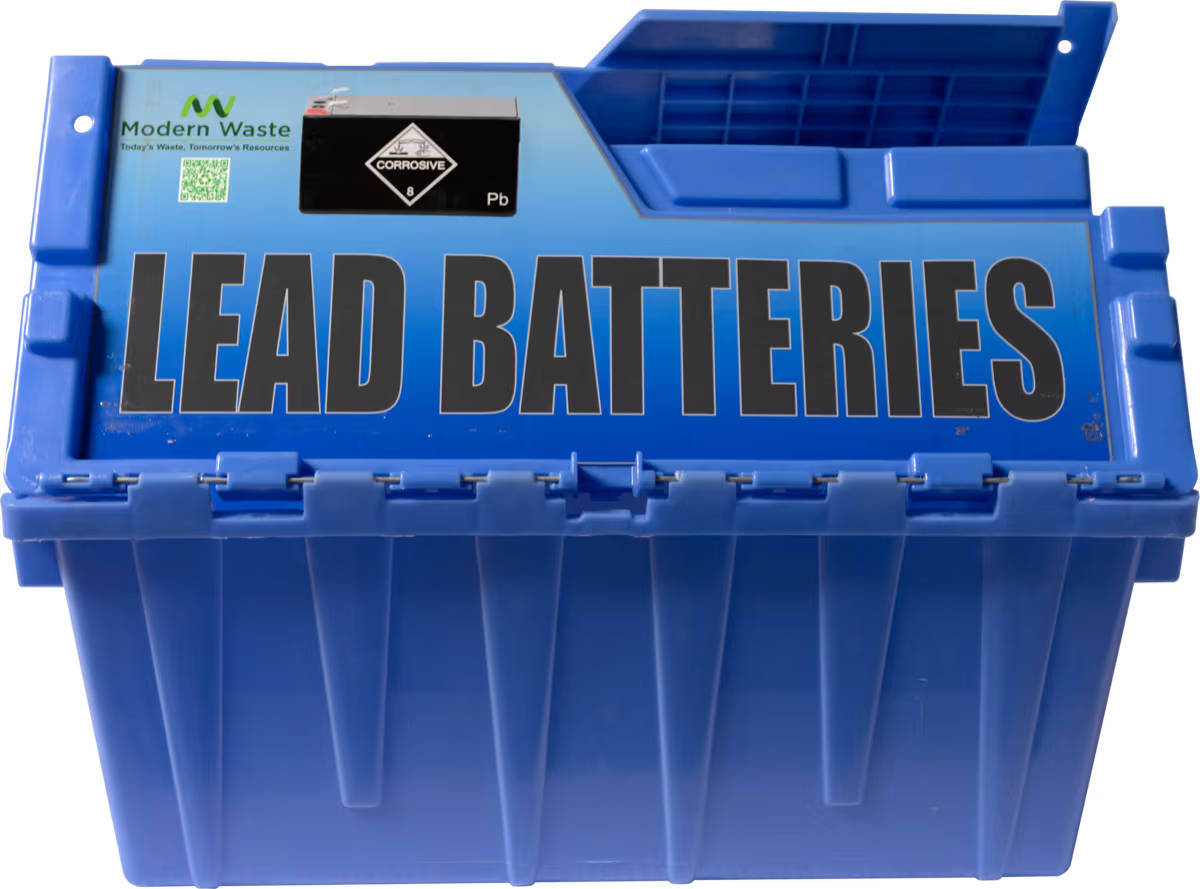
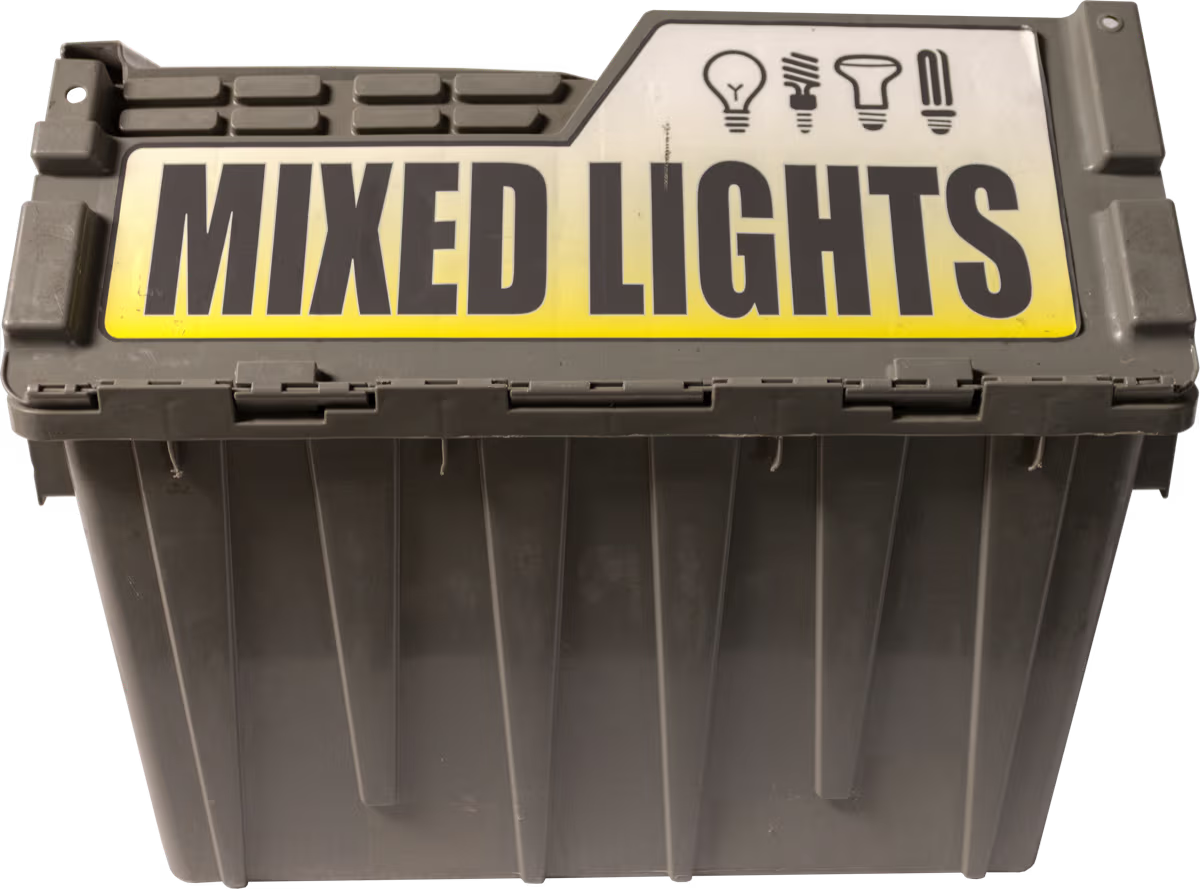
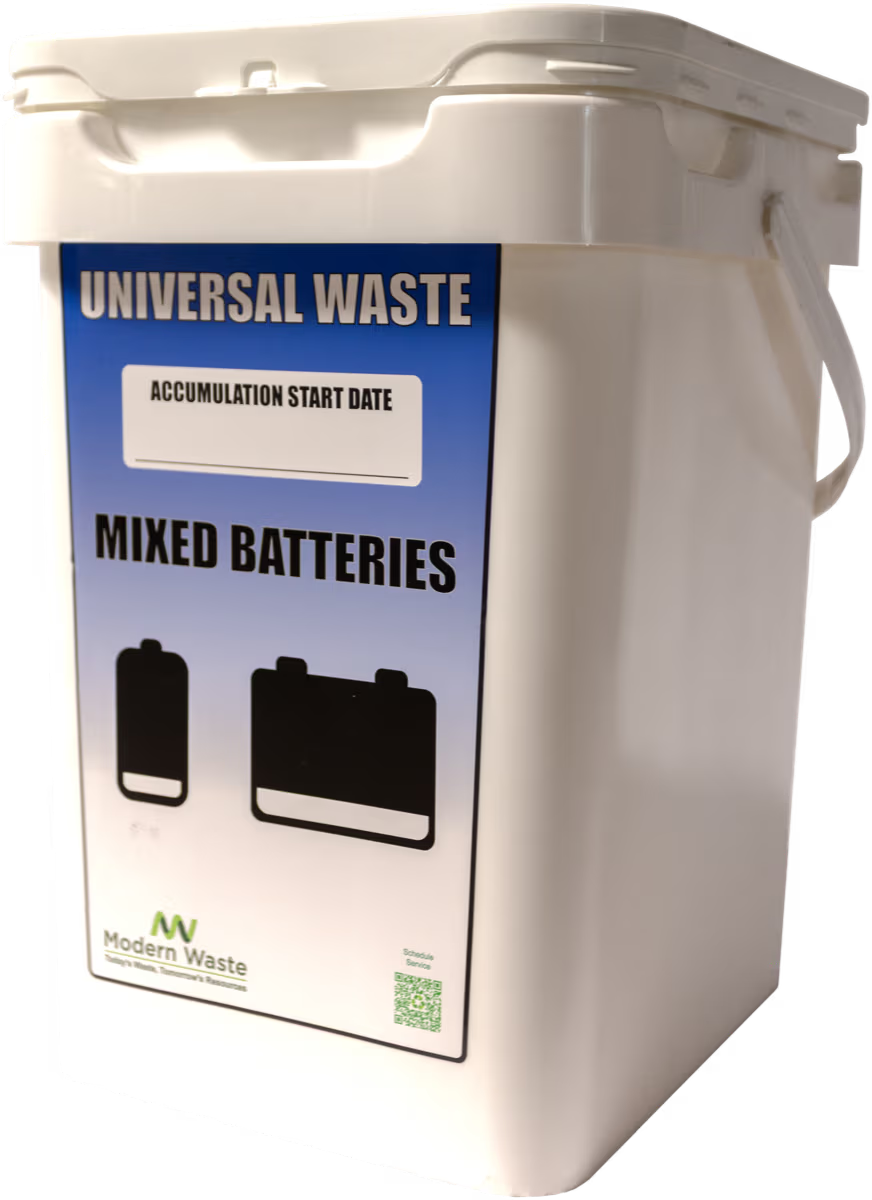
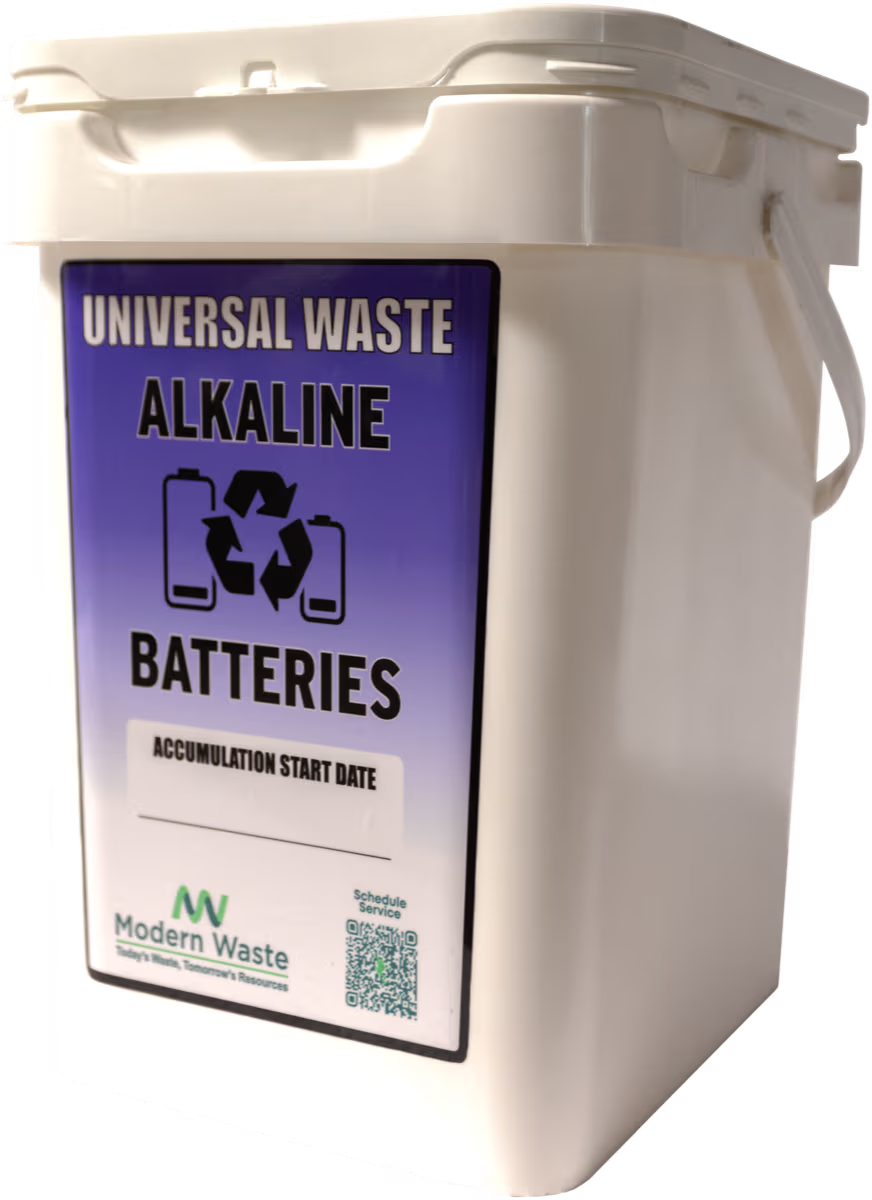
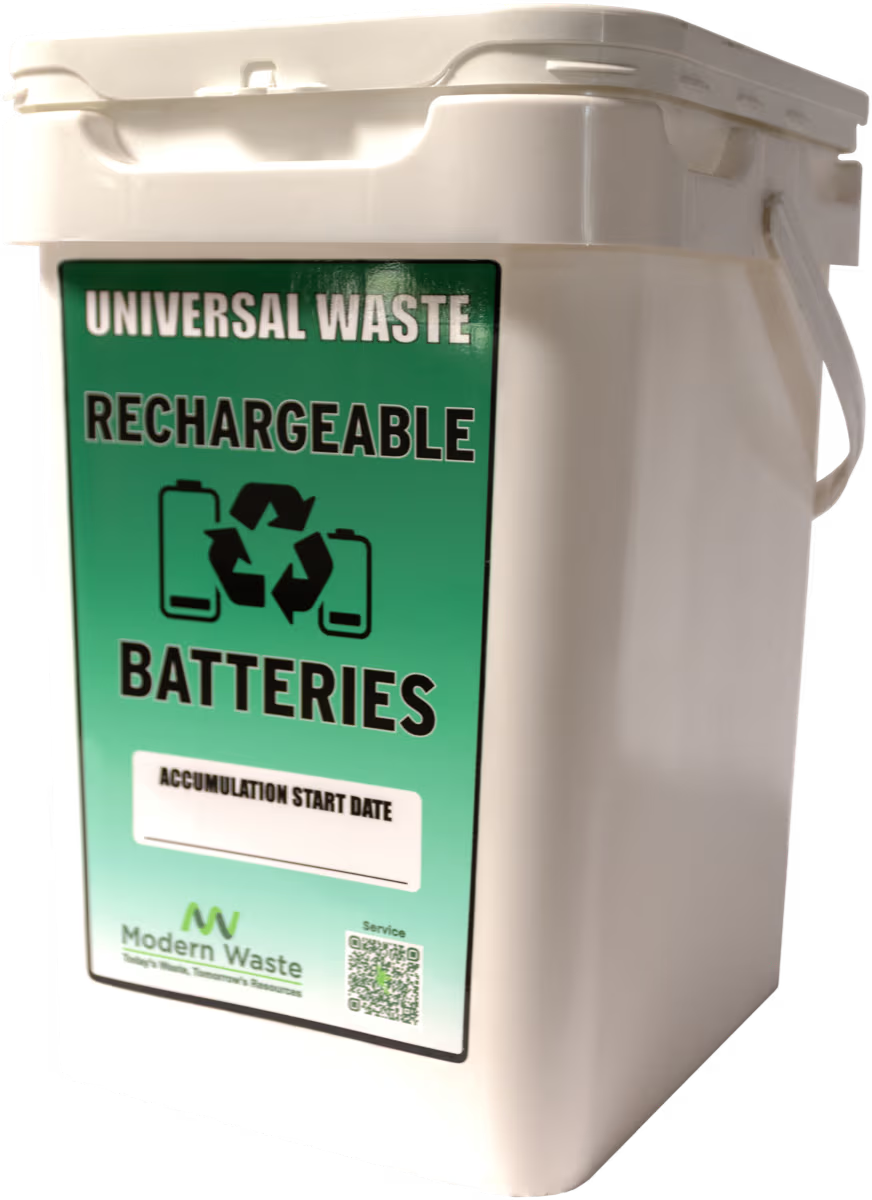
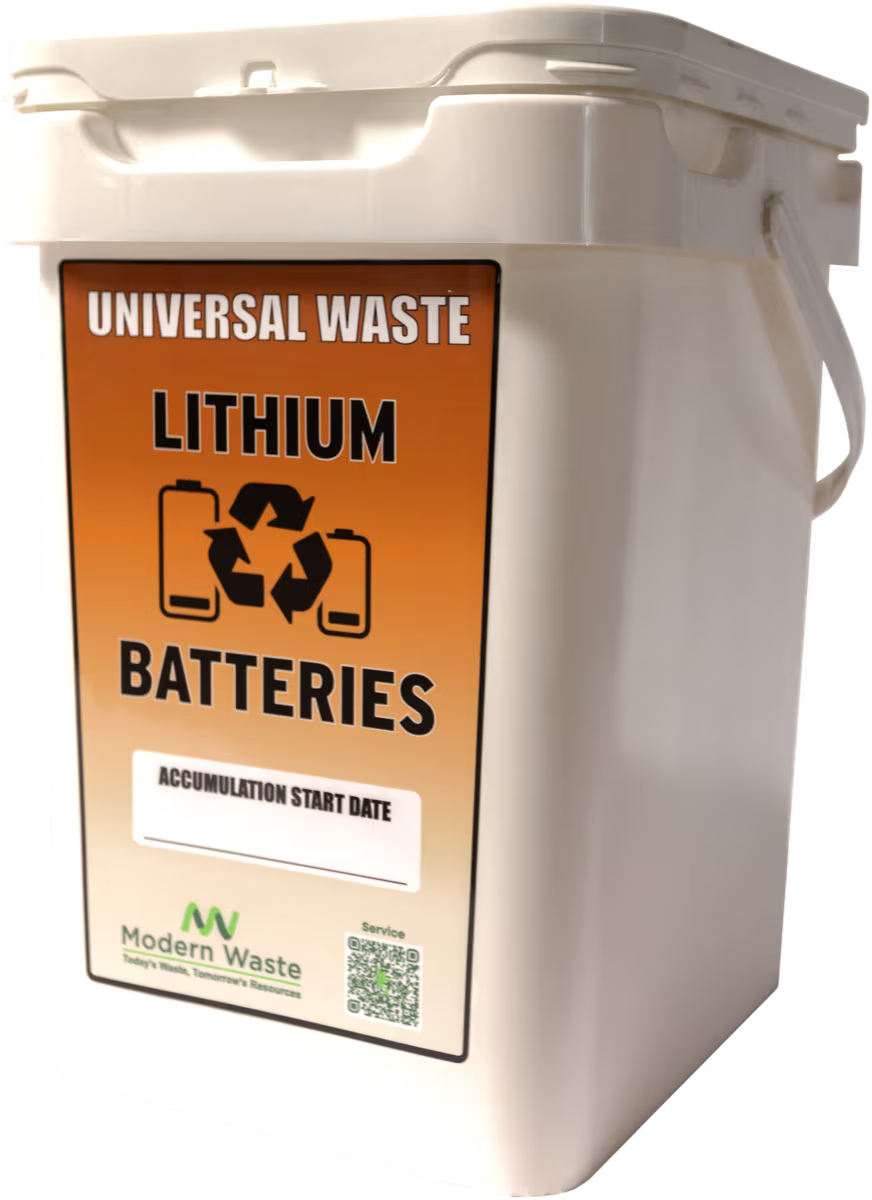
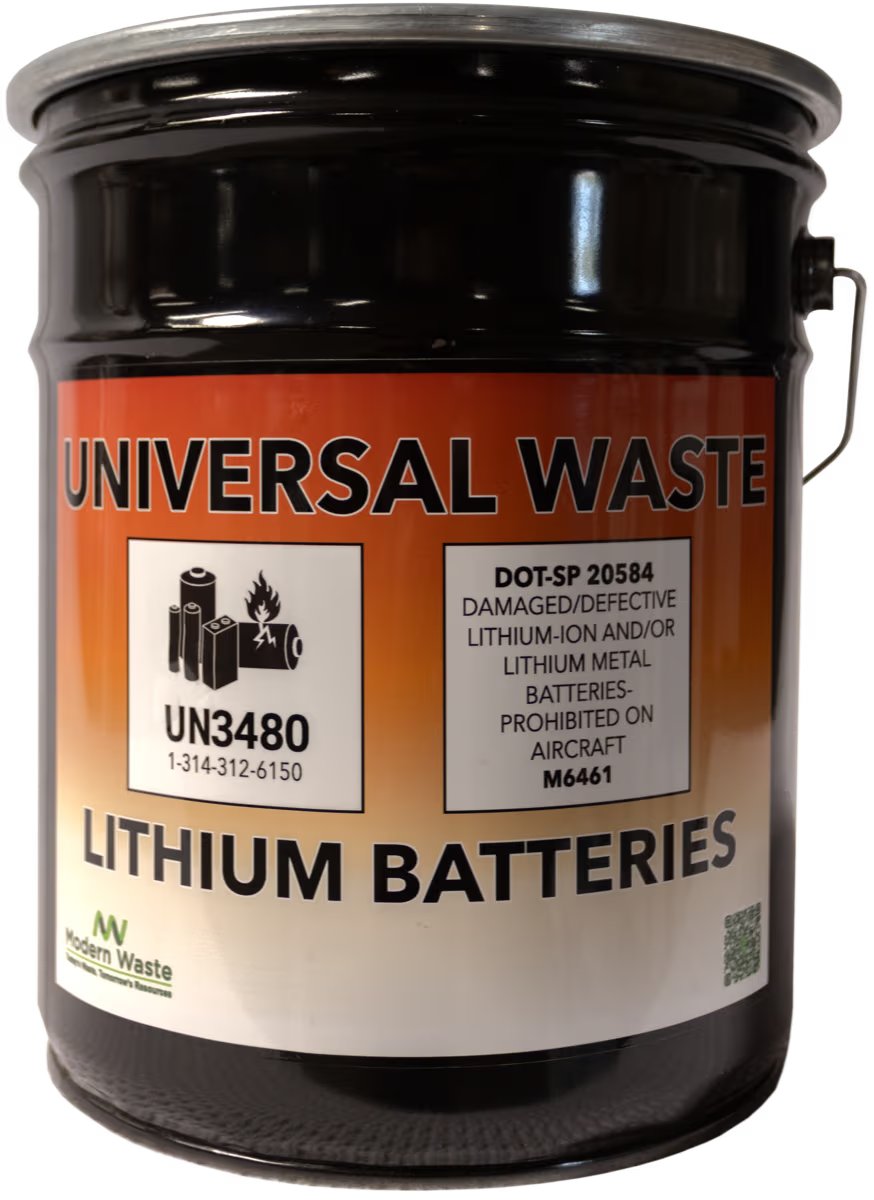
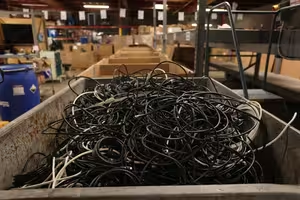
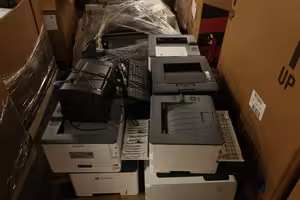
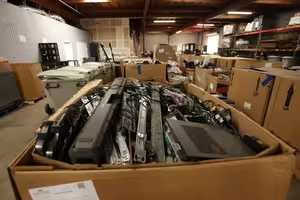
We bring the bins and containers your program needs, the labels that go on them, and specialized equipment for the way each material will be reused, recycled or destroyed. The containers pictured below are the ones we place most often. They range from 5-gallon buckets that each hold a single battery chemistry to 1.5 cubic yard gaylord boxes on pallets for bulk electronics. There are also 27-gallon tubs for lead-acid batteries and mixed fluorescent lights, and a metal cage for scrap metal.
Container size depends on your volume and your pickup schedule. An office on a recurring route may only need a cart and a few battery buckets, while a computer refresh or facility cleanout may call for pallets and gaylords for one collection.
In most cases businesses are responsible for sourcing their own containers and labels, and vendors that do provide them often charge extra. We provide them as part of the service.
Labeling is a legal requirement in California for many of these materials. Most discarded batteries, lamps that contain mercury and many electronic devices fall under the DTSC universal waste rules. Those rules require each container to be labeled or marked so its contents are clear, and you have to be able to show when accumulation began. At a minimum, each label should show:
- the type of material
- the date it was first stored
The labels we supply are made to meet these requirements. Dating the container when the first item goes in is one simple way to document the start date, and an inventory system works too. Federal and California rules also set time limits and shipment requirements that vary by handler category, so confirm the current thresholds for your business. A regular pickup schedule keeps material from sitting on site for long.
A few practices keep the storage area safe and ready for pickup:
- Keep battery chemistries in separate, labeled containers, and tape terminals or bag batteries individually when a short circuit is possible.
- Pull swollen, leaking or damaged lithium batteries out of routine collection and ask us for packing instructions.
- Keep fluorescent tubes whole, in their original boxes or a lamp container, and count them separately from ballasts.
- Stand CRT monitors upright on a pallet. Loose stacking is how tubes crack.
- Keep data-bearing devices in a container you control until pickup day.
- Store everything indoors or under cover, keep containers closed and in sound condition, and inspect the area regularly.
A rough estimate is enough to get started. It helps to know:
- which materials you generate, including battery chemistries, lamps, monitors and data-bearing devices
- approximate volume and how often it builds up
- how many locations need containers
- access details such as stairs, elevators, loading docks and parking
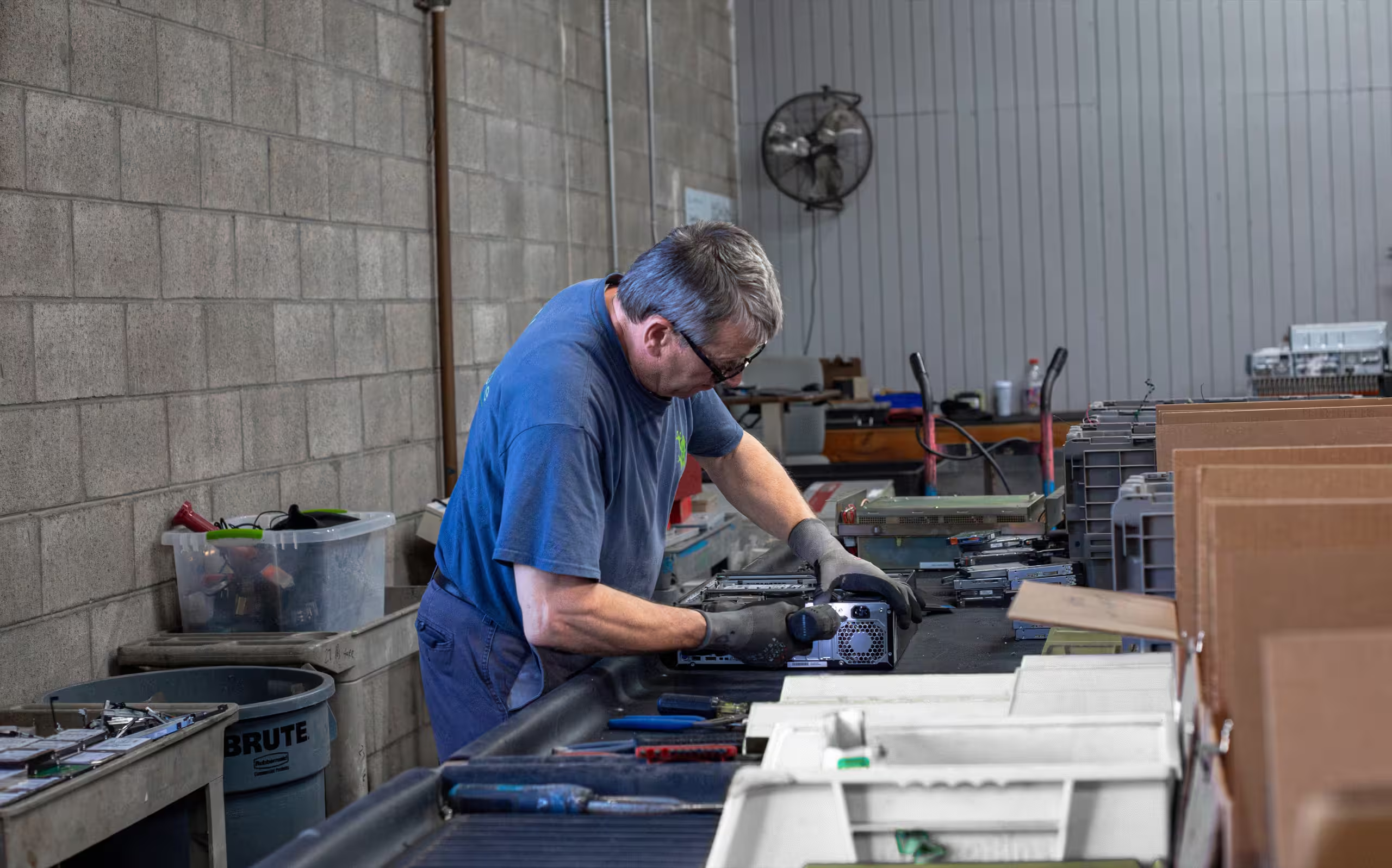
The same setup works whether you're starting battery recycling, collecting retired computers for IT asset disposition, or staging drives for on-site hard drive shredding. We match each container to its material and confirm the setup before the first pickup.
Next, our Field Service Managers train your staff on what goes in each container and which items must stay separate. When the containers fill up, our own crews collect them. If your volume, access or materials change, tell your contact and we'll adjust the containers to match.