

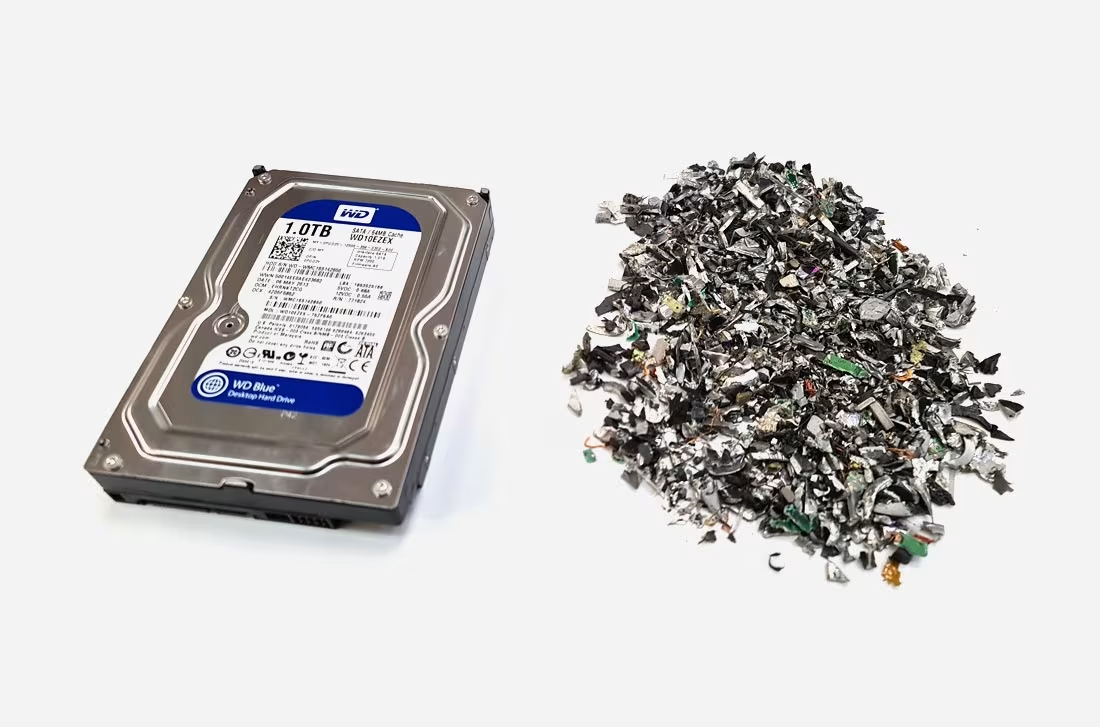
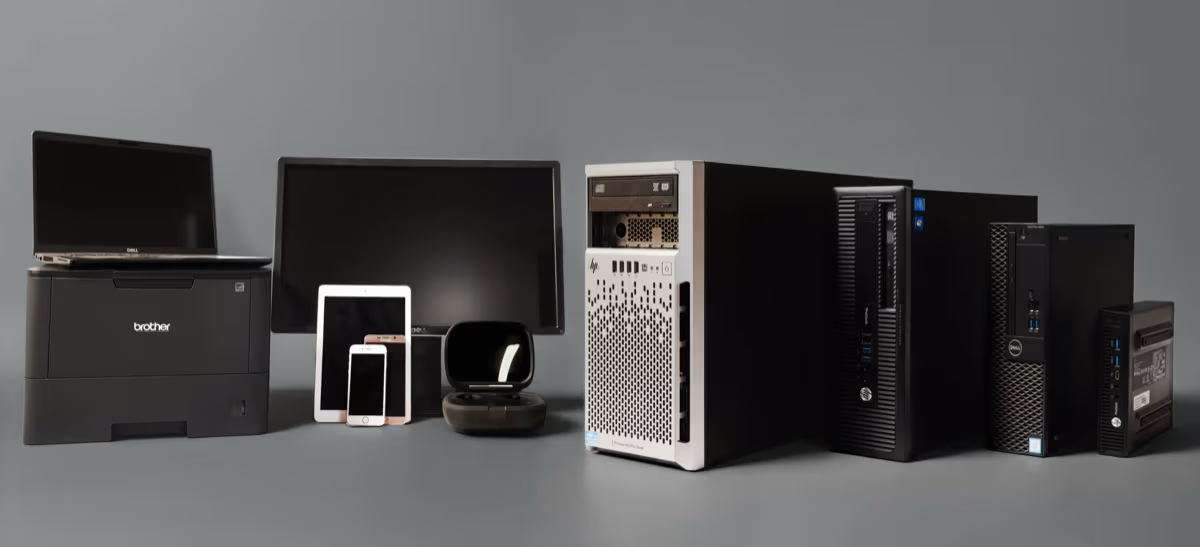
A closed matter rarely lives only on paper. The same documents sit on laptops, desktops, file servers, copier drives, phones, USB drives, discs and backup tapes. We destroy both forms: paper goes into locked containers and is shredded, and data-bearing media are logged and then shredded or wiped.
- Locked containers placed where staff discard confidential paper, collected on a set schedule
- One-time purges of closed-matter boxes from file rooms or off-site storage
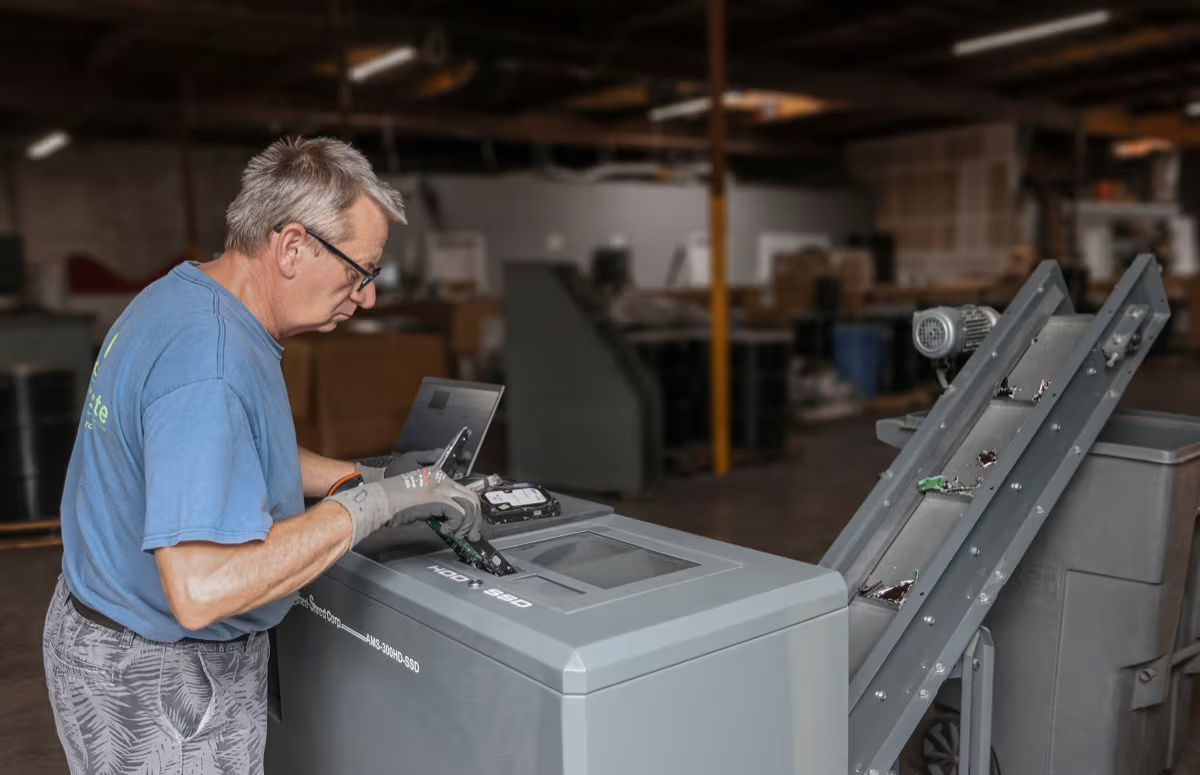
- Hard drives scanned by serial number and shredded, at your office if you want to witness it
- Shredded paper and drive fragments sent on for recycling
- A certificate of destruction after every service
The firm decides what may be destroyed. Records under a legal hold or still inside their retention period should never reach a container, so have the records owner approve each purge. Our certificates then give you a dated record of what was destroyed and how.
Firms combine secure data destruction, on-site hard drive shredding and e-waste recycling for retired office equipment. Our work runs under ISO 9001, ISO 14001 and ISO 45001 management systems. Request a quote for recurring service or a one-time purge.

Law firms retire two kinds of records at once: closed-matter paper files, and the laptops, desktops, copiers, phones and backup media that hold the same information. We collect paper in locked containers and shred it, log drives by serial number and shred them on-site or at our facility, and recycle the office electronics and batteries on the same pickup. Every service ends with a certificate of destruction for the firm's retention records.
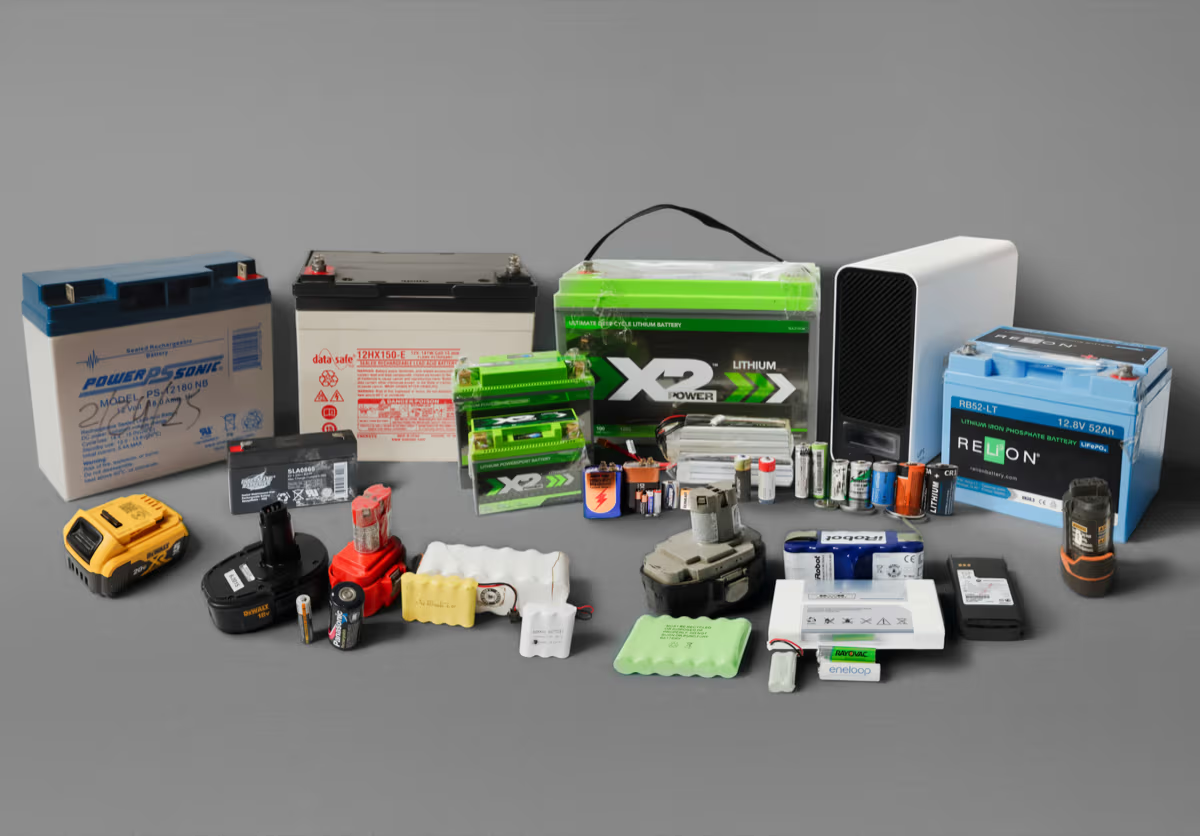
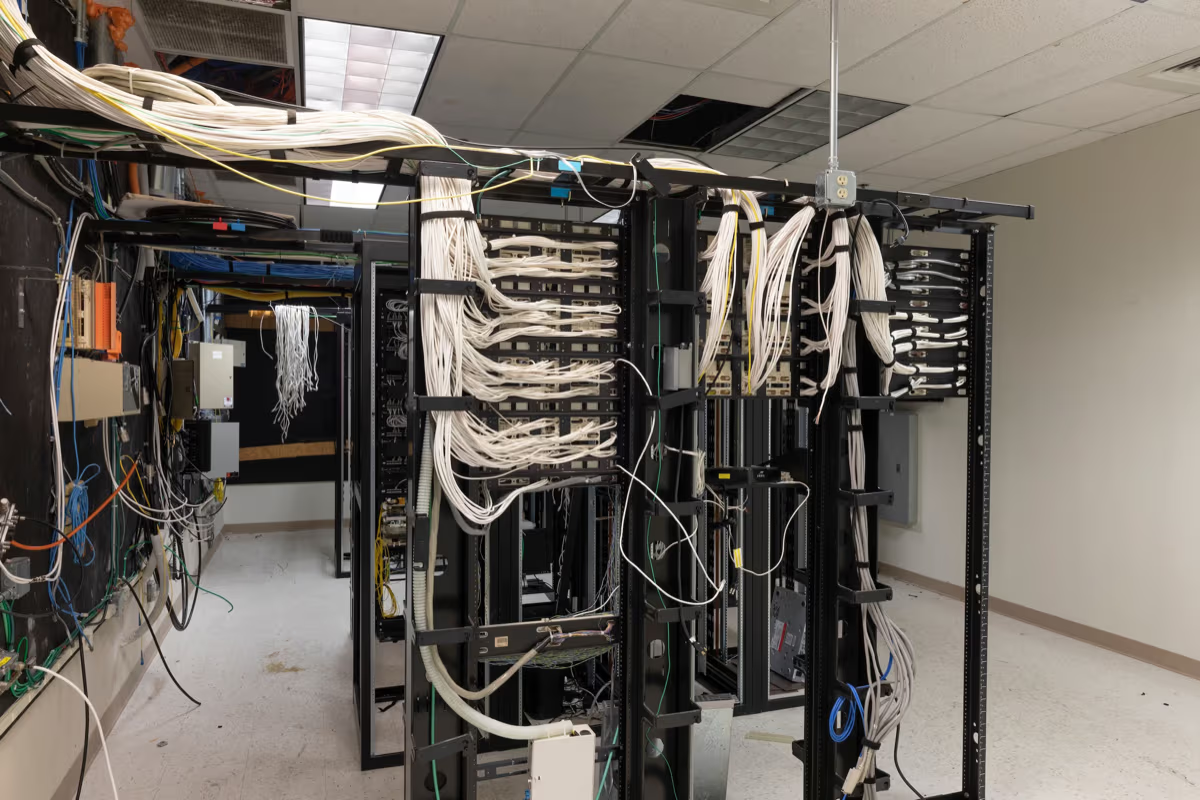


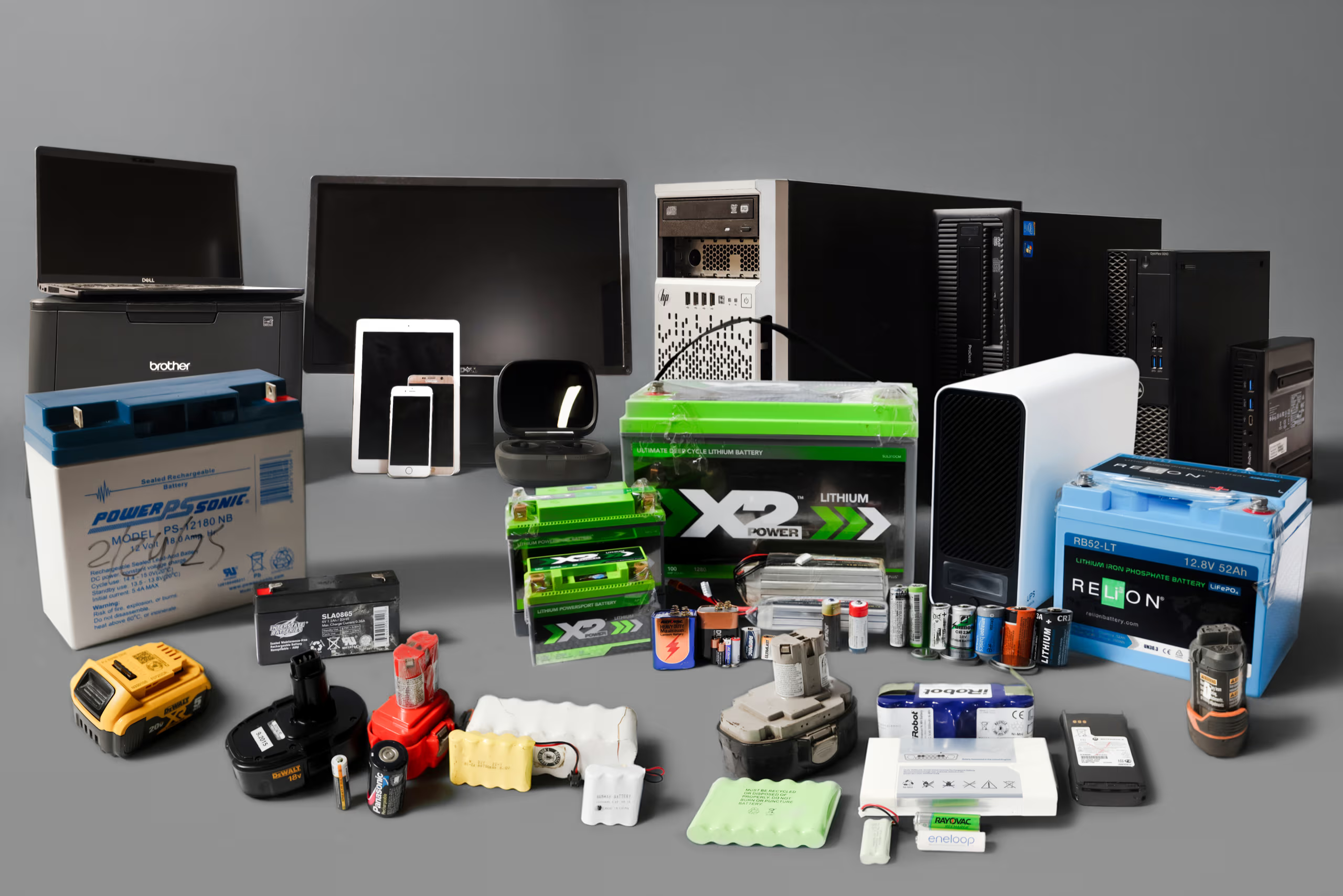

Simplify your compliance and disposal process with bundled recycling services that handle both electronic devices and batteries in one streamlined solution.

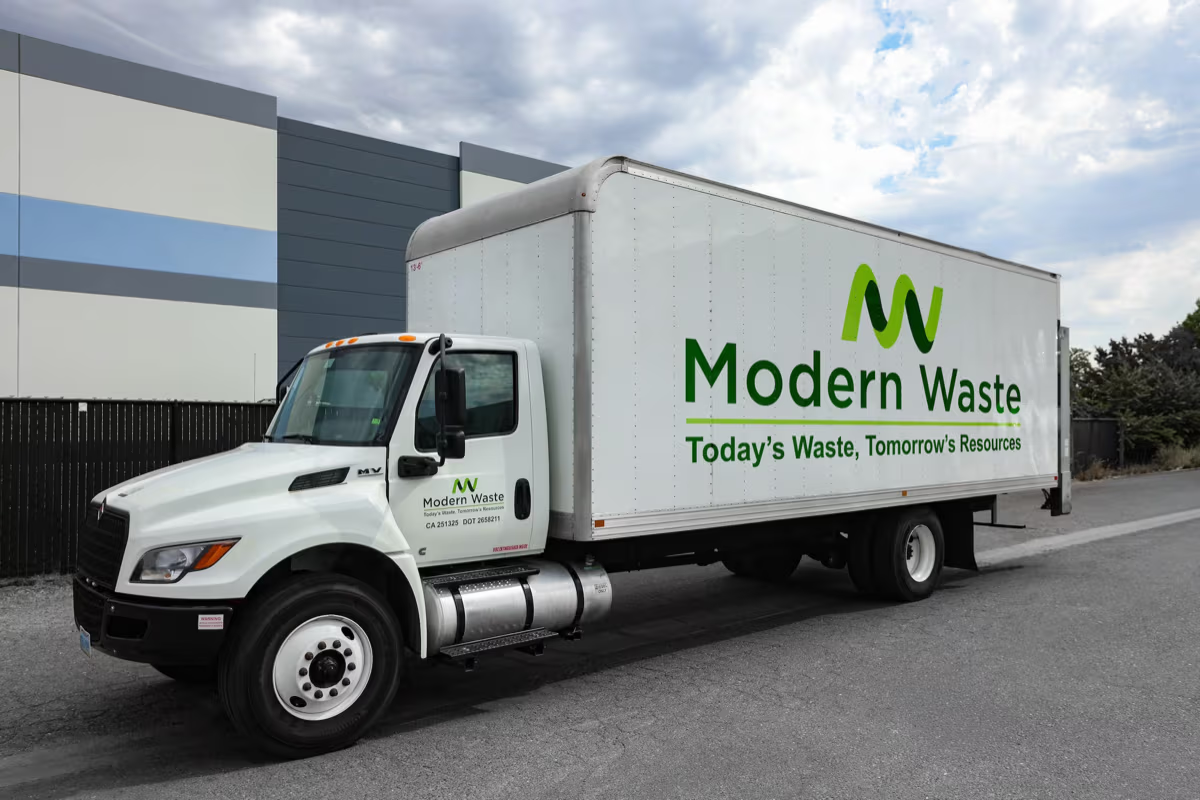
Our scheduled, route-based pickups cover all major regions of California—ensuring efficient, on-time service no matter where you operate.
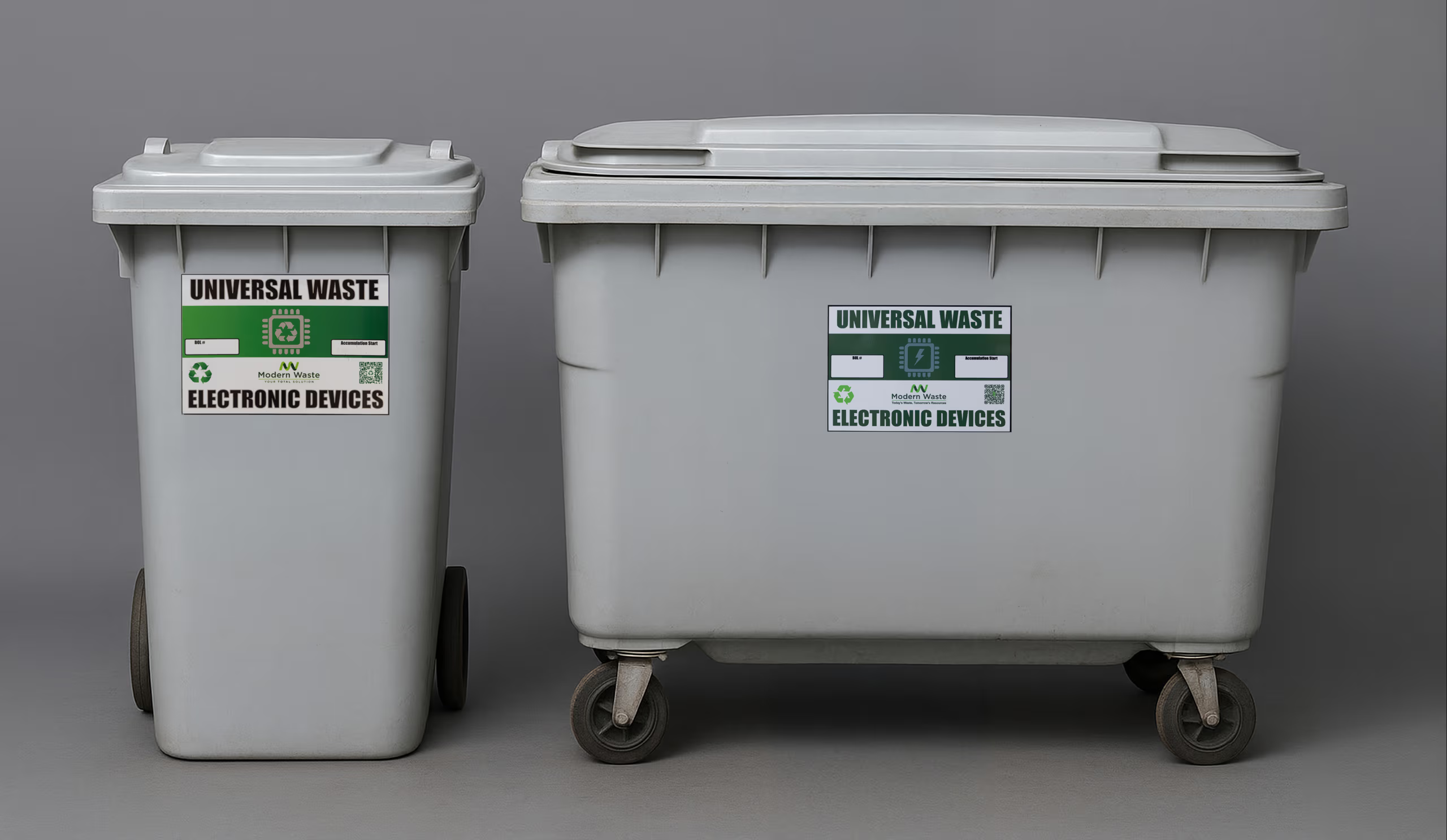
We provide clearly labeled, tamper-resistant containers to ensure safe and compliant collection of electronic waste and batteries at your location.

Modern Waste Solutions has served businesses and communities across California with dependable, environmentally responsible recycling solutions for over two decades.
We adhere to all California and federal regulations, ensuring your electronic and battery waste is managed with complete transparency and environmental responsibility.

Reviews
A little bit off the beaten track in Natomas, but Modern Waste quickly and efficiently helped me recycle my broken Lithium Iron Phosphate batteries at a reasonable $/lb fee (Sac county e-waste will not accept these items). Ramiro and Vincent were very friendly and helpful.

Chris was awesome! He came in and picked up all of the e-waste we had ready for him. He was polite and professional throughout the entire process. He handled the equipment with care, including the site equipment that was already in place. I am very happy with his service and appreciate the great job he did.

Aaron and Vincent were awesome, excellent customer service!

Great guys, excellent customer service, highly recommend!

Polite, quick and easy.

Chris from modern waste was the most outstanding respectful person I ever met my life when he was done he offered to sweep the floors. He offered so much even though he was limited on time he went out of his way and he’s over beyond best guy I ever met thank you so much for your service services Dan ITG.

We have answers.

Confidential files stay in locked containers from the time staff discard them until they are shredded, and each service ends with a certificate of destruction for the firm's records. Hard drives and other media are logged by serial number before they are destroyed.
Technician perspective: Have the firm's records owner approve destruction before anything goes into a secure container. Operational security cannot undo a retention or legal-hold decision made too early.
The firm decides what may be destroyed, and we control what happens after that decision: locked containers, scheduled collection by our own drivers, shredding, recycling of the shredded paper, and a certificate of destruction after each service.
Attorney-client privilege, legal holds and the retention schedule stay with the firm. We run the destruction side under ISO 9001, ISO 14001 and ISO 45001 management systems, and each certificate gives you a dated record to file with the matter or the retention log.
Firms use the same six steps whether they need a regular container swap or a single purge of closed matters.
- Equipment: we place locked containers for paper and a separate container for drives, phones and other media.
- Training: staff learn what goes in each container and what must stay out, such as files under a legal hold.
- Pick-up: containers are collected on a regular schedule or during a one-time purge.
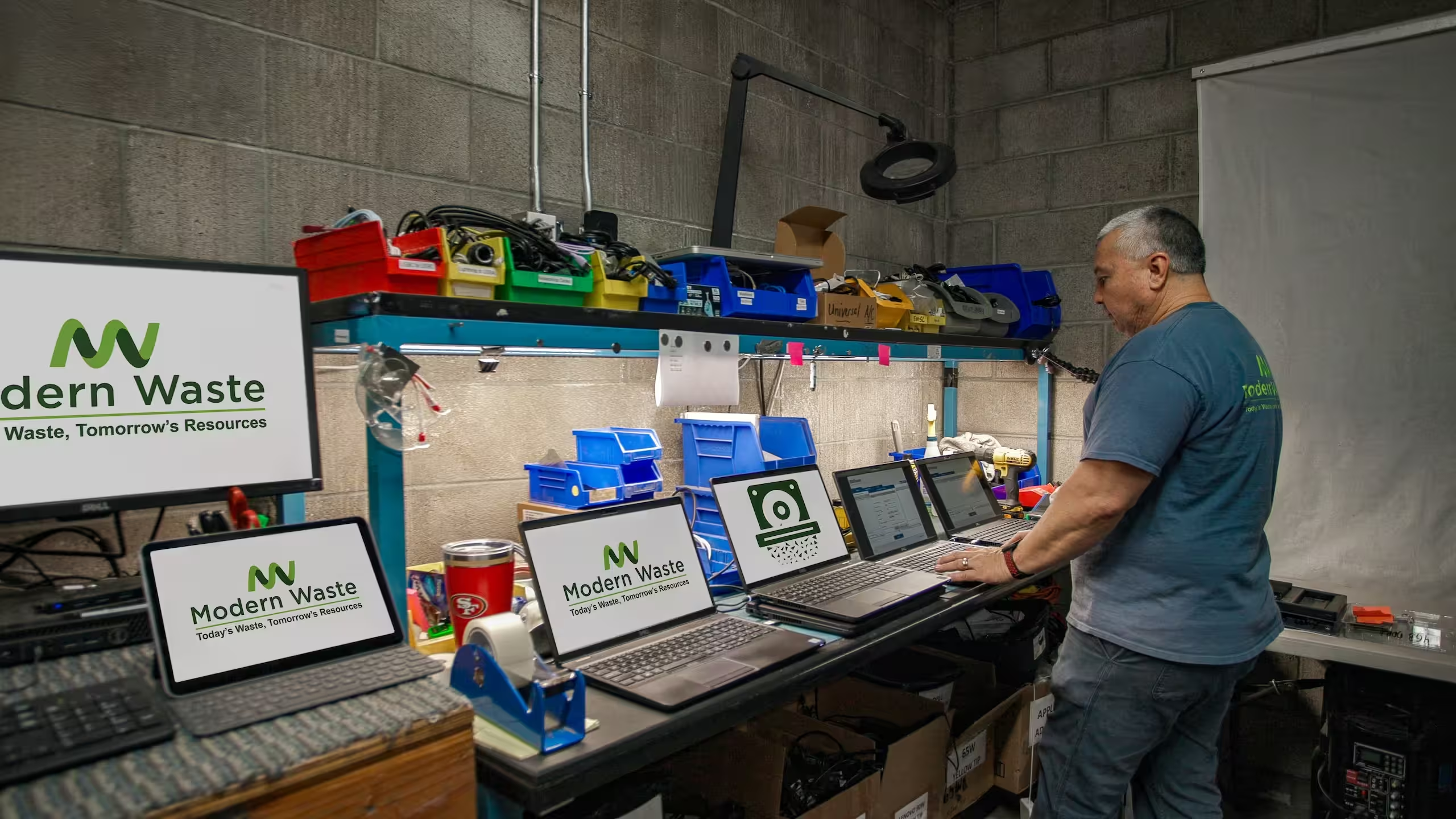
- Tracking: paper is recorded by container or weight, and drives by serial number.
- Processing: paper and media are shredded, and the shredded material is recycled.
- Reports: you receive a certificate of destruction for each service.
Most firms pair paper shredding with destruction of the electronic copies of the same files. A service can include:
| Service element | Typical scope |
|---|---|
| Secure containers | Collection equipment suited to the approved volume and service plan. |
| Pickup | Scheduled or project-based collection under documented handling controls. |
| Destruction | Paper and approved media are destroyed using the agreed method. |
| Material recovery | Shredded recyclable material is directed to an appropriate recovery path. |
| Documentation | A certificate of destruction and related service records are provided as agreed. |
Office electronics and batteries can be recycled on the same pickup. Copiers and printers often contain drives, so list them with the media.
Legal document shredding is the controlled destruction of paper records that hold client, matter, personnel or financial information, once the firm has approved their disposal under its retention policy.
For most firms the paper file is only half of the record. The same matter may sit on laptops, file servers, backup tapes, USB drives and discs, so a complete program covers those media as well. Office trash and recycling bins are not secure for either.
Closed matters, old personnel files and billing records pile up quickly. A shredding program deals with the risks that come with them:
- Confidential client information remaining in ordinary trash or unsecured storage.
- Premature destruction that conflicts with a legal hold or retention requirement.
- No certificate or chain-of-custody record showing how authorized files were destroyed.
It frees space as well. Boxes of closed files can be purged in one project and then kept under control with scheduled pickups.
Ask the vendor the questions a client would ask about your own security:
- How is the chain of custody kept? Look for locked containers, secure transport and a record for each pickup.
- Can the vendor destroy drives and other media as well as paper, and can drive destruction be witnessed at your office?
- What proof do you receive? A certificate of destruction should follow every service.
- Is the pricing clear? The quote should list container counts, service frequency and any one-time purge charges.
- Are the vendor's certifications current? We hold ISO 9001, 14001 and 45001.
Settle the records questions inside the firm first, then the logistics.
- Confirm that records are eligible for destruction and not subject to a legal hold.
- Estimate volume and choose recurring pickup or a one-time purge.
- Define container placement, access restrictions, witnessing needs, and certificate recipients.
- Include electronic media in the scope when a matter file exists in both paper and digital form.
Tell us the number of offices, a rough box count for any purge and who should receive the certificates, and we can quote a recurring schedule or a one-time project.
- Law firms clearing closed-matter files and administrative records.
- Corporate legal departments and paralegal teams that run retention schedules.
- Firms merging, moving or closing an office, where files and computers leave at the same time.
- Solo practitioners and small offices that need a documented purge more than a standing container.
Content matters more than volume. One cabinet of client files carries the same duty of confidentiality as a room full of boxes.