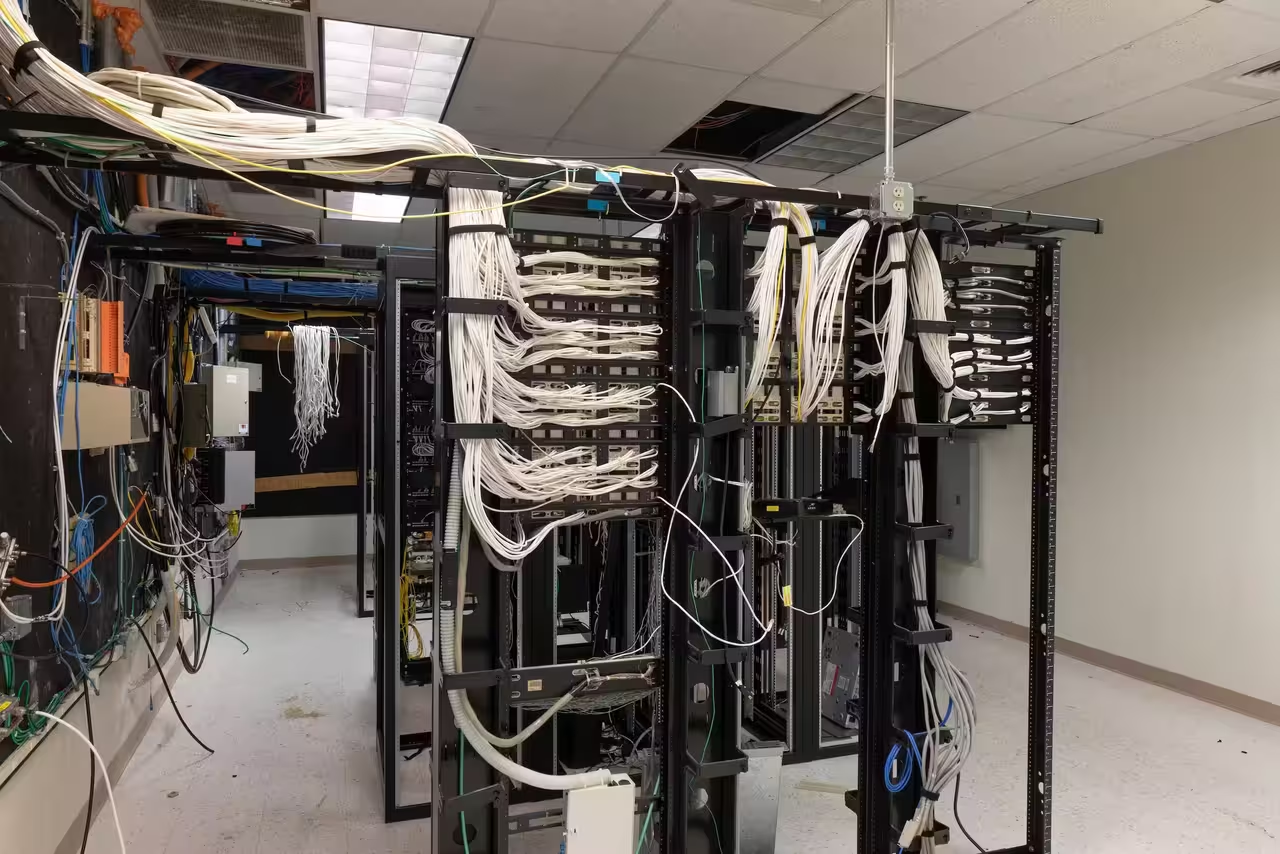
Professional Data Center & UPS Decommissioning Services

Decommissioning a data center or UPS (Uninterruptible Power Supply) system is a complex and sensitive process that requires expertise, planning, and strict adherence to compliance and safety standards. At Modern Waste, we provide full-service decommissioning designed to help businesses safely retire, recycle, or relocate infrastructure components with minimal disruption.

What's Included in Our Decommissioning Service?
  • Site Assessment & Project Planning – We begin with a full audit of your data center or UPS system to develop a custom plan tailored to your facility's infrastructure, timeline, and compliance needs.
  • Secure Equipment Removal – We professionally disconnect and remove servers, UPS units, batteries, PDUs, network gear, and cabling with a focus on safety and data security.
  • Certified Data Destruction – Hard drives and data-bearing devices are shredded or wiped in accordance with ISO 9001 standards. Certificates of destruction are provided for full audit trails.
  • Environmentally Responsible Disposal – All decommissioned equipment and components are recycled or disposed of in accordance with EPA, state, and local regulations to prevent environmental harm.
Why Choose Modern Waste?
  • Experienced Technicians – Our team has years of hands-on experience working in live data centers and commercial power environments.
  • Full Chain-of-Custody – We maintain complete documentation from removal through final recycling or disposal to ensure transparency and accountability.
  • Minimized Downtime – We schedule around your business needs to complete decommissions quickly, cleanly, and without disruption.
Ideal For:
  • IT departments retiring infrastructure
  • Corporate office relocations
  • Colocation providers closing data halls
  • Facilities upgrading to modern systems

Let Modern Waste simplify the process and ensure your decommissioning project is done right. Contact us today for a free consultation and quote.

UPS and Backup Power Battery Handling

UPS systems are only part electronics — the batteries inside are their own hazard category. Most legacy UPS units run on sealed lead-acid (VRLA) cells, while newer systems increasingly use lithium-ion packs, and the two chemistries can't be handled the same way. When we pull batteries during a decommissioning job, they go through the same certified process used for our standalone battery recycling service rather than being shipped out with general electronics — which matters both for safety and for staying compliant with hazardous-materials handling rules.

Rack, Cabinet, and Networking Gear Recovery

Beyond the servers and UPS units themselves, a full data center decommission typically includes:

  • Server racks and cabinets, disassembled and removed
  • Structured cabling, patch panels, and networking switches
  • Power distribution units (PDUs) and busway components
  • Cooling and airflow equipment tied to the retired footprint

Every component is asset-tagged before removal so the chain-of-custody documentation matches what actually left your facility — not just what was on the original inventory list. Hard drives and any data-bearing storage pulled during the process are handled under our secure data destruction standards, with certificates issued separately from the general equipment recycling paperwork.

Planning a full decommissioning project? See our ITAD & Data Center Decommissioning Program for a fast quote.

Service Areas We Cover

Data center and UPS decommissioning projects run throughout California and parts of Nevada, including Sacramento, Bakersfield, Fresno, Modesto, Clovis, Carmichael, Rocklin, Placerville, Orinda, Pleasant Hill, Los Banos, Goleta, and Sparks, NV. See the full Service Areas list for coverage near you.
Google reviews

4.8 out of 5

The average of 123 reviews our customers have left on Google.

This was our first time working with MWS and they were amazing! Quick response time, efficient, and friendly. Ivan was the team member who was on site for the pickup, and he was great. He worked quickly, is very knowledgeable, and is so kind. It was so easy working with him. We are looking forward to using MWS for our E-waste and Universal waste needs in the future. - Sacramento City College Sustainability

Sophie Wheeler on Google
  • Josh Bardet

    A little bit off the beaten track in Natomas, but Modern Waste quickly and efficiently helped me recycle my broken Lithium Iron Phosphate batteries at a reasonable $/lb fee (Sac county e-waste will not accept these items). Ramiro and Vincent were very friendly and helpful.

  • Gretchen Langevin

    We had another vendor cancel on us last minute & Modern Waste jumped into action & was able to help us with ewaste & critical document shredding overnight. Team was helpful, professional & got the job done quickly & efficiently. We were able to complete an office move out/shut down in a day with their help! Highly recommend this business!

    Response from Modern Waste Solutions ·

    Thank You Gretchen! We are happy to make a difference.

  • Shawnna Borremans

    Chris was awesome! He came in and picked up all of the e-waste we had ready for him. He was polite and professional throughout the entire process. He handled the equipment with care, including the site equipment that was already in place. I am very happy with his service and appreciate the great job he did.

  • E O

    I needed hard drives on some old laptops destroyed so any old personal information can't be stolen. The guys there were friendly and helpful and fast. Thanks Pavel and Vincent. Thanks Modern Waste for doing a helpful fast service to us.

    Response from Modern Waste Solutions ·

    We truly appreciate your generous review! 😊 It's fantastic to know our team was able to assist you with your hard drive destruction needs efficiently. We are so glad to hear you had a pleasing experience with us. Our door is always open for all your future recycling needs!

Got questions?
We have answers.

Data center decommissioning is a managed project for retiring, relocating, or recycling servers, storage systems, racks, network hardware, UPS units, batteries, PDUs, and cabling. It connects technical shutdown planning, data disposition, physical removal, material recovery, and closeout documentation. The scope must distinguish live infrastructure from equipment already approved for release.

A professional data center and UPS decommissioning project defines what is accepted, who authorizes release, how material is collected, what treatment will be used, and which records will be returned. That makes the service an accountable disposition process instead of simple removal.

We confirm the scope before scheduling so equipment, data, regulated components, and documentation follow the correct path from the start.

Data Center And Ups Decommissioning is intended for organizations that need more control than an ordinary trash or scrap pickup can provide. The need may come from data sensitivity, safety, regulated components, project scale, or audit requirements.

  • Enterprises retiring or consolidating data center infrastructure.
  • IT and facilities teams closing data halls, server rooms, or colocation space.
  • Organizations replacing UPS systems, batteries, racks, and network equipment.

A project does not need to be large to justify a documented service. A small load with confidential data or special handling can carry more risk than a large load of ordinary recyclable material.

A structured data center and UPS decommissioning program closes the gaps that appear when obsolete material is stored indefinitely or released without a defined treatment plan. It assigns responsibility for custody, safety, processing, and closeout.

  • Sensitive data remaining on released storage media.
  • Uncoordinated removal causing downtime, access conflicts, or safety exposure.
  • Servers, batteries, cabling, and power equipment entering the wrong recovery or disposal stream.

The result is a traceable business process with fewer last-minute surprises. It also gives facilities, IT, safety, and compliance teams a common record of what left the site and what happened next.

Safety and compliance are planned before anyone touches a rack. We review the site and the asset list with your team, confirm who can authorize each release, and agree the work sequence and access rules. Your team keeps control of production shutdown, retention and legal holds.

UPS batteries are handled as a hazard of their own. Lead-acid (VRLA) and lithium-ion cells are separated and sent through our battery recycling process instead of shipping with general electronics. Drives go through our secure data destruction process, and the remaining equipment is recycled in line with EPA, state and local rules. The work runs under our ISO 45001 safety and ISO 14001 environmental management systems.

Trust in data center and UPS decommissioning comes from trained field work, clear custody, documented processing, and records that match the approved scope. We connect collection and treatment rather than treating pickup as the end of the service.

Technician perspective: Our technicians recommend freezing the approved asset list and marking live, reusable, destruction-only, and recycling assets before field work starts. A single change-control contact should authorize exceptions so the crew never relies on verbal assumptions in a live facility.

That preparation reduces exceptions and protects both the customer's operations and the integrity of the final report. Any material outside the approved scope is reviewed before it moves forward.

Ask a prospective partner how they would run your removal, and listen for specifics:

  • Have their technicians worked inside live data centers, and how do they keep production equipment apart from released assets?
  • How are UPS batteries handled? Lead-acid and lithium-ion need different handling and should not ship with general electronics.
  • Are drives shredded or wiped under a documented process, with serial numbers on the certificate?
  • Does the chain of custody start at removal, with asset tags, or only once the truck is loaded?
  • Can they show current ISO 9001, 14001 and 45001 certificates?

Before ordering data center and UPS decommissioning, create a practical scope that separates routine logistics from data, safety, environmental, and facility decisions. The inventory can be preliminary, but unusual items and unknowns should be visible before scheduling.

  • Asset inventory, serial requirements, data-bearing components, and release status.
  • Shutdown dependencies, work windows, escorts, loading access, and security zones.
  • UPS chemistry, battery condition, rigging, rack, cable, and power-disconnection needs.
  • Required wipe or destruction method, recovery goals, and closeout reports.

Share photos and the required completion date with the quote request. We can then confirm acceptance, identify exclusions, and choose the correct collection and processing plan.

Our data center and UPS decommissioning offering is assembled around the customer's approved material and required outcome. It can connect collection, secure handling, treatment, responsible recycling, and closeout records in one coordinated scope.

Service element Typical scope
Planning Site assessment, inventory review, sequence, access, safety, and timeline.
Removal Approved servers, racks, storage, network gear, UPS units, batteries, PDUs, and cable.
Data treatment Specified wiping or physical destruction with custody records.
Recovery Reuse review, asset recovery, material separation, and responsible recycling.
Closeout Certificates and project reports matched to agreed fields.

The proposal states which elements are included and which conditions require separate approval or pricing. Customers should verify the final scope rather than assume that every possible material or report is included automatically.

Start a data center and UPS decommissioning request by describing the material, location, quantity, condition, access, deadline, and required documentation. Our Sacramento operation coordinates business service across California, subject to route availability and project scope.

  1. Prepare an inventory or representative list with quantities, labels, models, dimensions, and photos.
  2. Identify sensitive data, hazardous characteristics, damage, special access, or deinstallation requirements.
  3. Define the approved treatment, pickup or drop-off preference, timeline, and reporting fields.
  4. Submit the quote request so our team can review acceptance, logistics, exceptions, and pricing.
  5. Approve the written scope and prepare the site or material according to the confirmed instructions.

Do not wait until collection day to disclose unknown, damaged, leaking, data-bearing, unusually heavy, or regulated items. Early disclosure allows the correct containers, crew, transport, and downstream process to be assigned.

We organize data center and UPS decommissioning as a documented six-step workflow. The exact equipment, schedule, and reporting fields are adjusted to the customer's material stream and compliance needs.

  1. Equipment: We provide or specify the containers, carts, pallets, labels, or other collection equipment needed for the approved material.
  2. Training: We explain what belongs in each container, how to identify special items, and which materials must remain separate.
  3. Pick-up: Our team coordinates the business collection or accepts an approved facility drop-off under the agreed schedule.
  4. Tracking: We record the load and agreed data points, such as material type, weight, serial numbers, dates, or customer-specific fields.
  5. Processing: We triage, wipe, shred, dismantle, recycle, recover, or route materials according to the approved disposition plan.
  6. Reports: We issue the applicable recycling or destruction certificates and processing reports for accountability and audits.

Planning the scope before the first collection keeps these steps connected. It also prevents equipment, data media, batteries, and other regulated materials from entering the wrong workflow.

We provide full-service data center and UPS decommissioning for California businesses, including planning, secure removal, data treatment, responsible recycling, and chain-of-custody documentation. The process is designed around facility uptime and access requirements. Our role is confirmed in a project plan so technical, facilities, security, and compliance teams work from the same scope.

The practical advantage is fewer disconnected handoffs and a clearer audit trail from collection through final disposition. Service availability, timing, accepted materials, and reports remain project-specific and are confirmed before scheduling.

Customers receive a plan sized to the actual risk and logistics instead of a generic promise.

The closeout package can include certificates of destruction, recycling records, asset or serial reports, and a decommissioning summary. The exact fields and delivery timing must be specified before work begins. Reports confirm completed activities but do not substitute for the customer's internal change records or production shutdown approvals.

Closeout timing depends on processing, downstream records, and the level of inventory detail requested. Ask for document names and delivery expectations in the proposal so internal stakeholders know what evidence will be available.

Any discrepancy should be resolved against the pickup ticket, inventory, and approved change record before the project is closed.

Do Not Sell or Share My Personal Information