Published September 20, 2026 · 5 min read
· Updated September 27, 2026
Lithium-ion batteries run most of the modern workplace, and each one becomes a fire risk and a regulated waste at end of life. Here is how California businesses collect, store, ship and recycle them safely.
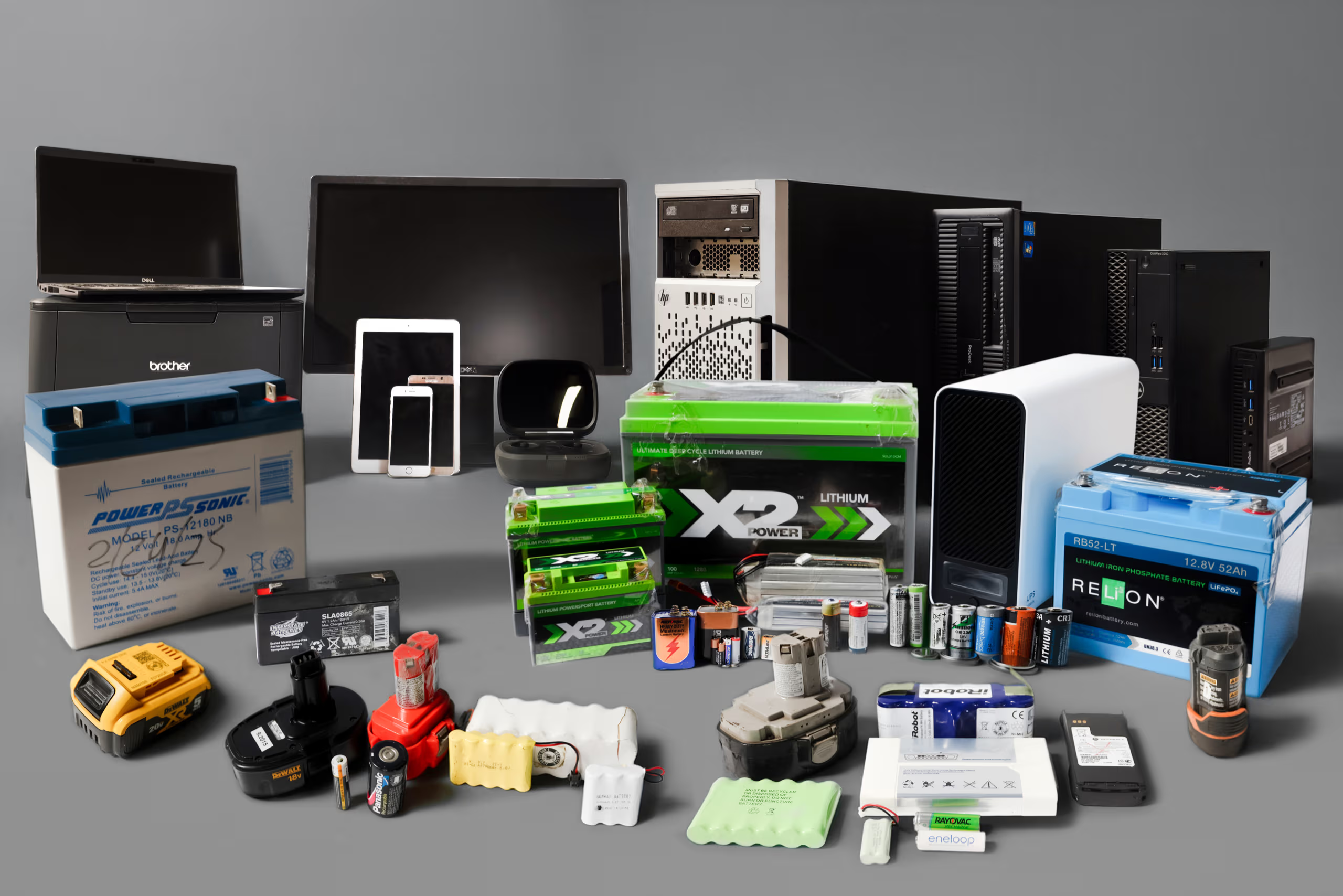
Laptops, phones, cordless tools, backup power systems, e-bikes and electric pallet jacks all run on lithium-ion cells. Each of those cells eventually swells, fails or gets replaced, and at that point it becomes one of the most hazardous things a California business can throw away. In a bin or a collection truck it is a fire risk, and under state rules it is a regulated waste that cannot go to a landfill.
Modern Waste Solutions has collected, transported and recycled batteries for California organizations since 1999 from its Sacramento facility. This guide covers lithium-ion battery recycling for businesses: where the batteries accumulate, why California regulates them as universal waste, how to store and ship them without starting a fire, how recycling recovers their materials and how to set up a program that holds up to review.
Where do lithium-ion batteries accumulate in a business?
Most organizations hold more lithium-ion cells than they think, because the batteries sit inside equipment instead of on an inventory shelf. They turn up in almost every department, and they share the same end-of-life hazards.
Large-format packs in e-bikes and electric material-handling equipment carry the most stored energy and the strictest handling rules; our guide to EV battery recycling covers them. Many UPS units still run on sealed lead-acid, which has its own guide on lead-acid and UPS battery recycling.
Why can't lithium-ion batteries go in the trash in California?
California's Universal Waste Rule, administered by the Department of Toxic Substances Control (DTSC), prohibits all batteries from regular trash and landfills. Lithium-ion cells contain cobalt, nickel, manganese, lithium salts and a flammable electrolyte. When a casing corrodes those materials can reach soil and groundwater, and the metals are worth recovering.
The business that generates the waste is responsible for it from the moment it is discarded until it reaches an authorized destination, so a mixed-recycling bin does not end that responsibility. A compliant program produces a chain of custody and a certificate of recycling that show where the material went.
What makes lithium-ion batteries a fire hazard?
A lithium-ion cell packs a lot of energy into a small space. Crushing, puncturing or short-circuiting it, which is what a compactor or a mixed collection truck does, can start thermal runaway: a self-sustaining reaction that produces intense heat, flammable gas and a fire that is hard to put out and can reignite. One swollen laptop battery can set a whole load alight.
Swollen, damaged and recalled cells carry the highest risk and should be isolated as soon as someone spots them. Our article on the hidden risks of improper battery disposal covers what goes wrong and the liability that follows.
How should businesses store, package and ship lithium-ion batteries?
Safe handling comes down to preventing short circuits and containing any cell that fails. A workable in-house procedure:
- Tape the terminals of loose cells and small packs with non-conductive tape, or bag each one, so contacts cannot touch metal or each other.
- Collect them in labeled, non-conductive containers. Never use a metal bin, the general trash or the mixed-recycling stream.
- Move damaged, swollen or recalled cells into separate, non-flammable containment right away. Do not charge or puncture them, and tell your recycler about them.
- Store accumulated batteries away from heat, combustibles and exits, and keep quantities modest between pickups.
- Ship only with a hauler that meets U.S. DOT requirements for lithium batteries. Damaged cells travel under stricter packaging rules.
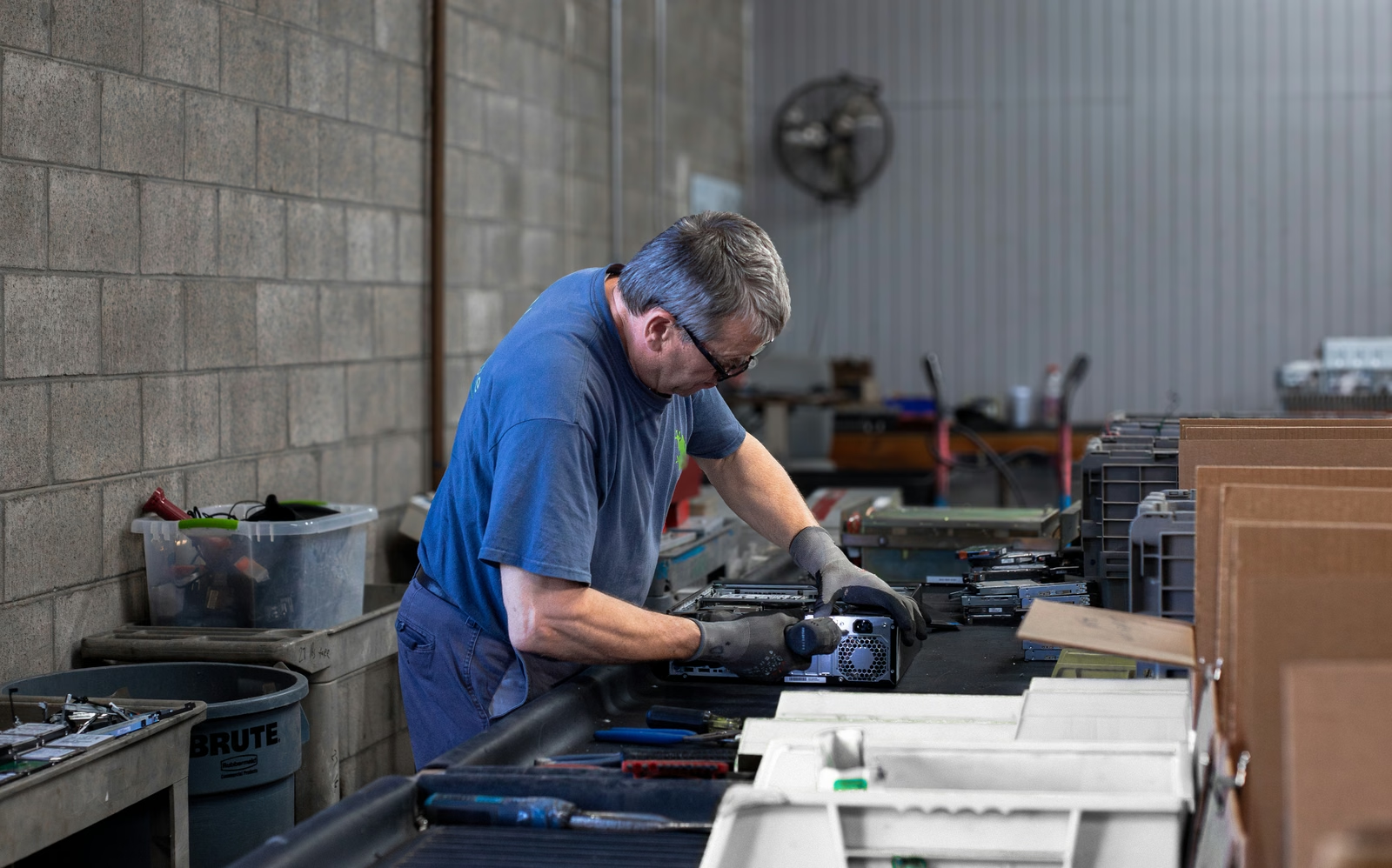
Modern Waste Solutions provides business battery recycling across California, including sorting, insulating, packaging, labeling and compliant transportation, so trained staff handle the riskiest step.
How does lithium-ion battery recycling work?
Once batteries reach a permitted facility, recycling recovers the metals inside each cell in four general stages.
- Sorting and stabilization: cells are identified by chemistry and discharged to remove residual energy.
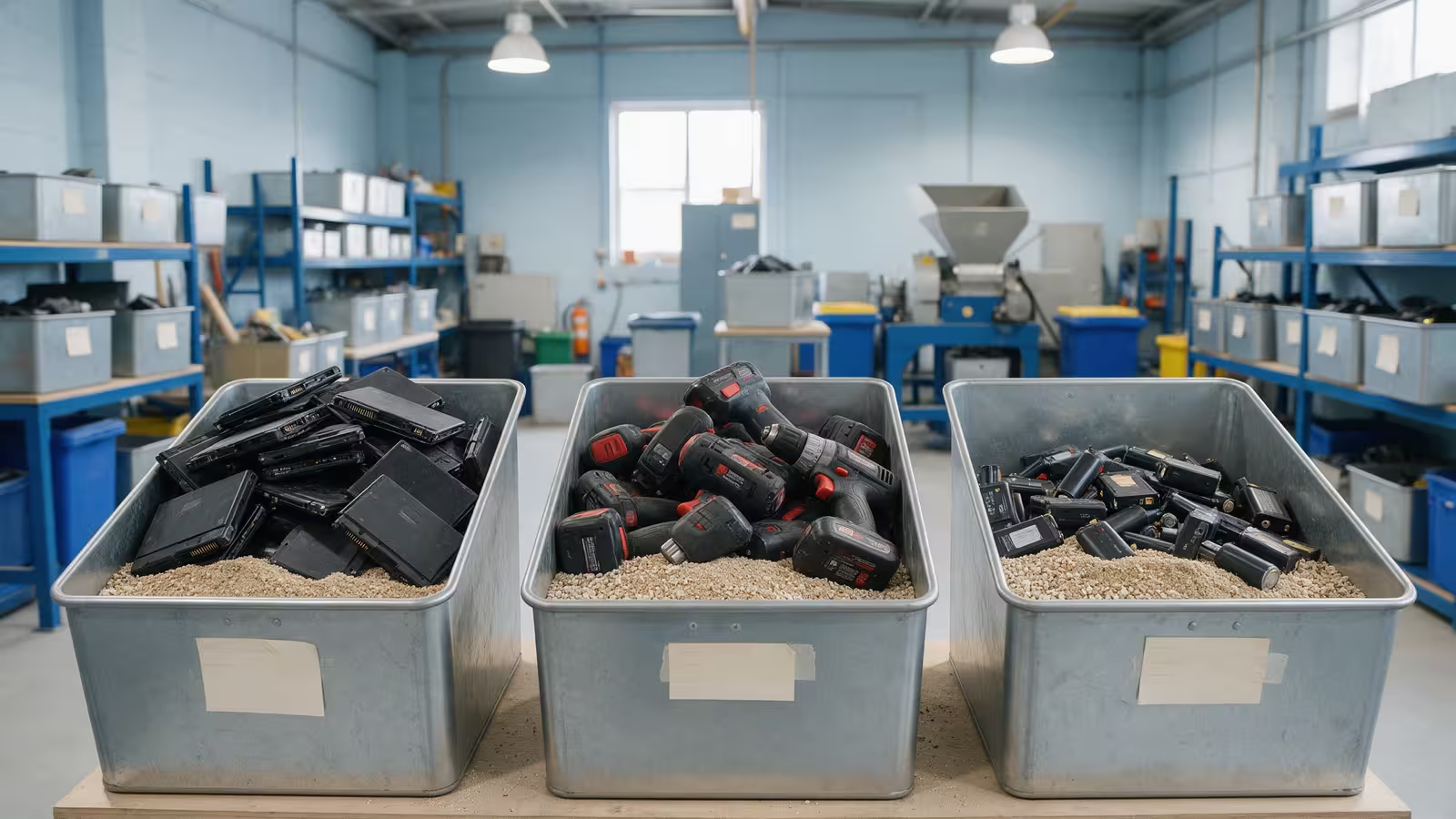
- Mechanical processing: batteries are shredded under controlled conditions that prevent ignition.
- Separation: casings, copper, aluminum and plastics are pulled away from the electrode material.
- Material recovery: the remaining "black mass" is refined to reclaim cobalt, nickel, lithium and other metals for new batteries and products.
Our guide to the battery recycling process and storage safety for California businesses follows material from pickup through processing for every chemistry.
How do you set up a compliant lithium-ion recycling program?
Once one person owns the program, the setup is short:
- Walk each department and list where lithium-ion batteries and battery-powered equipment collect.
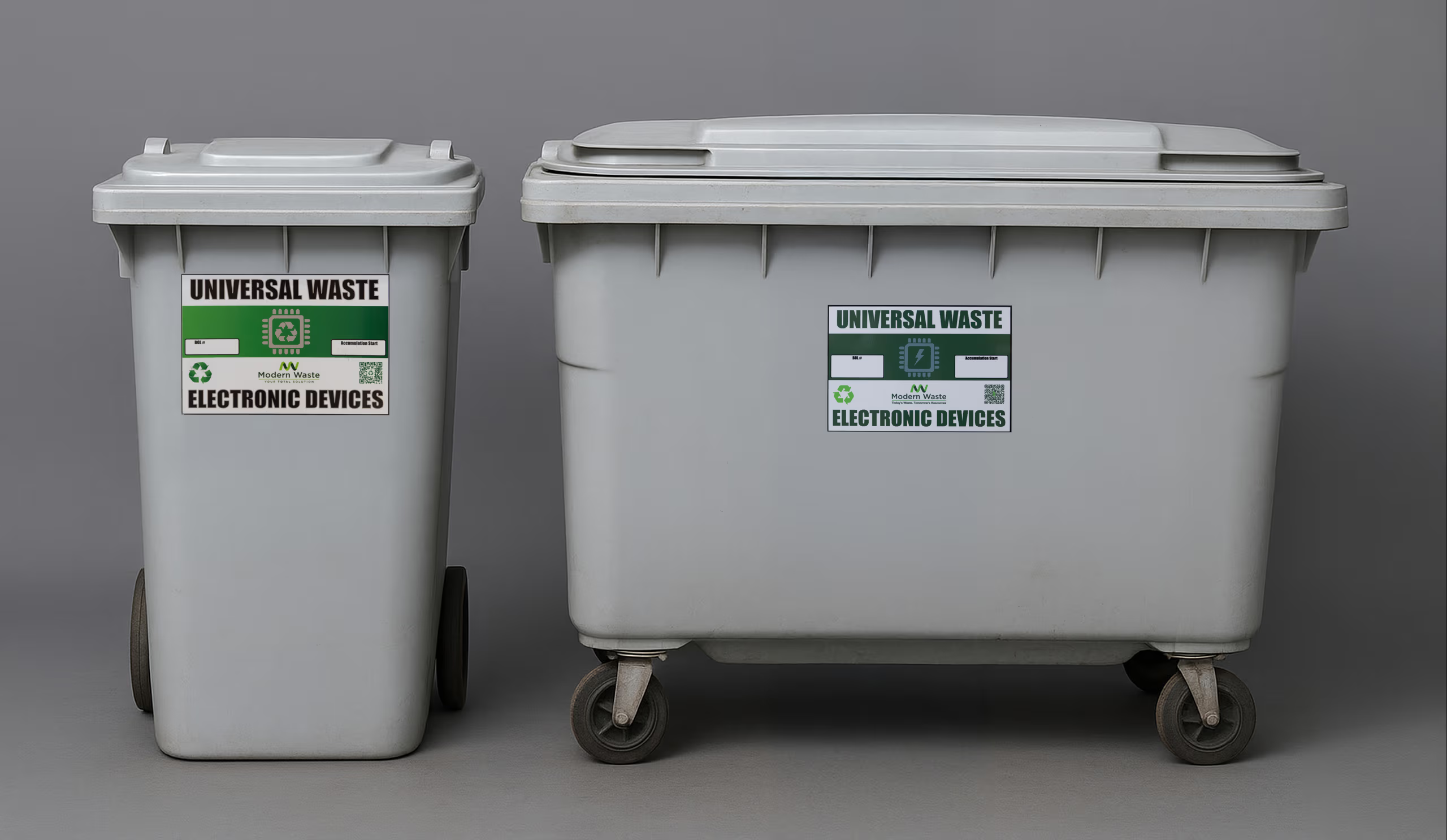
- Place labeled collection points with non-conductive containers and taping instructions posted beside them.
- Train staff to tape terminals, keep chemistries apart and set damaged cells aside instead of binning them.
- Schedule pickups by volume so batteries never build up past safe on-site quantities.
- File the chain of custody and certificate of recycling from every pickup.
Modern Waste Solutions supplies the containers and labels and trains your staff as part of its six-step program.
Frequently Asked Questions
Are lithium-ion batteries hazardous waste in California?
Yes. DTSC regulates them as universal waste. They are prohibited from regular trash and landfills and must be recycled through an authorized handler.
Do I have to tape the terminals before recycling lithium-ion batteries?
Yes. Taping terminals or bagging cells individually prevents the short circuits that cause fires in storage and transport, and it takes seconds.
What should I do with a swollen or damaged lithium-ion battery?
Isolate it from other batteries and combustibles, do not charge or puncture it, and tell your recycler. Damaged cells need special containment and cannot go into routine collection.
What happens to the materials recovered from recycled lithium-ion batteries?
Metals such as cobalt, nickel and lithium are refined and returned to manufacturing. That reduces the need for newly mined material and keeps toxic substances out of landfills.
Does Modern Waste Solutions handle large EV and e-bike battery packs?
Yes. Large-format packs hold more energy and follow stricter handling rules, so each job is scoped individually. Request a quote and we will confirm the process for your equipment.
The bottom line
Lithium-ion batteries become a liability when they are treated as ordinary trash. Collected at the source, taped, isolated when damaged and sent to a recycler, they turn into a routine, documented part of your waste stream, and their metals go into new products. If your organization accumulates lithium-ion batteries of any size, request a quote and Modern Waste Solutions will build a collection and recycling program around your volume and equipment.
Sources
Landon Goodman , President
Landon Goodman is the founder and President of Modern Waste Solutions, which he has led since 1999. From the company's Sacramento facility he oversees an ISO-certified operation providing electronics recycling, battery recycling, and secure data destruction to businesses across California.