
Published October 2, 2026 · 10 min read · Updated October 2, 2026
Data Center Decommissioning Process and Server Recycling Checklist
Data center decommissioning is a controlled change project that retires workloads, infrastructure, and records without interrupting systems that must remain live. Here is the full process, from go/no-go to final reconciliation.

Data center decommissioning is a controlled change project that retires workloads, infrastructure, facilities equipment, and records without interrupting systems that must remain live. The physical removal is only one phase. Dependencies, backups, network paths, contracts, data-bearing media, electrical isolation, heavy equipment, resale, recycling, and site restoration all need owners and acceptance criteria.
Modern Waste Solutions provides data center and UPS removal, data sanitization, electronics recycling, pickup, tracking, and reporting. A successful project combines internal change control with qualified field service and a final asset reconciliation.
The process begins with scope and authority. Leadership should name an accountable project owner and define which room, cages, racks, systems, circuits, contracts, and dates are included. A shutdown date is not a scope. Teams need a verified dependency map showing applications, databases, storage, backups, network routes, security services, monitoring, authentication, remote management, and external connections.
- Discover: inventory physical and virtual assets, owners, dependencies, support contracts, and data classifications.
- Design the target state: document migrations, replacements, archival needs, network changes, and acceptance tests.
- Establish change control: define freeze periods, approvals, communication, rollback, and emergency authority.
- Validate backups and recovery: confirm that required data is protected and that restoration has been tested for the relevant systems.
- Complete migration acceptance: business and technical owners sign off that workloads operate in the target environment.
- Approve shutdown: use formal go/no-go criteria rather than informal confirmation.
| Go/no-go criterion | Go evidence | No-go example |
|---|---|---|
| Workload migration | Owner acceptance and monitoring results | Unresolved production traffic to legacy system |
| Data protection | Tested backup or approved archive | Backup exists but restoration is untested |
| Network dependencies | Updated diagrams and traffic validation | Unknown route, DNS, firewall, or management dependency |
| Security | Credentials, certificates, logging, and access transitioned | Shared key or authentication service still depends on old hardware |
| Business continuity | Rollback and incident communication ready | No owner available during shutdown |
| Vendor/contracts | Maintenance, lease, and license obligations resolved | Equipment return or data clause remains unclear |
The no-go authority should be explicit. A technician who discovers active links or unknown drives needs permission to stop the event. The project should not reward staying on schedule at the expense of outage or data loss.
Facility review occurs in parallel. Confirm electrical one-lines, circuit ownership, UPS and battery status, cooling, fire systems, floor loading, rack anchoring, cable paths, access, escorts, loading docks, elevators, rigging, and waste classifications. Safety plans should distinguish IT shutdown from electrical de-energization; qualified personnel must perform work within their authorization.
Only after technical and facility acceptance should the team issue a destruction or disposition release. This sequence protects live systems and prevents equipment from being moved while its business role is still uncertain.
A complete checklist follows the project lifecycle and ties each task to evidence. It should be maintained in a controlled system with owners, dates, dependencies, status, and exceptions. A spreadsheet can work for a small room; a multi-site program may need a project and asset platform.
| Phase | Core tasks | Closeout evidence |
|---|---|---|
| Planning | Charter, scope, owners, schedule, risk, vendors, communications | Approved project plan |
| Inventory | Racks, devices, drives, cables, UPS, batteries, contracts | Baseline inventory and diagrams |
| Migration | Workload, data, network, security, monitoring, backup | Acceptance and rollback closure |
| Shutdown | Change approval, service stop, power-down, isolation | Timestamped shutdown record |
| Disconnection | Network, power, cabling, labels, drive mapping | Deinstallation checklist |
| Packing | Reuse protection, media security, battery segregation | Pallet/container register |
| Removal | Rigging, routes, scans, loading, custody | Pickup and custody record |
| Data treatment | Clear, Purge, Destroy, verification, validation | Sanitization/destruction report |
| Disposition | Resale, return, reuse, parts, recycling | Outcome and settlement |
| Restoration | Rack/cable cleanup, floor and wall repair, access removal | Site acceptance |
| Reconciliation | Authorized, received, and final outcome comparison | Final asset and exception report |
Planning should include maintenance contracts, colocation obligations, leased hardware, software licenses, certificates, IP addresses, DNS, firewall objects, monitoring, and remote access. Owners should decide whether records are archived or destroyed and how long decommission evidence will be retained.
Inventory must reach below the chassis level. Storage arrays and servers can contain multiple drives, flash modules, cache devices, management cards, and removable media. UPS systems include batteries that may follow separate hazardous-material and recycling rules. Racks, cabling, and PDUs need quantity and ownership decisions.
During packing, separate marketable equipment from recycling material and protect reusable devices from impact, static, weather, and missing components. Data-bearing media should remain in secure containers or controlled racks. Unknown devices and damaged batteries go to an exception area.
NIST SP 1800-5 supports asset visibility, while NIST SP 800-88 Rev. 2 supports media sanitization. A complete checklist connects those controls instead of treating inventory and destruction as separate projects.
The disposition route depends on server condition, support life, market value, data risk, storage media, licensing, and buyer requirements. A server can be reusable while some drives require destruction. A failed chassis can still contain functioning data-bearing media. Inventory should therefore track chassis and media separately and preserve their relationship.
| Asset | Reuse preparation | Destruction/recycling preparation |
|---|---|---|
| Server chassis | Remove credentials, export configuration, test, clean, grade, verify components | Remove and inventory media; separate batteries and boards as needed |
| Magnetic HDD | Apply validated Clear or Purge method when reuse is approved | Degauss or physically destroy using approved process |
| SSD/NVMe | Use supported sanitize or cryptographic method with valid prerequisites | Destroy flash packages through suitable physical process |
| Backup tape | Overwrite or degauss when compatible and authorized | Shred or otherwise destroy under approved specification |
| Storage array | Map drives, controllers, cache, encryption, and keys | Reconcile every module and destroy failed/unapproved media |
| Network appliance | Remove configuration, certificates, keys, and logs | Identify embedded storage before recycling |
Sanitization should use the Clear, Purge, or Destroy outcome chosen under policy. Verification checks completion and errors; validation determines whether the result is acceptable for the planned disposition. A successful wipe does not authorize resale if licensing, ownership, export, or buyer controls remain unresolved.
Server reuse requires configuration accuracy. Record processors, memory, drives, cards, power supplies, rails, firmware, service tags, and test results. Remove asset labels and credentials only after evidence is preserved. Keep marketable equipment complete; missing rails or power supplies can reduce value more than their replacement cost suggests.
For server recycling, remove or account for all media. Drives that fail logical treatment should enter secured exception storage and then physical destruction. The certificate should identify the media population, method, date, location, result, and exceptions. Chassis recycling records should separately document count or weight and downstream route.
Modern Waste Solutions' data center and UPS removal service combines equipment removal, data sanitization, and recycling. The project scope should state whether technicians remove drives, whether destruction occurs on-site or at the facility, and which reports will reconcile media and chassis.
Physical removal should have an engineered work plan. Equipment weight, center of gravity, rack anchoring, floor loading, door and elevator dimensions, electrical condition, battery hazards, sharp edges, overhead work, and traffic routes can create risks beyond ordinary office electronics pickup.
- Survey the site: record room, rack, aisle, floor, door, elevator, dock, parking, clearance, and security conditions.
- Define boundaries: identify what the vendor disconnects, removes, packs, transports, and leaves in place.
- Isolate energy: qualified personnel verify electrical shutdown, stored energy, UPS bypass, battery condition, and lockout requirements.
- Sequence equipment: remove drives and sensitive components under custody, then lighter rack equipment, heavy assets, racks, and cabling as approved.
- Protect the facility: use floor protection, corner guards, approved carts, rigging, spotters, and controlled routes.
- Scan and pack: reconcile assets, protect reuse candidates, segregate batteries, and label pallets or containers.
- Load and transfer custody: record vehicle, driver, time, seals, counts, and exceptions.
| Work item | Client responsibility | Vendor responsibility |
|---|---|---|
| Change authorization | Approve shutdown and release | Follow authorized scope |
| Electrical isolation | Provide qualified facility/electrical control | Verify boundary before handling |
| Asset inventory | Supply baseline and disposition instructions | Scan, reconcile, and report differences |
| Data media | Approve treatment and witness needs | Secure, sanitize/destroy, and report |
| UPS batteries | Provide system history and condition | Use trained removal, packaging, and recycling route |
| Site protection | Approve route, access, and work hours | Supply appropriate labor and handling equipment |
| Final acceptance | Review room and records | Correct damage and close assigned exceptions |
UPS systems require special planning. Batteries may be sealed lead-acid or lithium-ion, heavy, energized, leaking, swollen, or difficult to access. Do not treat battery cabinets as empty racks. Identify chemistry, count, voltage status, manufacturer instructions, and transportation requirements.
Cabling scope should specify whether cables are disconnected only, pulled from pathways, removed above ceilings, or left for another contractor. Firestopping, abandoned cable rules, and restoration may require licensed trades and local review. Rack removal may require anchoring and floor-repair plans.
A pre-job walk with IT, facilities, security, safety, and the vendor should resolve these boundaries. The final method statement should include crew, equipment, sequence, emergency contacts, stop-work authority, and daily reconciliation.
The project should maximize net value without compromising migration, data, safety, or environmental controls. Value recovery is one outcome among several, and it should be measured after all fees and risks are included.
| Factor | Value opportunity | Cost or risk |
|---|---|---|
| Current servers and network gear | Specialist resale or internal redeployment | Testing, licensing, configuration, returns |
| Memory, CPUs, cards, rails | Parts recovery and complete-system value | Labor and inventory complexity |
| Storage media | Reuse after validated sanitization | Data risk and method failure |
| Racks, PDUs, cabling | Local resale or metal recovery | Heavy labor and freight |
| UPS systems | Reuse, parts, or commodity recovery | Electrical work, batteries, weight, support status |
| Commodity fractions | Metals and circuit-board value | Processing fees and market volatility |
Request a transparent proposal separating project management, labor, deinstallation, packing, rigging, freight, data treatment, shredding, recycling, and reporting. The value section should identify purchase, consignment, revenue share, or estimated settlement. It should state testing grade, sales period, fees, returns, and unsold route.
Timing affects recovery. Equipment left powered down in a data center loses market value while space, cooling, security, and contracts continue. However, rushing removal before workload acceptance can cause outages and data loss. The schedule should preserve a short, controlled interval between technical release and disposition.
Environmental review should follow downstream material. Verify the processing facility, certifications, battery routes, and any exports. Require a disposition summary for equipment sold, reused, destroyed, and recycled. Avoid double counting: an asset sold for reuse should not also be reported as recycled by full weight.
Set decision thresholds. High-value equipment may justify detailed testing; older commodity gear may be sold as a lot; unsafe or obsolete material should go directly to recycling. Review net settlement, not gross offer. If the provider controls both resale and fees, require transparent deductions and audit rights.
Modern Waste Solutions can combine California field removal with data treatment and recycling. A scoped inventory and site survey allow the company to distinguish resale candidates, data media, UPS batteries, and low-value material before quoting.
The closeout package should prove that technical services were retired safely, the site was cleared within scope, assets were reconciled, data received an approved outcome, value was settled transparently, and remaining material entered responsible recycling.
| Closeout item | Required content |
|---|---|
| Migration acceptance | Business and technical signoff, rollback closure |
| Final asset reconciliation | Authorized, received, reused, sold, destroyed, recycled, missing |
| Chain of custody | Pickup, vehicle, seals, receipt, facility events |
| Sanitization/destruction records | Media, method, result, verification, validation, exceptions |
| Recycling certificates | Equipment and battery scope, date, location, weight/count |
| Settlement report | Gross proceeds, fees, returns, reserves, net payment |
| Exception log | Owner, corrective action, evidence, closure date |
| Site restoration acceptance | Rack, cable, floor, wall, access, keys, photographs used as project evidence |
Photographs can document rack condition, pathways, room clearance, damage, and restoration, but they should be indexed to the work area and date. They do not replace asset scans, electrical verification, or certificates.
Practical recommendations are to hold a formal closeout review, prevent destruction of project records under the same schedule as retired data, and test that certificates and scan files can be retrieved. Reconcile financial and environmental reports to avoid counting the same asset in multiple outcomes.
Closeout should also have a defined acceptance window. During that period, the project owner can compare rack locations, serialized records, media outcomes, battery receipts, invoices, and settlement data before approving completion. Any variance should remain open with a named owner, due date, and corrective evidence. Final payment and release of project reserves can be tied to resolution of material exceptions, which gives every party a practical reason to finish the record rather than merely finish the physical removal.
Modern Waste Solutions can assess equipment, UPS systems, access, labor, data requirements, pickup, and reporting for a California project. Use the data center and UPS removal service to request a site review and documented scope.
- NIST SP 1800-5, IT Asset Management: csrc.nist.gov/pubs/sp/1800/5/final
- NIST SP 800-88 Rev. 2, Guidelines for Media Sanitization: csrc.nist.gov/pubs/sp/800/88/r2/final
- Modern Waste Solutions: Data Center and UPS Removal
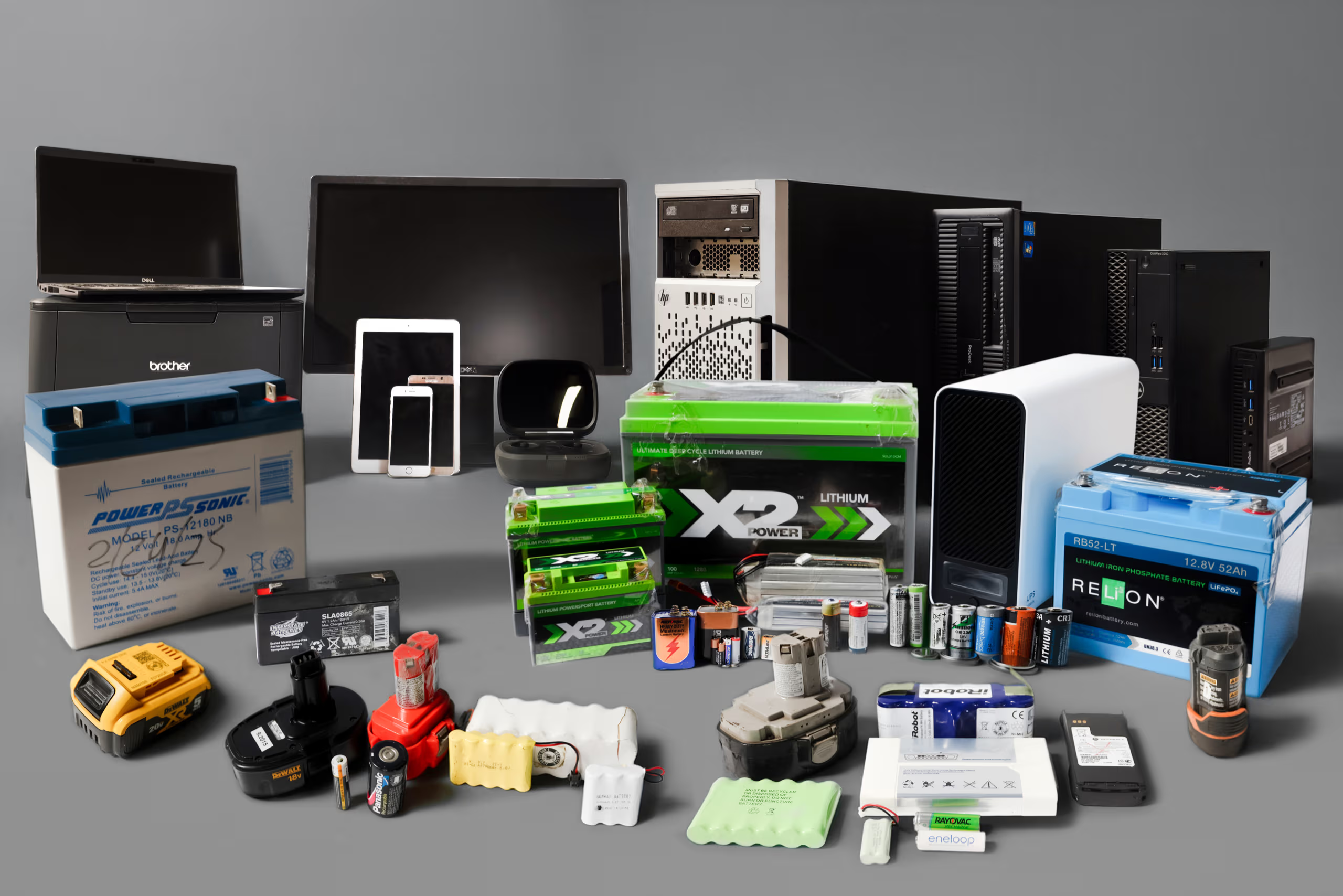

Simplify your compliance and disposal process with bundled recycling services that handle both electronic devices and batteries in one streamlined solution.

Our scheduled, route-based pickups cover all major regions of California—ensuring efficient, on-time service no matter where you operate.
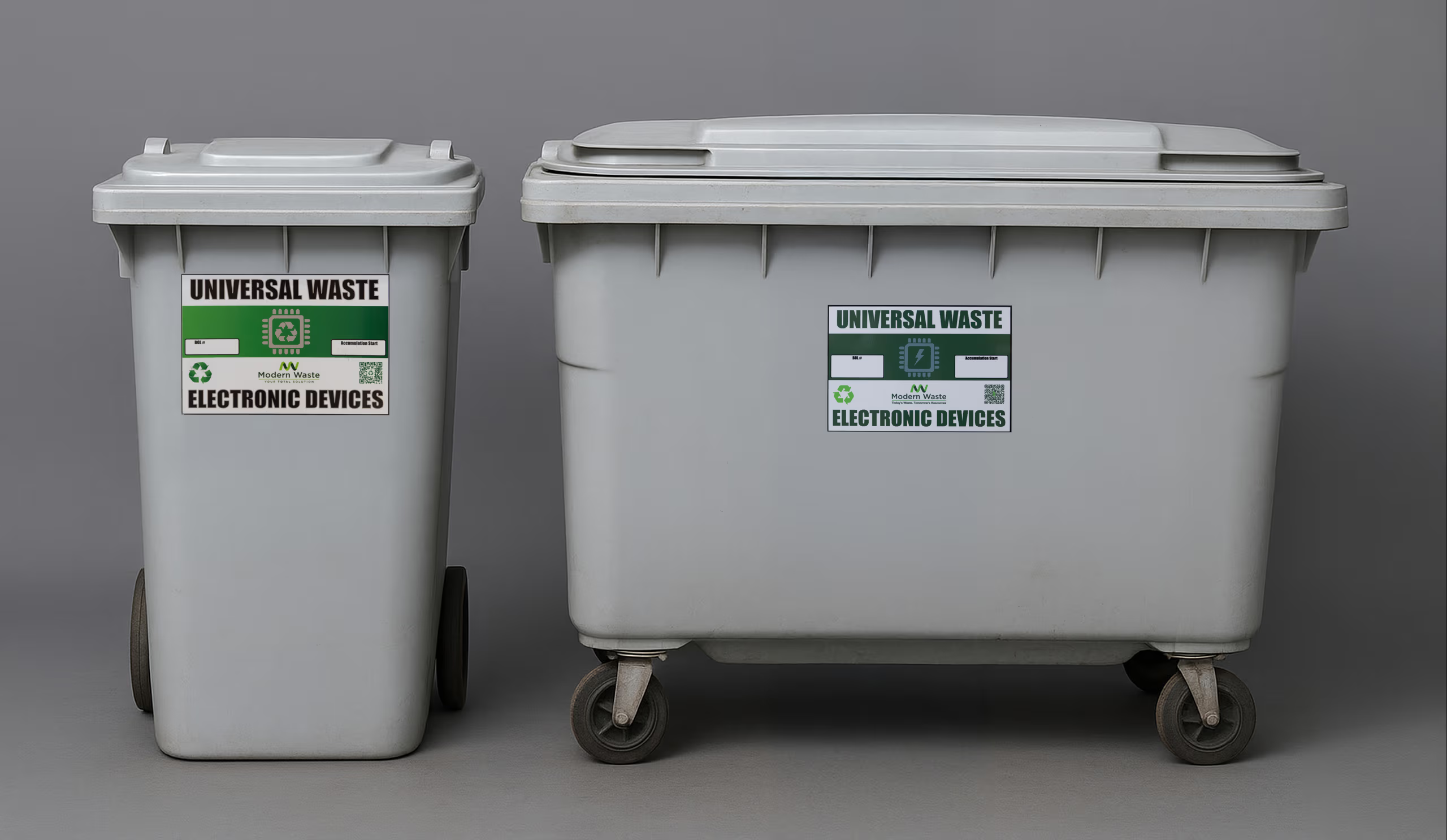
We provide clearly labeled, tamper-resistant containers to ensure safe and compliant collection of electronic waste and batteries at your location.

Modern Waste Solutions has served businesses and communities across California with dependable, environmentally responsible recycling solutions for over two decades.
We adhere to all California and federal regulations, ensuring your electronic and battery waste is managed with complete transparency and environmental responsibility.


Reviews
A little bit off the beaten track in Natomas, but Modern Waste quickly and efficiently helped me recycle my broken Lithium Iron Phosphate batteries at a reasonable $/lb fee (Sac county e-waste will not accept these items). Ramiro and Vincent were very friendly and helpful.

Chris was awesome! He came in and picked up all of the e-waste we had ready for him. He was polite and professional throughout the entire process. He handled the equipment with care, including the site equipment that was already in place. I am very happy with his service and appreciate the great job he did.

Aaron and Vincent were awesome, excellent customer service!

Great guys, excellent customer service, highly recommend!

Polite, quick and easy.

Chris from modern waste was the most outstanding respectful person I ever met my life when he was done he offered to sweep the floors. He offered so much even though he was limited on time he went out of his way and he’s over beyond best guy I ever met thank you so much for your service services Dan ITG.

Data center decommissioning is a controlled change project that retires workloads, infrastructure, and records without interrupting systems that must remain live. Here is the full process, from go/no-go to final reconciliation.
A mature ITAD program connects asset ownership, data security, environmental compliance, logistics, financial recovery, and reconciliation. Here is how the process works, what it costs, and how to evaluate a provider.

IT equipment liquidation converts marketable retired assets into documented financial recovery while routing nonmarketable equipment to responsible recycling. Here is how to decide which path fits each asset.