
Published August 15, 2024 · 5 min read · Updated September 27, 2026
Universal Waste Management for California Businesses
What counts as universal waste in California, the handler rules a business has to follow, where the waste can go, and how to build a program that holds up to inspection.
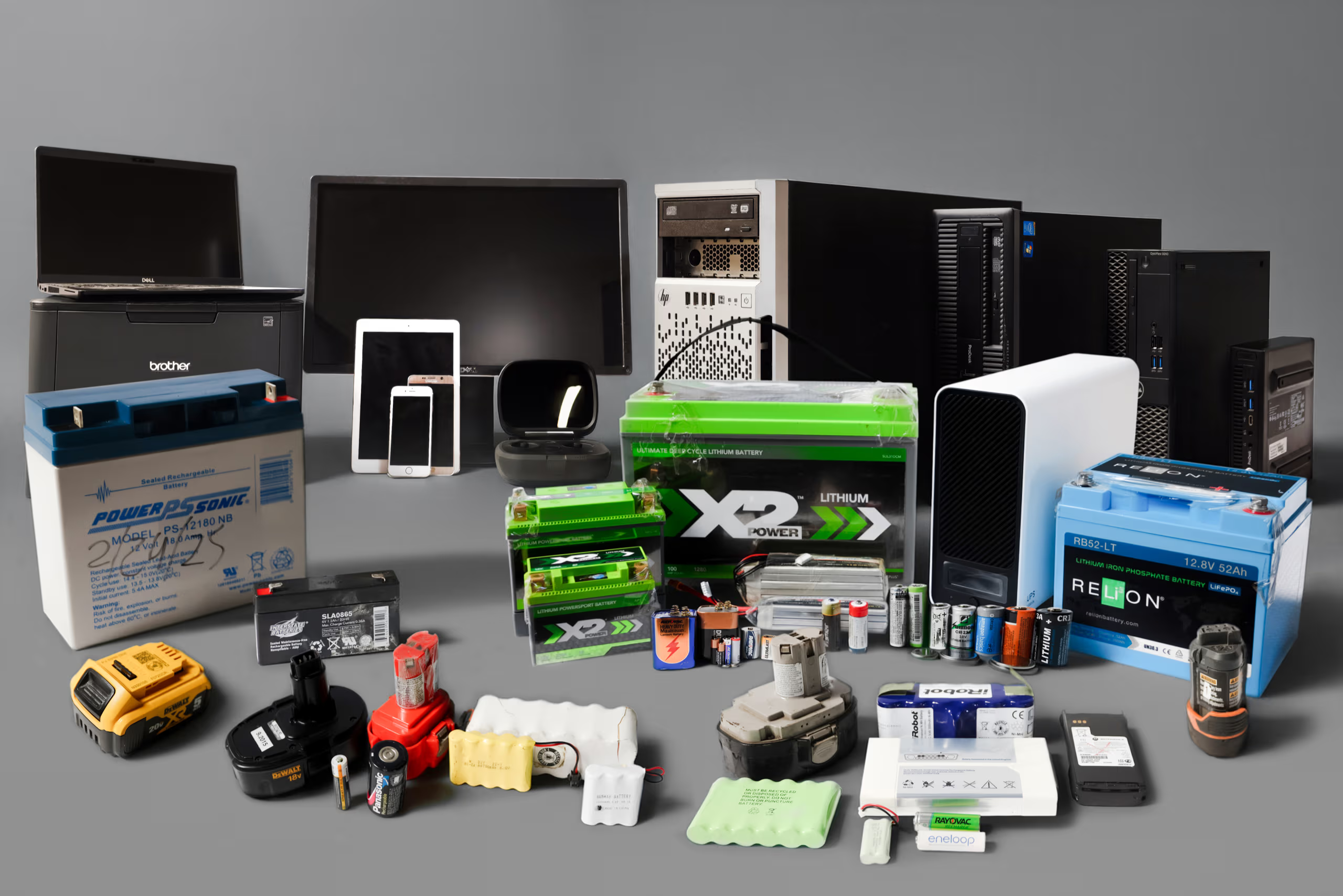
Batteries, fluorescent tubes, old monitors and half-used aerosol cans turn up in almost every California business. All of them are hazardous waste once they are discarded. California lets businesses manage them under a lighter set of rules, called the Universal Waste Rule, but only if the business actually follows those rules. When it doesn't, the same items are treated as ordinary hazardous waste, with the full weight of the hazardous waste regulations behind them.
Modern Waste Solutions has operated since 1999 from its Sacramento facility and collects and recycles universal waste streams, including electronics, batteries, lamps and ballasts, for organizations throughout California. This guide explains what universal waste is, what a business has to do as a universal waste handler, where the waste can go, and how to set up universal waste management that stands up to an inspection.
The Department of Toxic Substances Control (DTSC) describes universal wastes as hazardous wastes that are widely produced by households and many types of businesses. DTSC currently lists eight categories:
| Category | Common examples in a business |
|---|---|
| Batteries | Alkaline, lithium-ion, nickel-cadmium, button cells, small sealed lead-acid alarm and emergency-light batteries |
| Electronic devices | Computers, monitors, phones, printers, TVs and other devices that are hazardous waste |
| Cathode ray tubes (CRTs) | Picture tubes removed from old TVs and monitors |
| CRT glass | Tubes that are broken or processed for recycling |
| Lamps | Fluorescent tubes, CFLs, high-intensity discharge and sodium vapor lamps, any lamp with added mercury |
| Mercury-containing equipment | Thermostats, switches, thermometers, pressure gauges, dental amalgam |
| Non-empty aerosol cans | Paint, lubricant and cleaner cans with product or propellant left inside |
| Photovoltaic (PV) modules | Solar panels at end of life |
DTSC's fact sheet puts the core rule plainly: universal wastes may not be disposed of in the trash. State and local prosecutors enforce it by inspecting business dumpsters. In 2018, for example, Home Depot agreed to a $27.84 million settlement after 45 dumpster inspections between 2013 and 2015 turned up waste batteries, aerosol cans, paints, electronic devices and customer records. Our article on why businesses can't throw away electronics covers the data side of the same problem.
If your business generates universal waste, you are a universal waste handler. The term also covers facilities that accept universal waste from others and accumulate it before sending it on. A company that picks up universal waste and hauls it to a recycler is a transporter, and the permitted facility that finally recycles or treats it is a destination facility. Each role has its own rules. Most businesses only need to worry about the handler requirements.
DTSC's summary of handler requirements (California Code of Regulations, title 22, sections 66273.30 to 66273.39) comes down to a short list:
- Don't dispose of universal waste or treat it except as the regulations allow.
- Notify DTSC or obtain an EPA identification number when your situation requires it.
- Keep the waste in non-leaking, compatible containers, segregated in distinct areas.
- Label and mark containers properly, including the date accumulation began.
- Accumulate universal waste for no longer than one year.
- Keep spill kits available where mercury-containing items are stored, and respond to any release.
- Train the people who manage universal waste, and their supervisors, and keep training records.
- Keep records of what you received and shipped (name, address, quantities) for three years.
Notification thresholds depend on the type and amount of waste you handle, and they apply to electronic devices and CRTs in particular. If you are unsure whether your site needs to notify, check DTSC's universal waste handler guidance or ask your provider to help you work it out.
A handler may not send universal waste to a municipal landfill or to a non-hazardous recycling center. It has to go to one of three places: another universal waste handler, a universal waste transporter, or a destination facility with a permit to treat, store or recycle it. In practice, most businesses hand it to a recycler that picks it up, processes what it can, and sends the rest to permitted downstream facilities.
Ask any provider where each stream ends up. Batteries, lamps, CRT glass and circuit boards all go to different processors, and your records should show that the material reached an authorized destination.
- Inventory each site. List what each location generates: batteries by chemistry, electronics, lamps and ballasts, aerosol cans, solar panels, mercury devices.
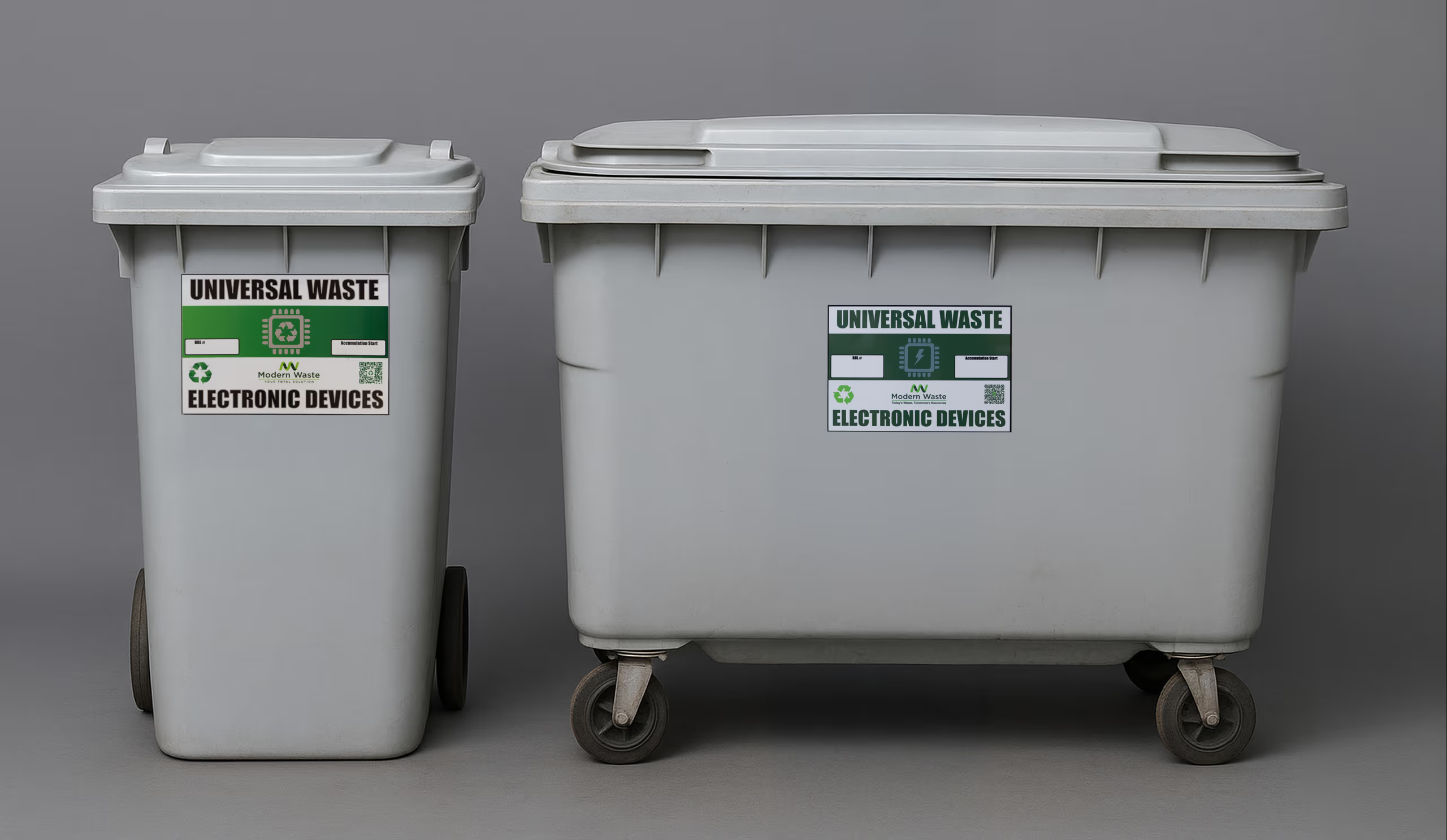
- Set up containers and labels. One labeled container per stream, dated when the first item goes in, kept in a designated area. Our guide to setting up an e-waste collection point covers the layout.
- Train the right people. Facilities, maintenance, IT and janitorial staff handle most universal waste. Keep a sign-in sheet or training log.
- Schedule pickups before the one-year limit. A recurring pickup keeps accumulation dates from creeping up on you.
- File the paperwork. Keep shipping records and certificates of recycling for at least three years, organized by site.
- Check it twice a year. Walk each site, look at dates and labels, and look in the dumpsters too.
Is universal waste the same as hazardous waste?
Universal waste is a subset of hazardous waste. It qualifies for simpler handling rules only while it is managed under the Universal Waste Rule; mismanaged universal waste is regulated as hazardous waste.
How long can a business store universal waste?
Up to one year from the date the waste was generated or received. Label containers or keep an inventory that shows the start date.
How long do we keep universal waste records?
DTSC's handler summary calls for records of what was received and shipped, with names, addresses and quantities, for three years, plus records of personnel training.
Are solar panels universal waste in California?
Yes. DTSC added photovoltaic modules to the universal waste categories, so end-of-life solar panels from a business can be managed and recycled under universal waste rules.
Universal waste management is manageable once each stream has a labeled, dated container, trained people, a pickup schedule inside the one-year limit and a records file. Most of the risk sits in the gaps between those pieces. We handle the collection and recycling side for batteries, electronics, lamps and ballasts and solar panels, with records for every pickup. Request a quote to set up a program for your sites.
- California DTSC: Universal Waste
- California DTSC: Universal Waste Handlers
- California DTSC: Universal Waste Fact Sheet
- U.S. EPA: Universal Waste
- California Department of Justice: Home Depot settlement (2018)

Simplify your compliance and disposal process with bundled recycling services that handle both electronic devices and batteries in one streamlined solution.

Our scheduled, route-based pickups cover all major regions of California—ensuring efficient, on-time service no matter where you operate.
We provide clearly labeled, tamper-resistant containers to ensure safe and compliant collection of electronic waste and batteries at your location.

Modern Waste Solutions has served businesses and communities across California with dependable, environmentally responsible recycling solutions for over two decades.
We adhere to all California and federal regulations, ensuring your electronic and battery waste is managed with complete transparency and environmental responsibility.

Reviews
A little bit off the beaten track in Natomas, but Modern Waste quickly and efficiently helped me recycle my broken Lithium Iron Phosphate batteries at a reasonable $/lb fee (Sac county e-waste will not accept these items). Ramiro and Vincent were very friendly and helpful.

Chris was awesome! He came in and picked up all of the e-waste we had ready for him. He was polite and professional throughout the entire process. He handled the equipment with care, including the site equipment that was already in place. I am very happy with his service and appreciate the great job he did.

Aaron and Vincent were awesome, excellent customer service!

Great guys, excellent customer service, highly recommend!

Polite, quick and easy.

Chris from modern waste was the most outstanding respectful person I ever met my life when he was done he offered to sweep the floors. He offered so much even though he was limited on time he went out of his way and he’s over beyond best guy I ever met thank you so much for your service services Dan ITG.


Data center decommissioning is a controlled change project that retires workloads, infrastructure, and records without interrupting systems that must remain live. Here is the full process, from go/no-go to final reconciliation.
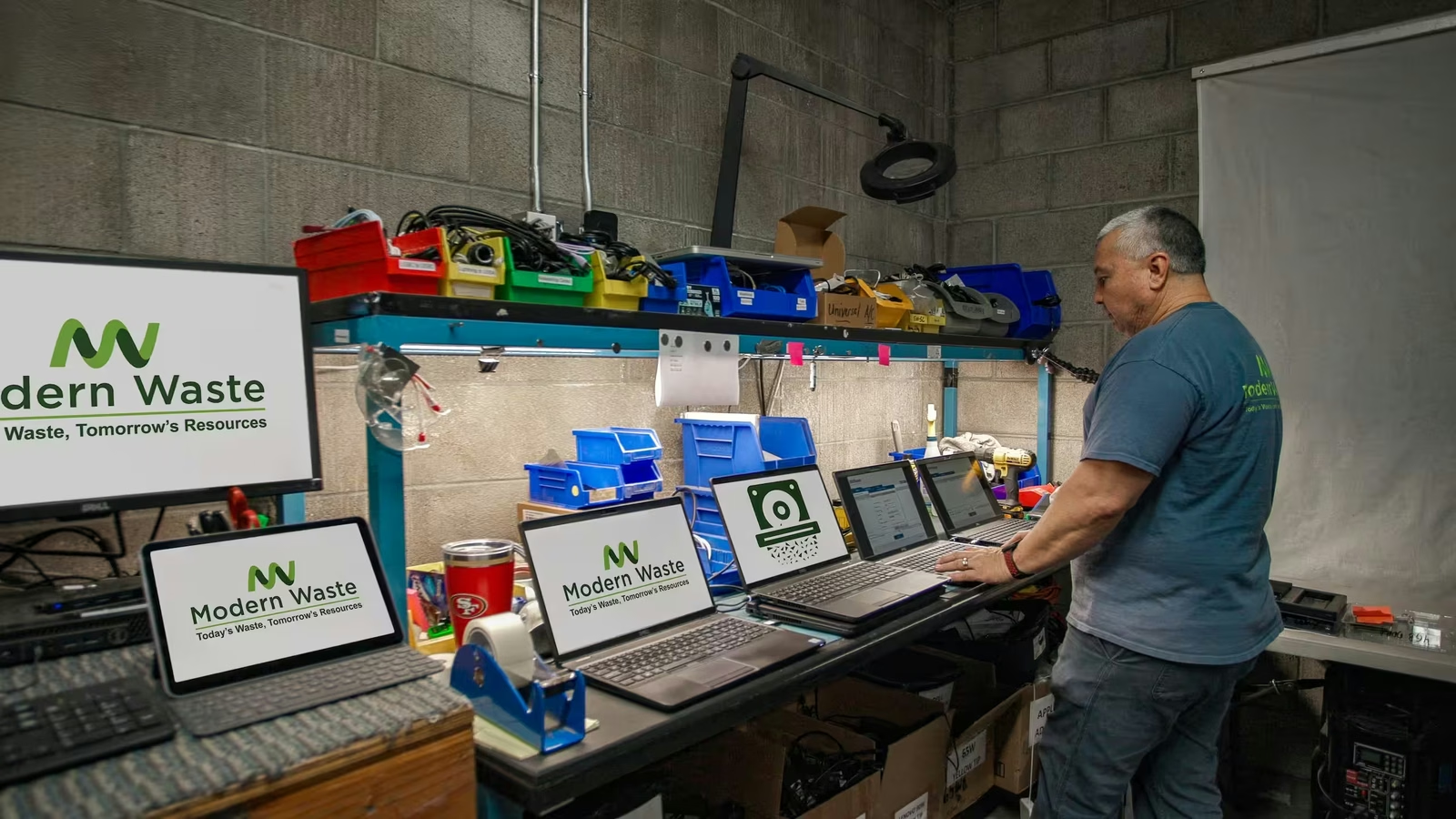
A mature ITAD program connects asset ownership, data security, environmental compliance, logistics, financial recovery, and reconciliation. Here is how the process works, what it costs, and how to evaluate a provider.
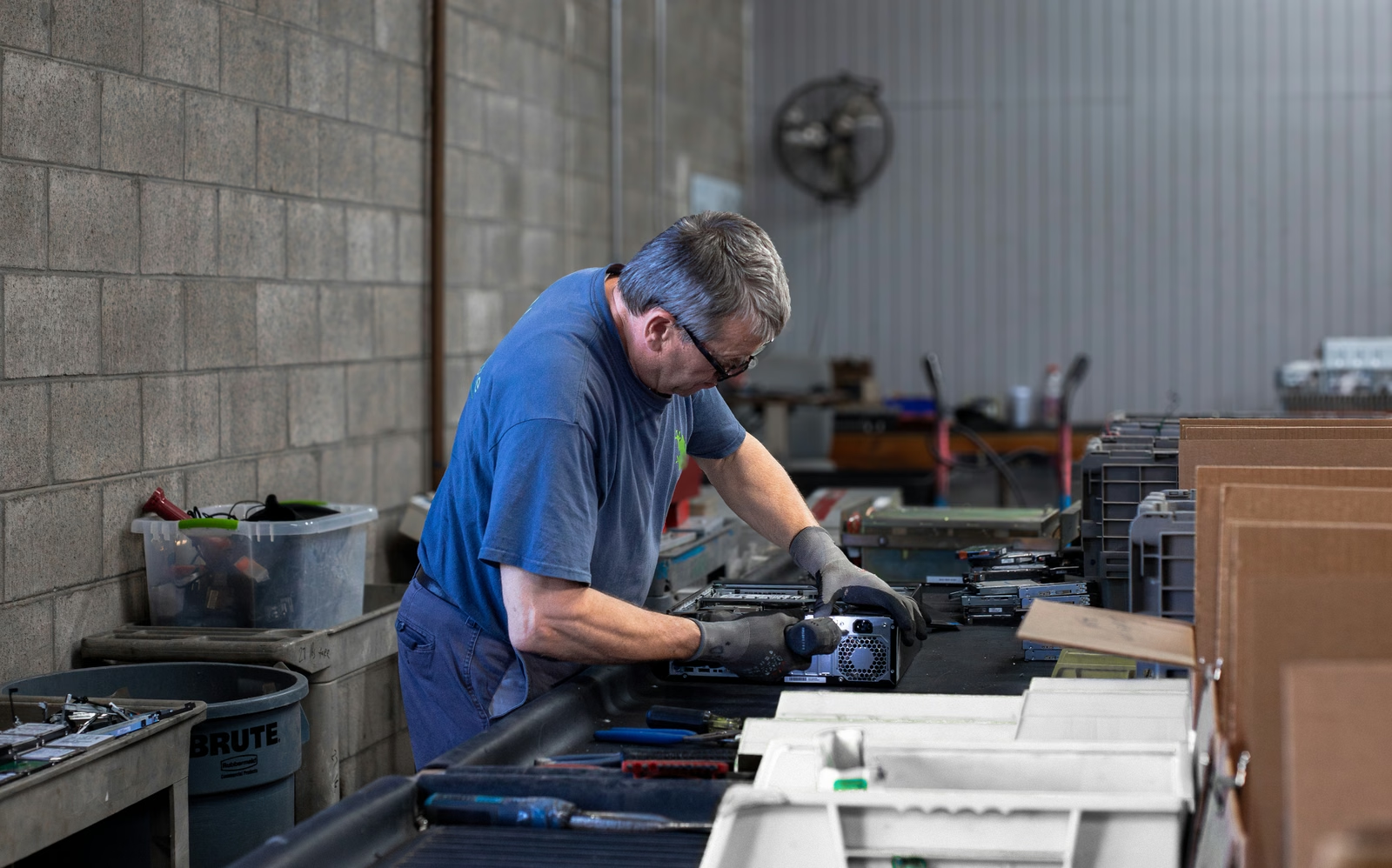
IT equipment liquidation converts marketable retired assets into documented financial recovery while routing nonmarketable equipment to responsible recycling. Here is how to decide which path fits each asset.