
Published June 14, 2025 · 4 min read · Updated September 27, 2026
Why California Businesses Can't Throw Away Old Electronics
Tossing old electronics in the dumpster exposes a California business to data breaches, environmental liability and enforcement. Here is what goes wrong, which items are the usual problems, and what to do instead.
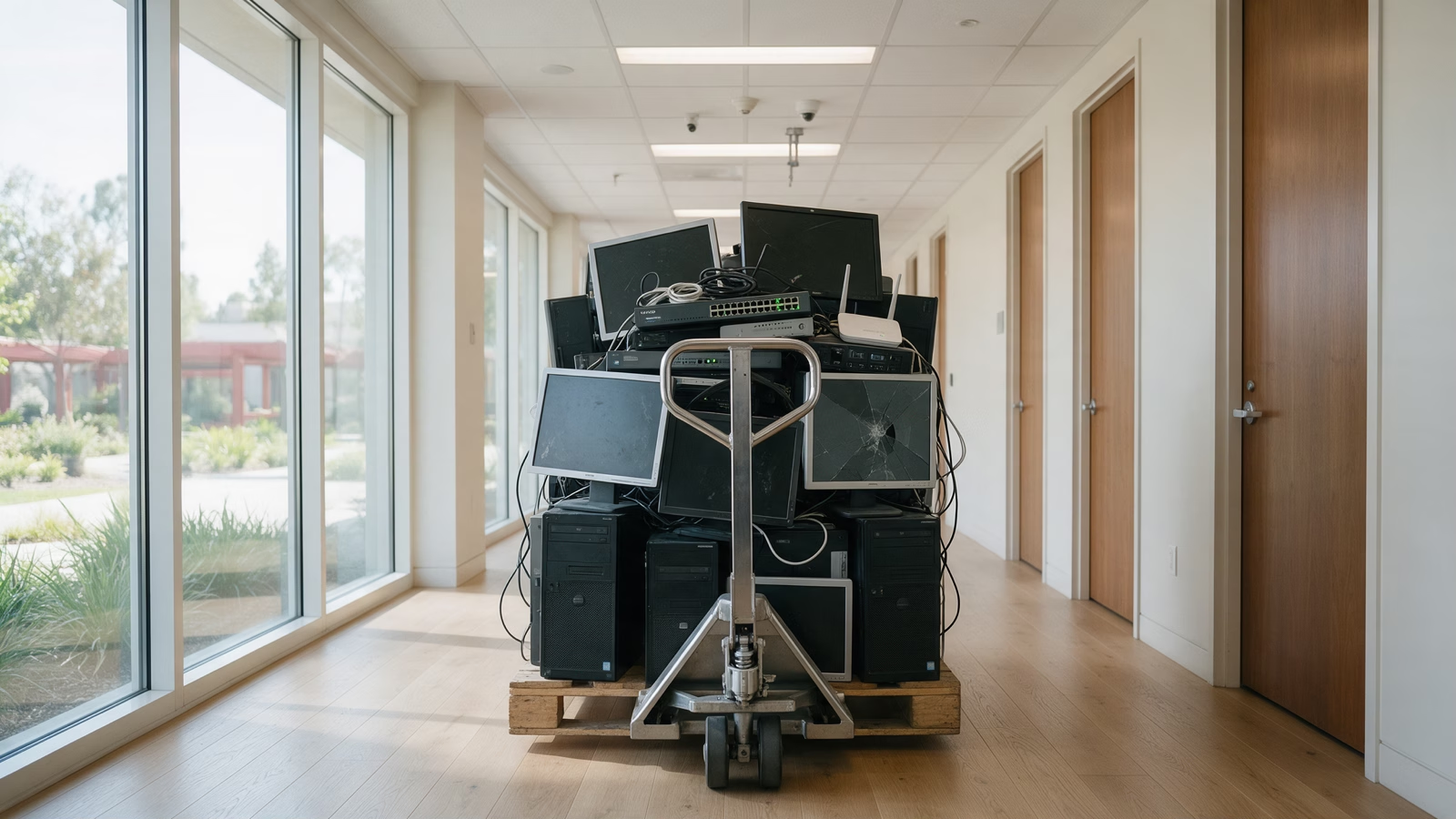
Every business eventually retires electronics: computers, servers, monitors, phones, networking gear and the batteries inside them. The quickest option is the dumpster behind the building, and in California it is usually the wrong one. Thrown away, retired equipment becomes a data breach waiting to happen, an environmental liability and a compliance problem that stays with the business.
Modern Waste Solutions has provided electronics recycling, secure data destruction and battery recycling to California organizations since 1999 from its Sacramento facility. This article explains why a California business cannot simply throw away old electronics, which items are the usual problems, and what is at stake when e-waste is treated as ordinary trash.
California treats many electronics as regulated material. Devices can contain leaded glass, mercury, batteries and other substances that make them hazardous, and state rules restrict how they are discarded. Retired equipment also tends to hold data. Throwing it away therefore creates three problems at once, hazardous material, data security and missing records, and the business that generated the equipment owns all three until the material reaches an authorized destination.
| Item | Why it is a problem in the trash |
|---|---|
| TVs and computer monitors | Older CRT units contain leaded glass; flat panels can contain mercury lamps. |
| Batteries of every size | Banned from California trash. Lithium cells can start fires in trucks and compactors. |
| Phones and tablets | Toxic components, a lithium battery and recoverable metals, plus whatever data is still on them. |
| Laptops, desktops and servers | Circuit boards and batteries, and drives that may still hold company data. |
| Printers and copiers | Many have internal hard drives that store scanned and printed documents. |
| Fluorescent lamps and ballasts | Lamps contain mercury; older ballasts can contain PCBs. |
If you are unsure how to classify a particular device, our guide to what counts as e-waste in California walks through the categories.
Laptops, desktops, servers, phones, copiers and some medical and imaging devices store data on internal drives and memory. Powering a device down does not remove that data, and deleting files or reformatting a drive does not reliably destroy it. When equipment leaves your control without verified data destruction, whatever is on it goes with it: customer records, financials, credentials, protected health information.
Secure data destruction with a serialized record for each device lets you show the data was destroyed instead of assuming it. That record is what protects the business if a question comes up later.
When hazardous electronic material ends up in a landfill or an unauthorized channel, the business that generated it can face enforcement by California agencies and cleanup costs if contamination is traced to its material. Fines are only part of it; remediation, legal costs and the disruption of an investigation add up too.
| Risk area | What can go wrong | How proper recycling addresses it |
|---|---|---|
| Data security | Recoverable data leaves on discarded drives | Verified destruction and a serialized certificate |
| Regulatory | Hazardous material handled as ordinary trash | Authorized handling under California rules |
| Environmental | Heavy metals reach soil and groundwater | Material recovery through documented downstream partners |
| Reputation | A breach or violation becomes public | A documented chain of custody you can show |
Responsible disposal works best as a habit instead of a scramble at the end of an equipment refresh:
- Keep a labeled container or cage for retired electronics, separate from general trash.
- Flag anything that stored data and keep it locked up until destruction is verified.
- Collect batteries in their own container with terminals taped.
- Schedule pickups before the storage area fills up, and keep the certificates from each one.
For the rules behind each of these steps, see our article on e-waste compliance for California businesses. Our electronic waste recycling service provides the containers, pickup and reports. When you are ready, request a quote.
Is e-waste recycling legally required for businesses in California?
California restricts many electronics from ordinary trash and regulates hazardous electronic material. Businesses are responsible for sending retired equipment to authorized recyclers instead of landfilling it.
Does deleting files or reformatting a drive protect our data?
No. Deleting and reformatting do not reliably destroy data. Verified wiping or physical destruction, with a serialized certificate, is the dependable way to make information unrecoverable.
Who is liable if our old equipment is disposed of improperly?
The business that generated the material is responsible for its lawful handling until it reaches an authorized destination. That is why a documented chain of custody matters.
Can employees drop off household electronics with our business pickup?
Our pickups are for business equipment, and we don't provide residential services. Employees can recycle their household electronics through our sister company, Secure Recycle, at the same Sacramento address, 3921 Pell Circle.
For a California business, recycling e-waste instead of throwing it away is risk management. It protects your data, keeps you within state rules and leaves you with records to prove both. If your organization is retiring equipment, talk to Modern Waste Solutions about a compliant recycling and data destruction program.
- California DTSC: Electronic Hazardous Waste: dtsc.ca.gov/electronic-hazardous-waste
- CalRecycle: Electronic Waste Management: calrecycle.ca.gov/electronics
- U.S. EPA: Electronics Donation and Recycling: epa.gov/recycle/electronics-donation-and-recycling
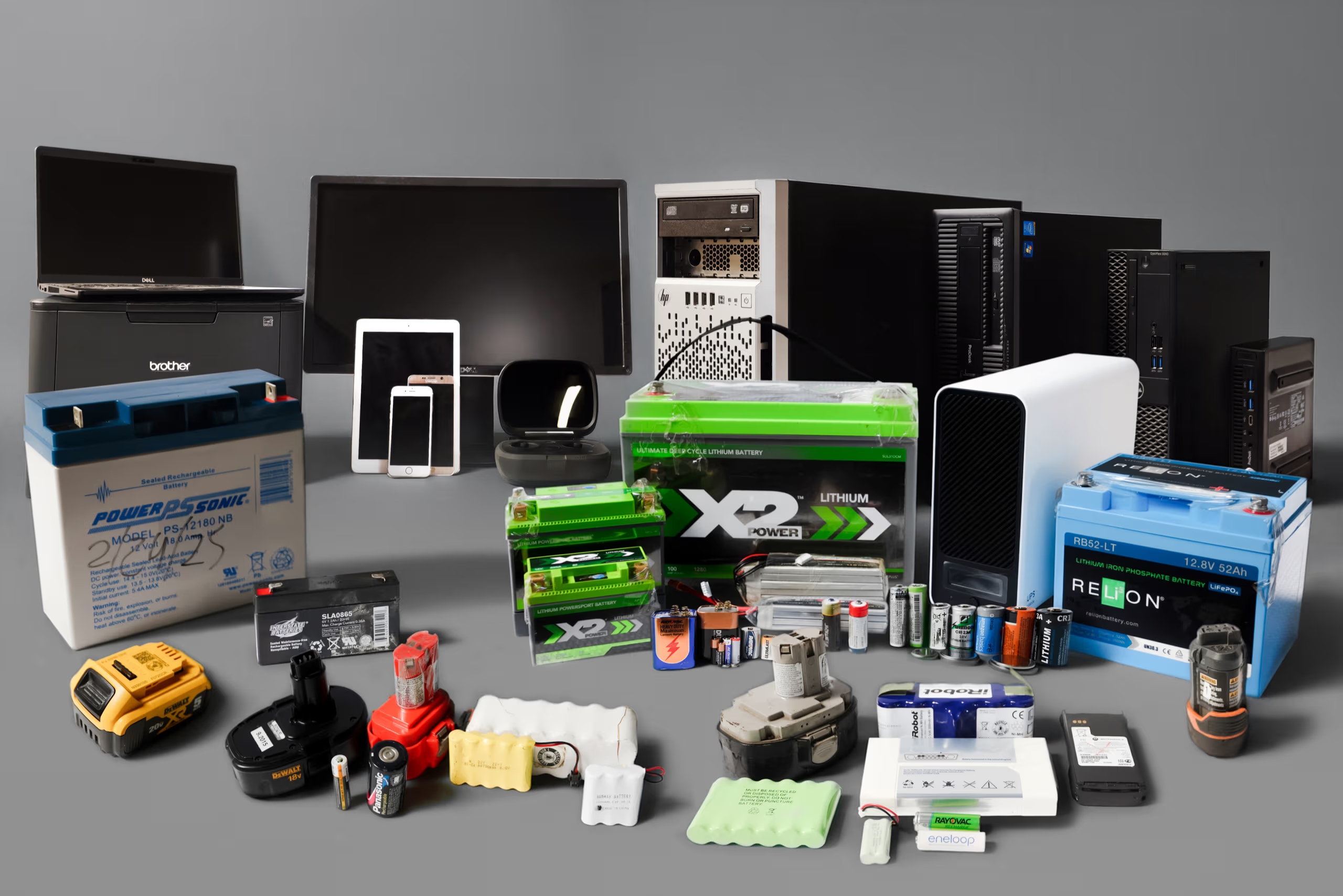

Simplify your compliance and disposal process with bundled recycling services that handle both electronic devices and batteries in one streamlined solution.

Our scheduled, route-based pickups cover all major regions of California—ensuring efficient, on-time service no matter where you operate.
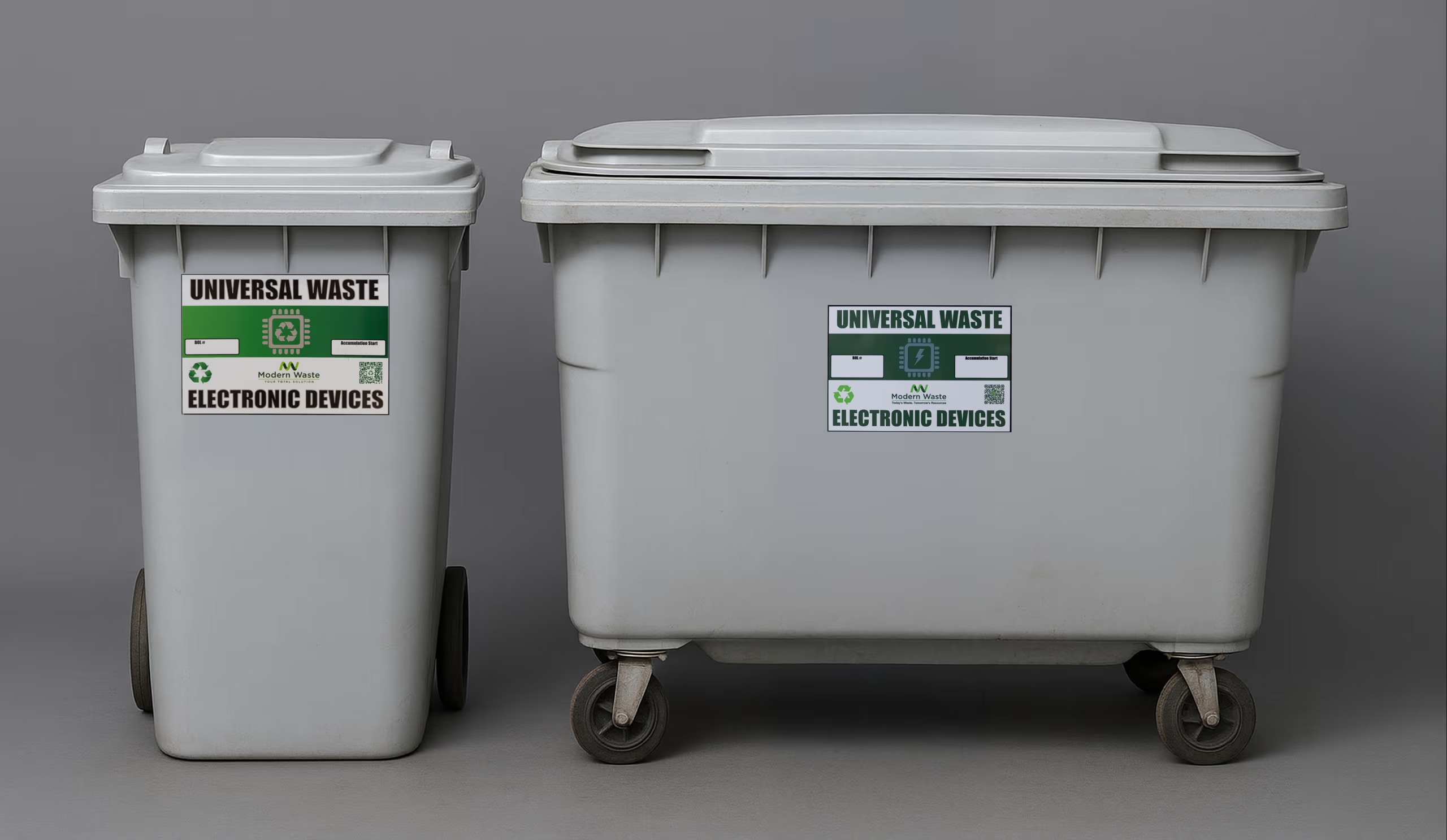
We provide clearly labeled, tamper-resistant containers to ensure safe and compliant collection of electronic waste and batteries at your location.

Modern Waste Solutions has served businesses and communities across California with dependable, environmentally responsible recycling solutions for over two decades.
We adhere to all California and federal regulations, ensuring your electronic and battery waste is managed with complete transparency and environmental responsibility.

Reviews
A little bit off the beaten track in Natomas, but Modern Waste quickly and efficiently helped me recycle my broken Lithium Iron Phosphate batteries at a reasonable $/lb fee (Sac county e-waste will not accept these items). Ramiro and Vincent were very friendly and helpful.

Chris was awesome! He came in and picked up all of the e-waste we had ready for him. He was polite and professional throughout the entire process. He handled the equipment with care, including the site equipment that was already in place. I am very happy with his service and appreciate the great job he did.

Aaron and Vincent were awesome, excellent customer service!

Great guys, excellent customer service, highly recommend!

Polite, quick and easy.

Chris from modern waste was the most outstanding respectful person I ever met my life when he was done he offered to sweep the floors. He offered so much even though he was limited on time he went out of his way and he’s over beyond best guy I ever met thank you so much for your service services Dan ITG.

Data center decommissioning is a controlled change project that retires workloads, infrastructure, and records without interrupting systems that must remain live. Here is the full process, from go/no-go to final reconciliation.
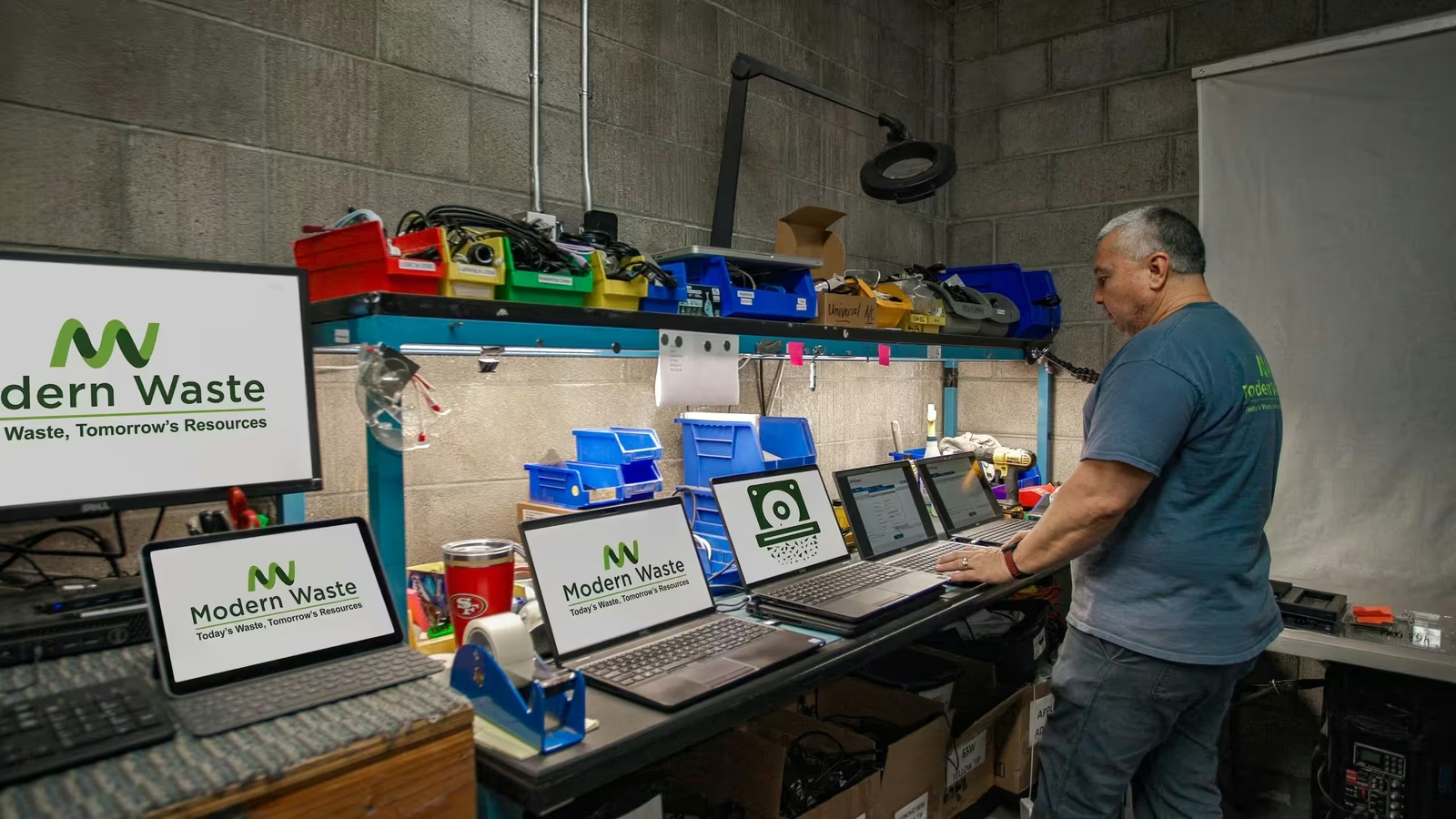
A mature ITAD program connects asset ownership, data security, environmental compliance, logistics, financial recovery, and reconciliation. Here is how the process works, what it costs, and how to evaluate a provider.
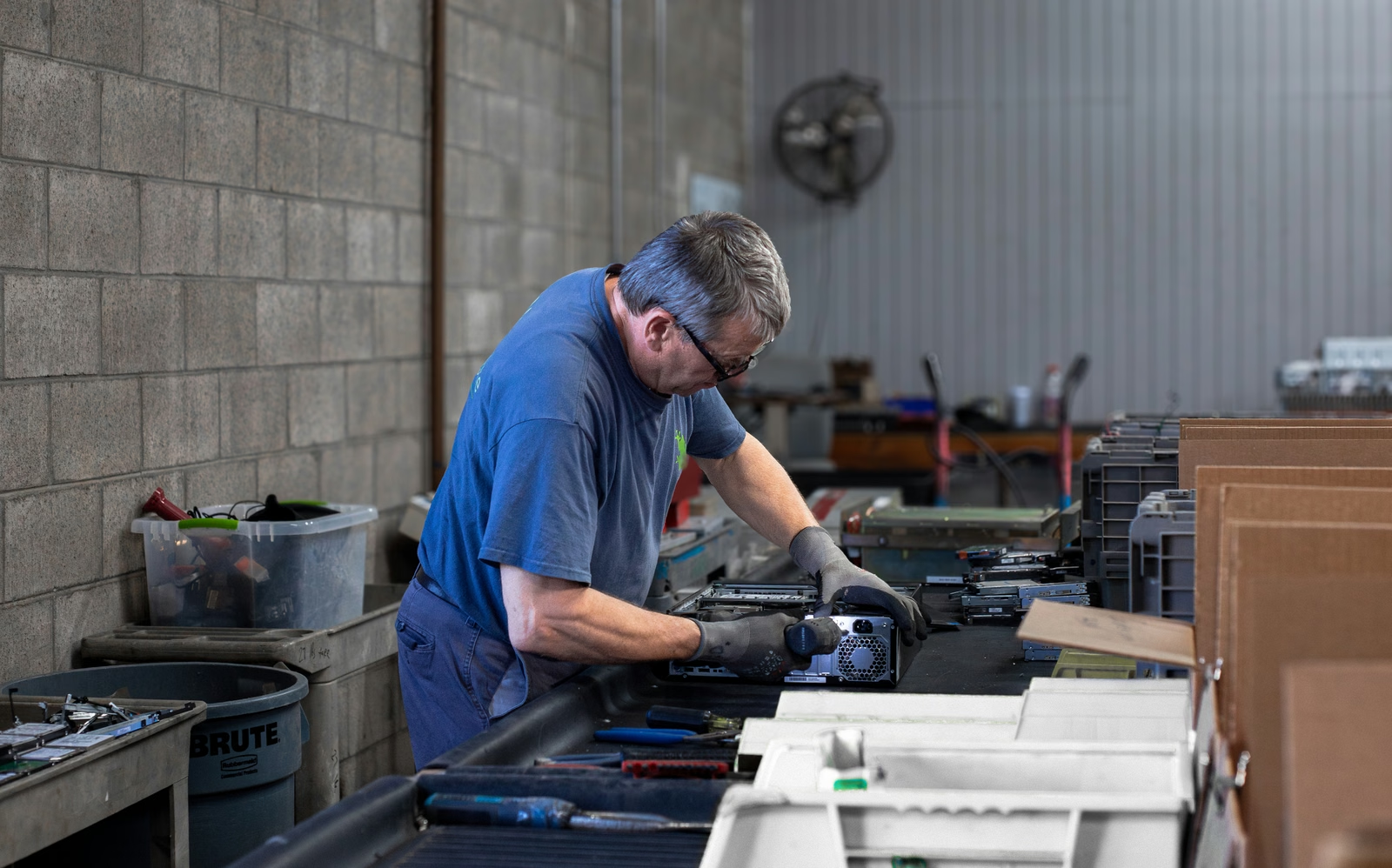
IT equipment liquidation converts marketable retired assets into documented financial recovery while routing nonmarketable equipment to responsible recycling. Here is how to decide which path fits each asset.