Published January 27, 2025 · 5 min read
· Updated September 27, 2026
What telecom and cable companies retire, why California has fined carriers over what ended up in their dumpsters, and how to manage returned equipment, backup batteries and data.
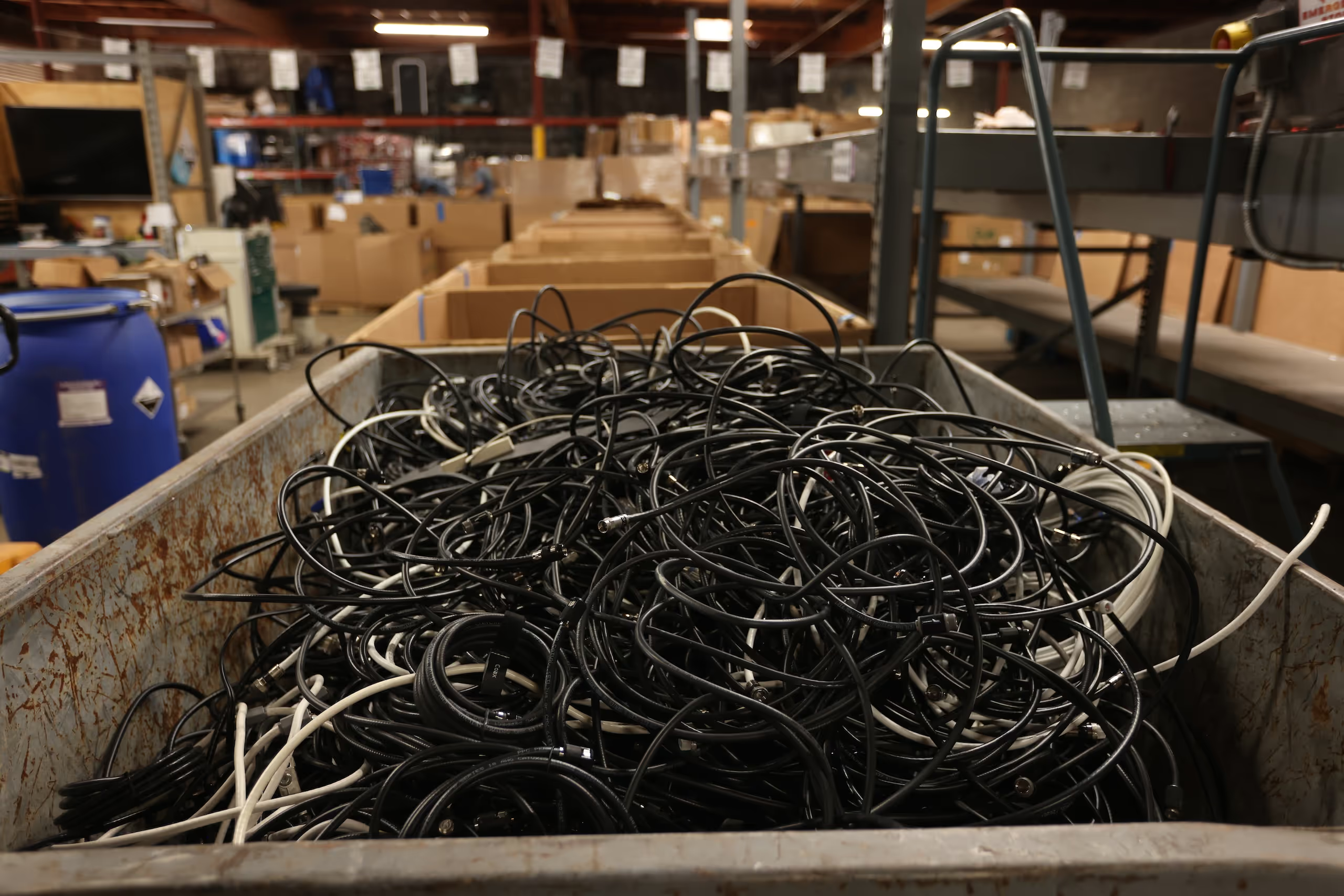
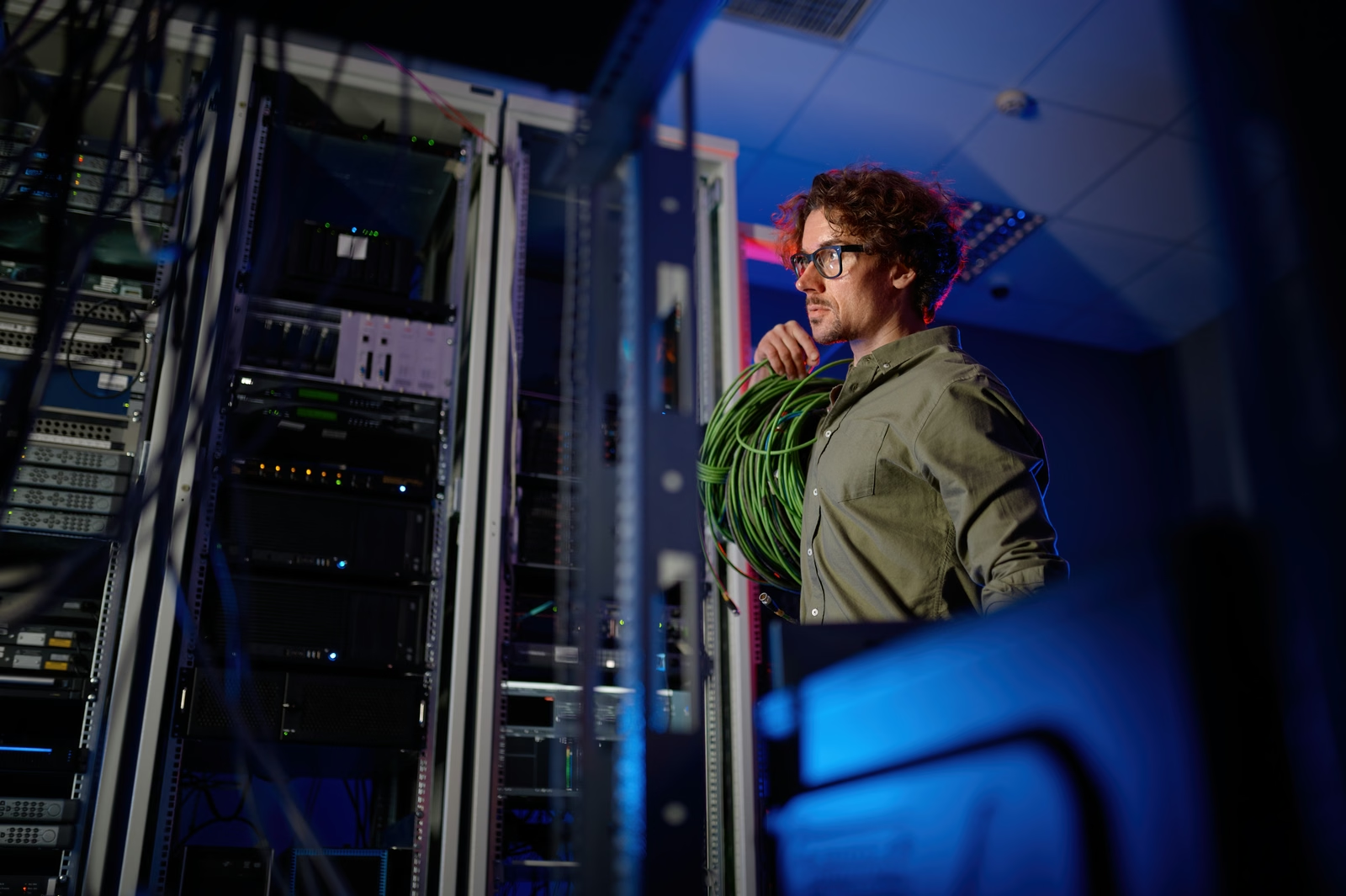
Telecom and cable companies handle a volume of electronics few other businesses match. Customers return modems, routers and set-top boxes by the pallet. Field technicians swap out splitters, remotes and power supplies every day. Network upgrades retire switches, routers and racks of backup batteries at central offices and cell sites. Each of those streams is regulated in California, and several carriers have paid millions after investigators found them in company dumpsters.
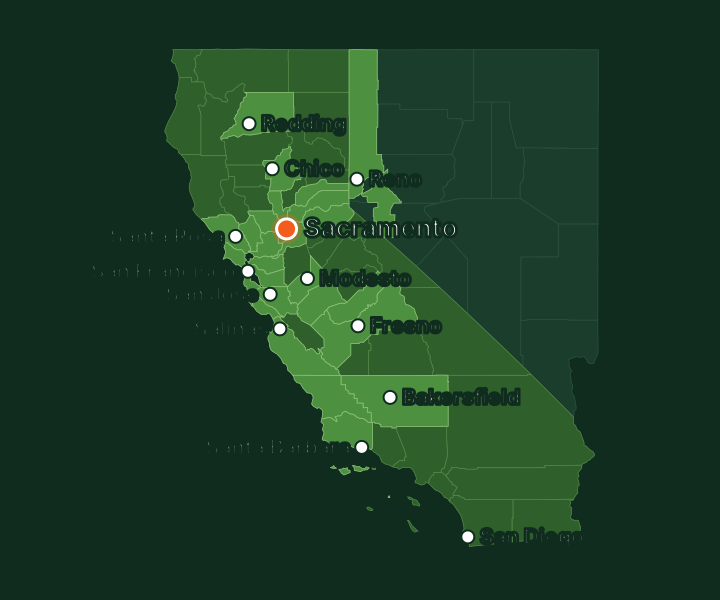
Modern Waste Solutions has operated since 1999 from its Sacramento facility and recycles electronics, batteries and data-bearing equipment for communications companies and other businesses throughout California. This article covers what telecom companies retire, what enforcement has looked like, and how to set up e-waste management for telecom companies across stores, warehouses, field fleets and network sites.
What e-waste do telecom companies generate?
Why has telecom e-waste drawn enforcement in California?
Telecom equipment is spread across stores, trucks and remote sites, and small items easily end up in the trash. The California Department of Justice and county district attorneys have reached hazardous waste settlements with several communications companies, including AT&T ($23.8 million), DIRECTV ($9.5 million) and Cox Communications ($3.3 million).
The most recent example shows how ordinary the items are. In December 2024, Frontier California agreed to a $3.5 million settlement after inspections at ten facilities recovered more than 300 potentially hazardous items from regular dumpsters, including batteries, remote controls, splitters, aerosol cans and devices with circuit boards. The settlement requires proper storage, labeling and transport of hazardous waste, employee training, three independent compliance audits over five years, and inspection of containers before waste leaves for recycling or a landfill.
Those terms are a useful checklist for any telecom company, whether or not it has been inspected.
How should telecom companies collect e-waste from stores and field operations?
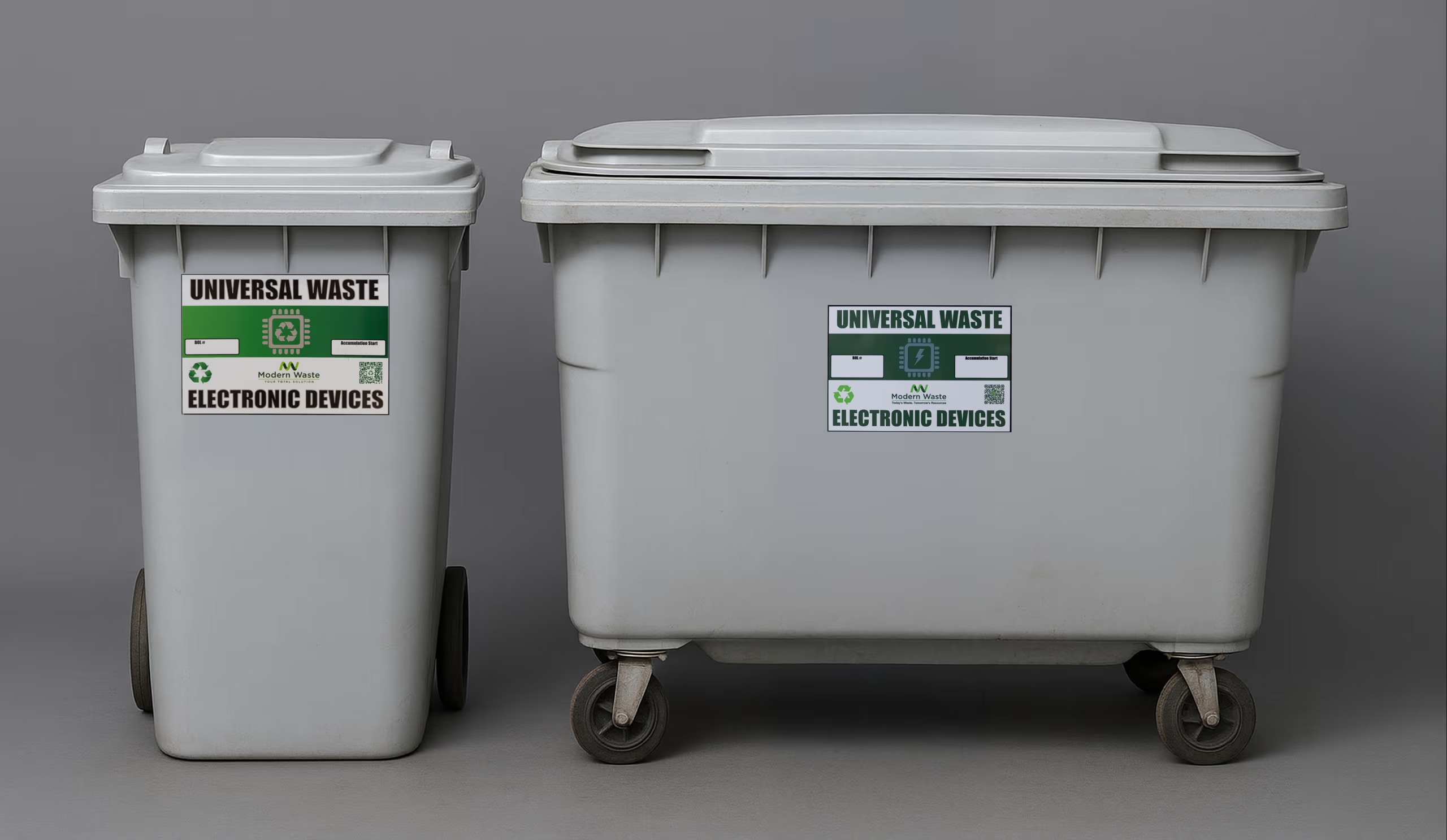
- Give every store, warehouse and yard the same labeled containers: one for electronics, separate buckets for each battery chemistry, and a locked container for data-bearing devices.
- Take batteries out of returned remotes and devices where that's practical, and collect them by chemistry.
- Have field technicians bring retired equipment back to the yard in a designated tote instead of disposing of it on the route.
- Mark each container with "Universal Waste", its contents and the start date, and ship within one year.
- Train store staff, warehouse crews and technicians, and keep the training records.
- Check the dumpsters. A monthly look at what's in the trash catches problems before an inspector does.
For companies with many locations, an enterprise recycling program keeps containers, rules and records the same at every site.
How should backup batteries from network sites be handled?
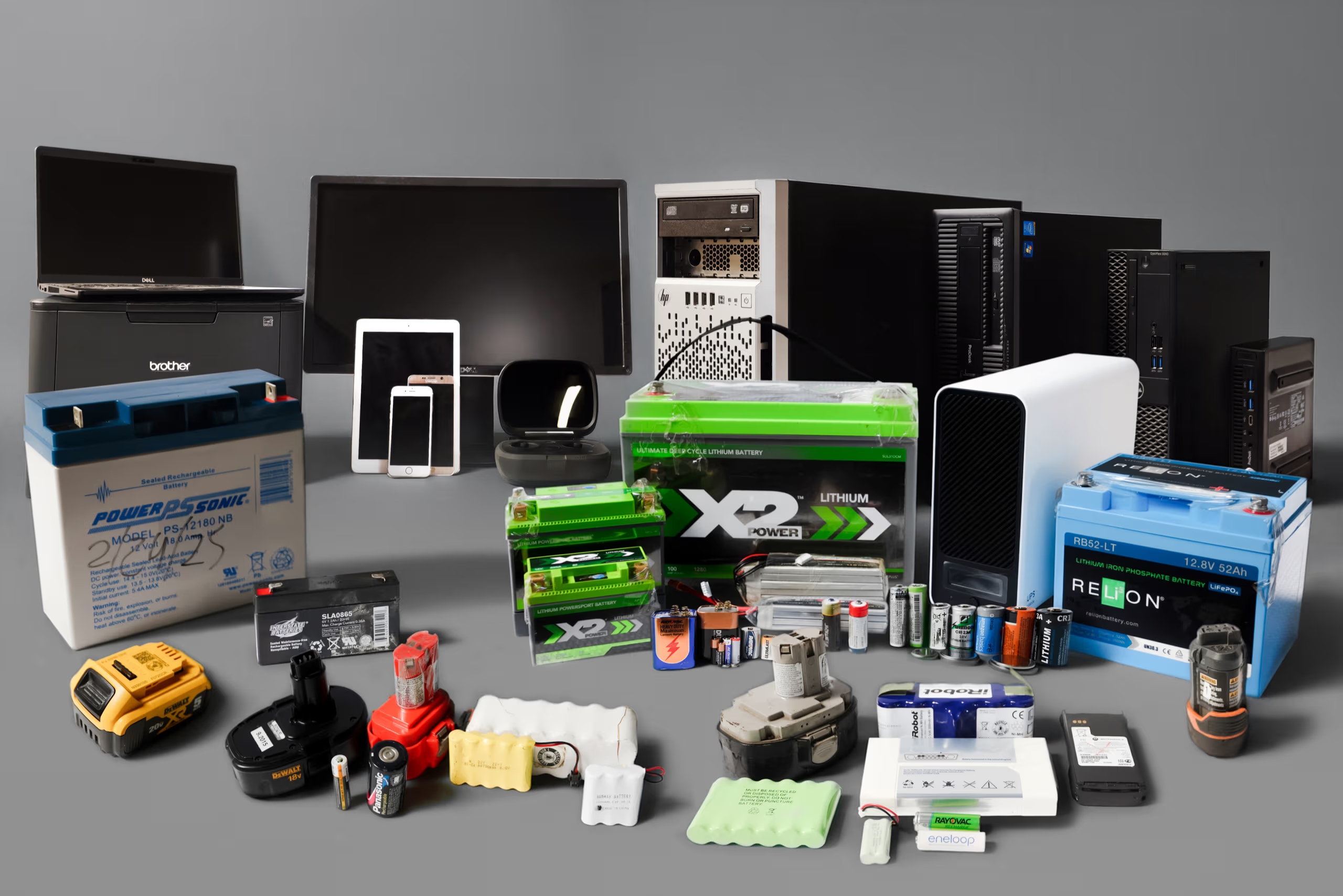
Central offices, headends and cell sites rely on battery strings, mostly sealed lead-acid with a growing share of lithium-ion. When a string is replaced, the old batteries are heavy, may be damaged, and are often spread across remote sites. Plan removal with the replacement work, keep lead-acid units upright and terminals protected, and keep lithium batteries apart from lead-acid. Our guides to lead-acid and UPS battery recycling and lithium-ion battery recycling cover handling in detail, and our data center and UPS decommissioning crews can remove larger systems.
What about customer data and network configurations?
Returned gateways and routers can hold customer Wi-Fi credentials and settings. Network equipment keeps configurations, passwords and topology. PBX systems store voicemail and call logs, and staff phones hold messages and contacts. Treat all of it as data-bearing: reset or wipe what will be redeployed, and destroy what won't, with a record for each serial number. Our ITAD services handle testing, wiping and resale of network gear that still has value, and hard drive destruction covers storage that must be shredded.
How can telecom companies reduce e-waste?
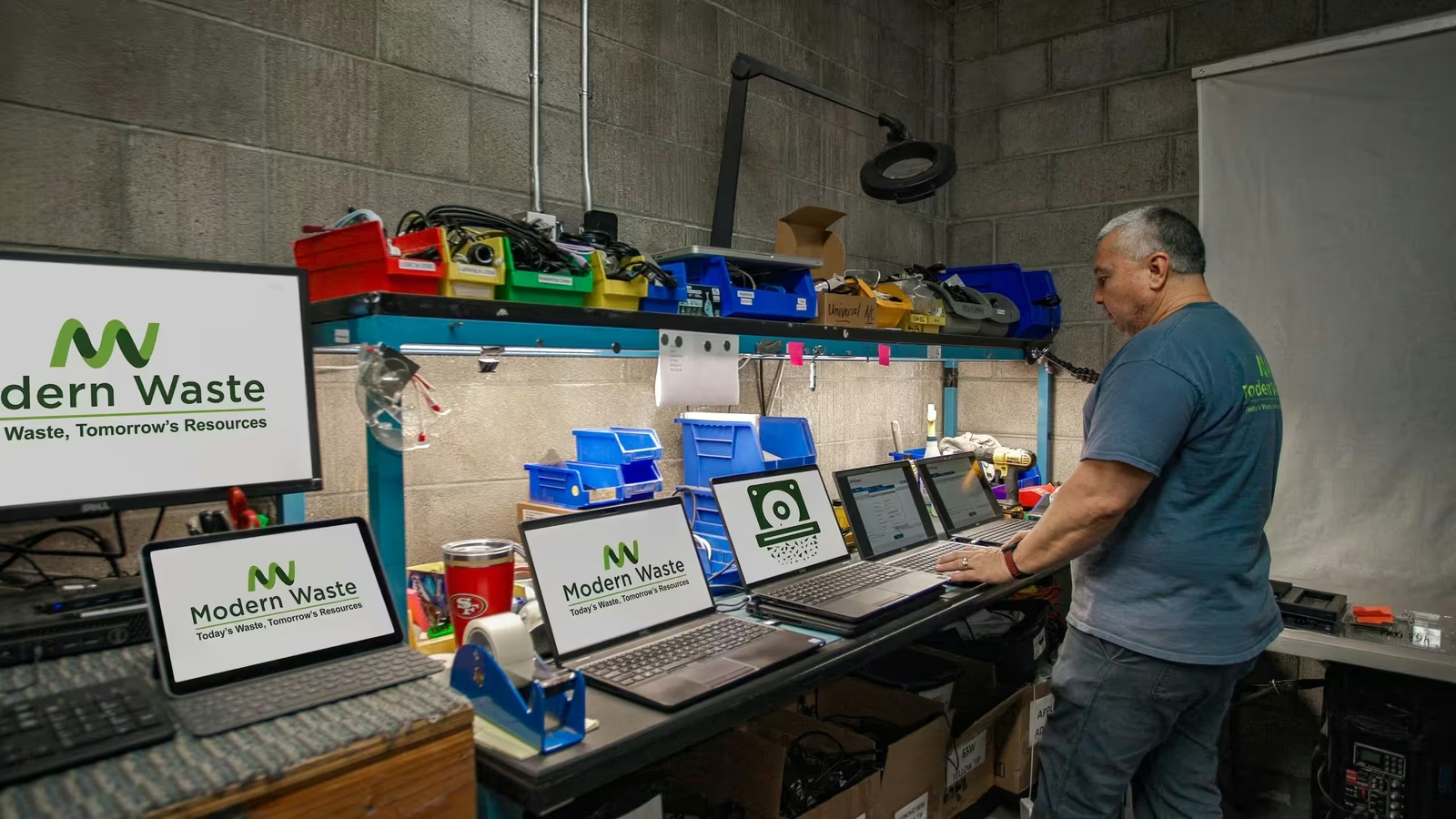
The most effective lever is keeping equipment in use longer. Test and refurbish returned customer equipment for redeployment where your programs allow it. Resell network hardware with remaining life through an ITAD provider instead of scrapping it. Standardize containers and reporting so you can see which sites and product lines produce the most waste. Our article on e-waste recycling and sustainability goals covers how to turn recycling records into reportable data.
Frequently Asked Questions
Are remote controls and splitters regulated waste?
They can be. Remotes contain batteries and circuit boards, and investigators listed both remotes and splitters among the potentially hazardous items pulled from Frontier's dumpsters. Recycle them with your electronics.
Are set-top boxes and modems e-waste in California?
Yes. They are electronic devices that can't go in the trash. Wipe or reset stored customer settings and recycle them, or refurbish them for reuse.
Do you recycle telecom backup batteries from cell sites?
Yes. We recycle sealed lead-acid and lithium-ion backup batteries. Tell us the quantities, chemistries, locations and condition so the pickup and packaging can be planned.
Can one program cover stores, warehouses and network sites?
Yes. We set up containers and pickup schedules per site and group the records by location, so you can report on each one.
The bottom line
E-waste management for telecom companies comes down to consistent containers at every store, yard and network site, trained staff, batteries kept apart by chemistry, and data wiped or destroyed with records. The Frontier settlement terms make a good self-audit list. Request a quote to set up collection across your locations, or see our business electronics recycling service.
Sources
Landon Goodman , President
Landon Goodman is the founder and President of Modern Waste Solutions, which he has led since 1999. From the company's Sacramento facility he oversees an ISO-certified operation providing electronics recycling, battery recycling, and secure data destruction to businesses across California.