Published June 14, 2025 · 3 min read
· Updated September 27, 2026
Retiring old equipment is one of the few sustainability actions you can measure, audit and report. Here is how e-waste recycling turns IT asset disposal into ESG evidence for a California business.
Most corporate sustainability commitments are hard to measure. Retiring electronics is an exception: every device that leaves your building can be weighed, tracked, kept out of landfill and documented. Handled through a documented recycling program, e-waste recycling is one of the few sustainability actions that produces numbers a business can put in a report.
Modern Waste Solutions has provided electronics recycling and secure data destruction to California organizations since 1999 from its Sacramento facility, under ISO 9001, 14001 and 45001 certified management systems. This article covers how e-waste recycling supports corporate sustainability and ESG goals, and what records make that contribution reportable.
How does e-waste recycling support corporate sustainability goals?
Electronics contain recoverable materials, including copper, aluminum, steel, precious metals such as gold and silver, glass and plastics, that can go back into manufacturing instead of being mined again. Reuse extends a device's working life first; recycling recovers its materials once it has none left. That order is the basic idea of a circular economy.
For a business, the contribution shows up in three places that match common sustainability targets for waste and circularity:
- Material recovery: resources returned to the supply chain.
- Landfill diversion: pounds of equipment kept out of disposal.
- Hazard control: batteries and leaded glass managed correctly instead of left to break down in a landfill.
How does responsible recycling reduce your environmental footprint?
Electronics thrown away with ordinary waste take usable materials to landfill and can release heavy metals and other regulated substances as they break down. A recycler removes the hazardous parts, such as batteries and leaded CRT glass, and sends each to an appropriate destination before the remaining material is recovered.
Recovered material also reduces demand for new extraction and the energy that goes with it. A sustainability narrative does not need an invented percentage to make this point. The U.S. EPA's sustainable materials management guidance describes the mechanism: reuse and recovery displace new production across a product's life cycle.
What ESG evidence does an e-waste recycling program produce?
"We recycle our electronics" becomes a defensible ESG claim once it is documented. A well-run program leaves you with:
- A chain-of-custody record from pickup to processing.
- A certificate of recycling for each job.
- Weights and itemized manifests, which are the figures behind a diversion or recovery metric.
- A certificate of data destruction for data-bearing devices, which doubles as governance evidence.
Ask your recycler how its environmental management system handles downstream vendors. Our ISO 14001 system covers handling, transport, downstream vendors and final disposition, so the figures you report rest on a documented process. If you are new to the categories involved, our guide to what counts as e-waste in California explains them.
How do you make IT asset disposition count toward sustainability targets?
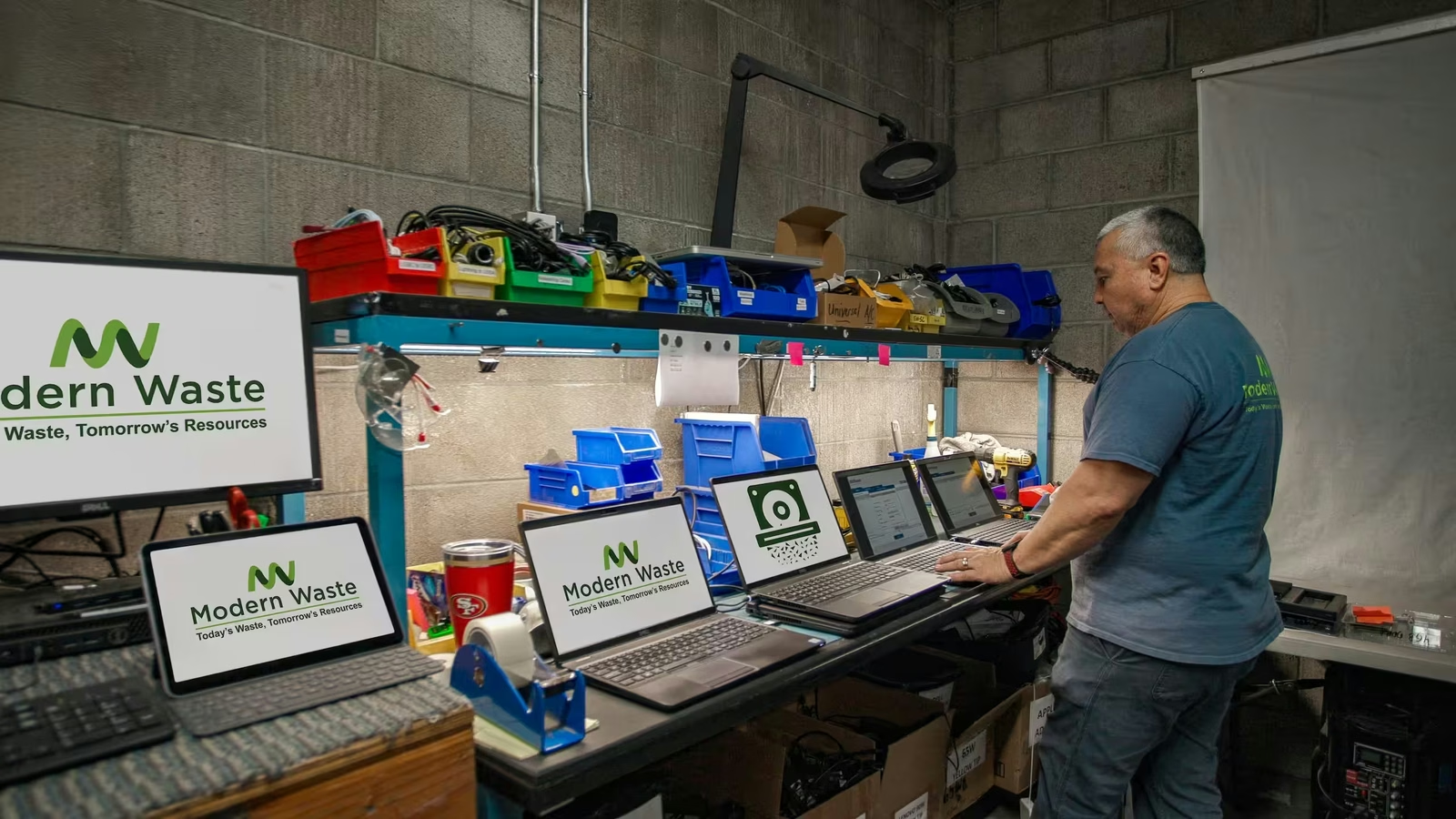
Retired equipment with remaining value can go through IT asset disposition for resale evaluation. For the operational side of a pickup, see our business guide to recycling electronics.
Frequently Asked Questions
Does e-waste recycling count toward sustainability goals?
Yes. It produces measurable landfill diversion and material recovery, and a documented program gives you the records to report both.
What proof can we use in an ESG report?
Chain-of-custody records, certificates of recycling and destruction, and itemized weights from each pickup give you auditable figures instead of estimates.
Why does the recycler's certification matter for sustainability claims?
An ISO 14001 environmental management system is audited, so your reported outcomes rest on documented handling and downstream controls. That matters if a claim is ever questioned.
The bottom line
End-of-life electronics are a sustainability lever you can measure and audit. Run through a documented program, IT asset disposition becomes ESG evidence you can report. Talk to Modern Waste Solutions about a reportable electronics recycling program for your business.
Sources
Landon Goodman , President
Landon Goodman is the founder and President of Modern Waste Solutions, which he has led since 1999. From the company's Sacramento facility he oversees an ISO-certified operation providing electronics recycling, battery recycling, and secure data destruction to businesses across California.