
Published June 14, 2025 · 4 min read · Updated September 27, 2026
The Hidden Risks of Improper Battery Disposal
Spent batteries in the trash start fires, leach toxic metals and expose California businesses to regulatory liability. Here is what goes wrong with improper battery disposal and how to avoid it.
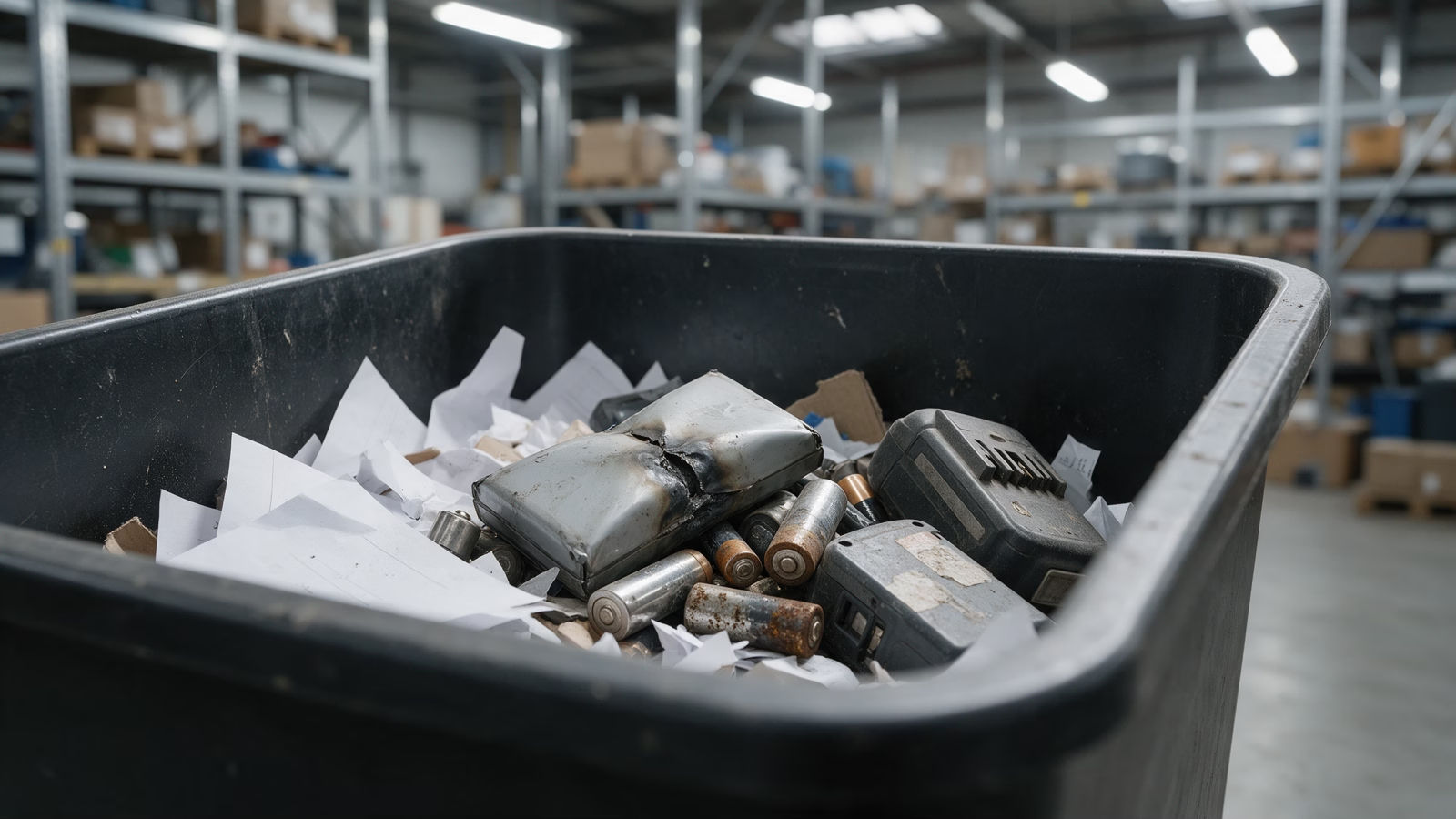
A battery in a trash can looks harmless. In practice it is one of the most common causes of avoidable fires in waste and recycling operations, a source of heavy metals in soil and groundwater, and, for a California business, a documented compliance failure. Lithium-ion cells can ignite when they are crushed, punctured or short-circuited, which is what happens once a battery leaves a labeled container and ends up in a compactor or collection truck.
Modern Waste Solutions has handled battery collection, transportation and recycling for California organizations since 1999. This article covers the risks of improper battery disposal: what goes wrong when batteries are thrown away, which chemistries the state regulates, the liability a business takes on, and how to set up compliant collection instead.
The hazards fall into two groups, immediate physical danger and long-term environmental harm. Both are preventable, and both become the generator's problem once a battery is handled as ordinary trash.
Lithium-ion batteries store a lot of energy in a small space. When a cell is damaged or its terminals touch conductive material, it can go into thermal runaway, a self-sustaining reaction that produces intense heat, flammable gas and a fire that water alone does not easily put out. Waste haulers across the country report truck and facility fires traced to batteries hidden in general refuse. One swollen laptop battery in a compactor can set a whole load alight.
Batteries contain heavy metals and corrosive electrolytes: lead, cadmium and, in older chemistries, mercury; cobalt, nickel and lithium salts in newer ones. In a landfill the casings corrode, and these substances can migrate into soil and groundwater, where they persist and are expensive to clean up. That is why California does not allow batteries to be landfilled.
Under California's Universal Waste Rule, administered by the Department of Toxic Substances Control (DTSC), all batteries are banned from the regular trash, including single-use alkaline batteries. They must be recycled or taken to a household hazardous waste or universal waste handler. The table below covers the most common workplace chemistries.
| Battery type | Where it shows up | Primary risk |
|---|---|---|
| Lithium-ion / Li-polymer | Laptops, phones, tools, UPS packs, e-bikes | Fire and thermal runaway when damaged or shorted |
| Lead-acid | Vehicles, forklifts, backup power, alarms | Lead and sulfuric acid, which are corrosive and highly toxic |
| Nickel-cadmium / NiMH | Power tools, emergency lighting, older devices | Cadmium is a regulated carcinogen |
| Alkaline (single-use) | Remotes, keyboards, flashlights, test equipment | Banned from California trash; must be recycled |
Not knowing the rule is no defense. The organization that generates the waste is responsible for its lawful handling from the moment it is discarded until it reaches an authorized destination. Improper disposal can lead to enforcement by DTSC and local agencies, cleanup costs if contamination is traced to your material, and, if a fire starts, liability for property damage and injuries. Indirect costs follow: business interruption, insurance consequences and harm to your standing with clients who expect a documented supply chain.
Documentation is the part you control. A compliant program produces a chain-of-custody record and a certificate of recycling showing the material was managed correctly. Without them, a business cannot show where its batteries went.
A managed battery program takes the hazard out of your facility. It should:
- Separate batteries at the source into labeled, non-conductive containers, never the general waste stream.
- Tape terminals or bag lithium cells individually to prevent short circuits, and isolate swollen, damaged or recalled units.
- Store accumulating batteries away from heat and combustibles.
- Use a qualified hauler and recycler for transport and processing, with reporting at the end.
Modern Waste Solutions provides battery recycling across California, covering sorting, insulating, packaging, labeling, transportation and a certificate of recycling for your records. For how the material is handled after it leaves your site, see our guide to the battery recycling process and storage safety, and for lithium-ion specifics, lithium-ion battery recycling for businesses. When you are ready to set up a pickup, request a quote and we will build a program around your volume and chemistries.
Can I throw alkaline (AA/AAA) batteries in the trash in California?
No. California bans all batteries from regular trash, including single-use alkaline batteries. They must be recycled or taken to a universal waste or household hazardous waste handler.
Why are lithium-ion batteries a fire hazard?
They store a lot of energy and can go into thermal runaway when punctured, crushed or short-circuited, releasing heat and flammable gas. That most often happens in trucks and compactors after a battery has been thrown out with ordinary trash.
What documentation should a business keep for battery disposal?
Keep the chain-of-custody record from pickup through processing and the certificate of recycling from your provider. They show the material was handled lawfully if a regulator asks.
What should I do with a swollen or damaged battery?
Isolate it from other batteries and combustibles, do not charge or puncture it, and tell your recycler. Damaged cells need special handling and cannot go into routine collection.
Throwing batteries away saves a few minutes and leaves the business with fire risk, environmental damage and regulatory exposure. A managed program removes those risks and gives you the paperwork to show it. If your organization collects batteries of any chemistry, talk to Modern Waste Solutions about compliant collection and recycling.
- California DTSC: Universal Waste (batteries): dtsc.ca.gov/universal-waste
- CalRecycle: Battery Stewardship (Responsible Battery Recycling Act): calrecycle.ca.gov/epr/batteries
- U.S. EPA: Used Lithium-Ion Batteries: epa.gov/recycle/used-lithium-ion-batteries
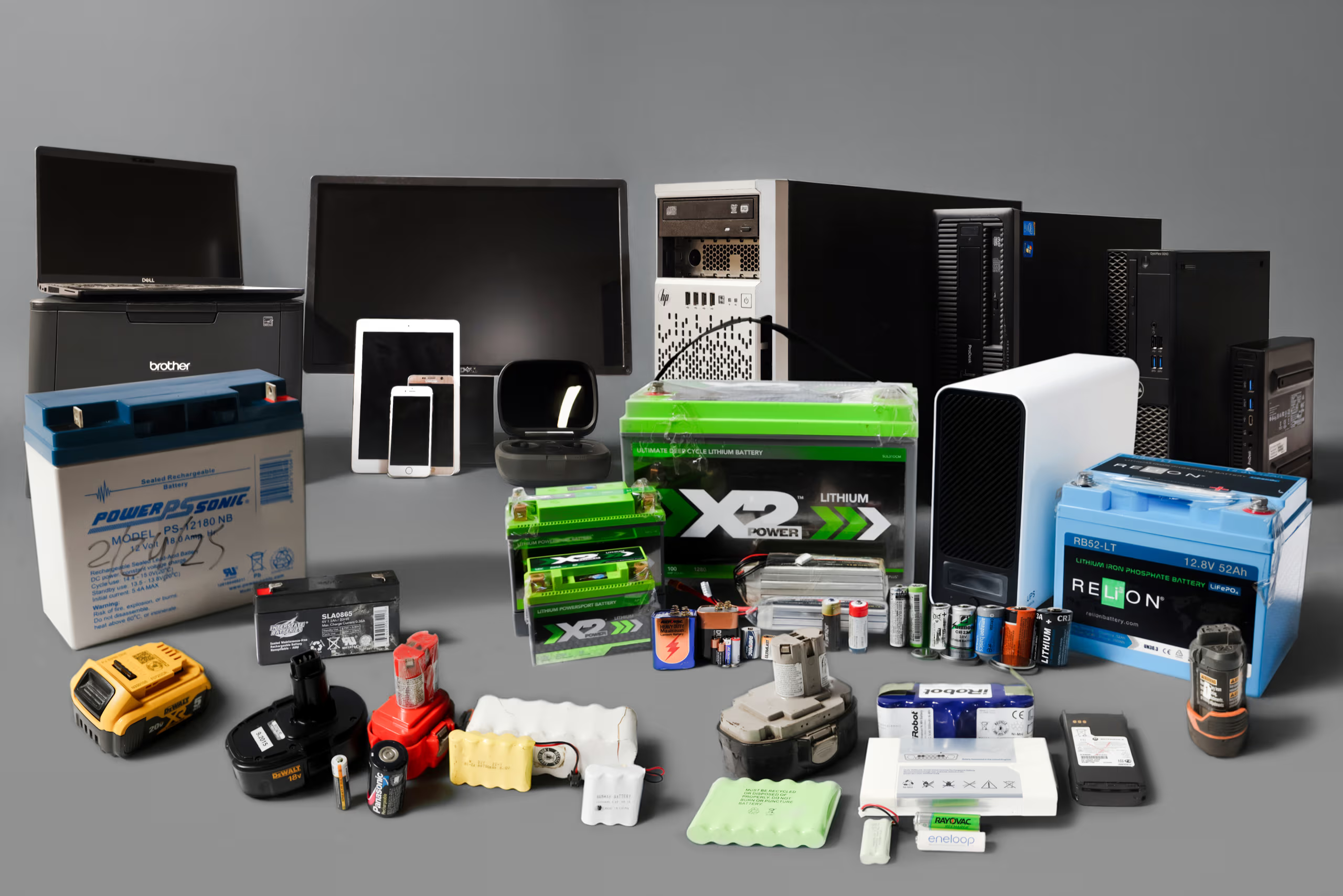

Simplify your compliance and disposal process with bundled recycling services that handle both electronic devices and batteries in one streamlined solution.

Our scheduled, route-based pickups cover all major regions of California—ensuring efficient, on-time service no matter where you operate.
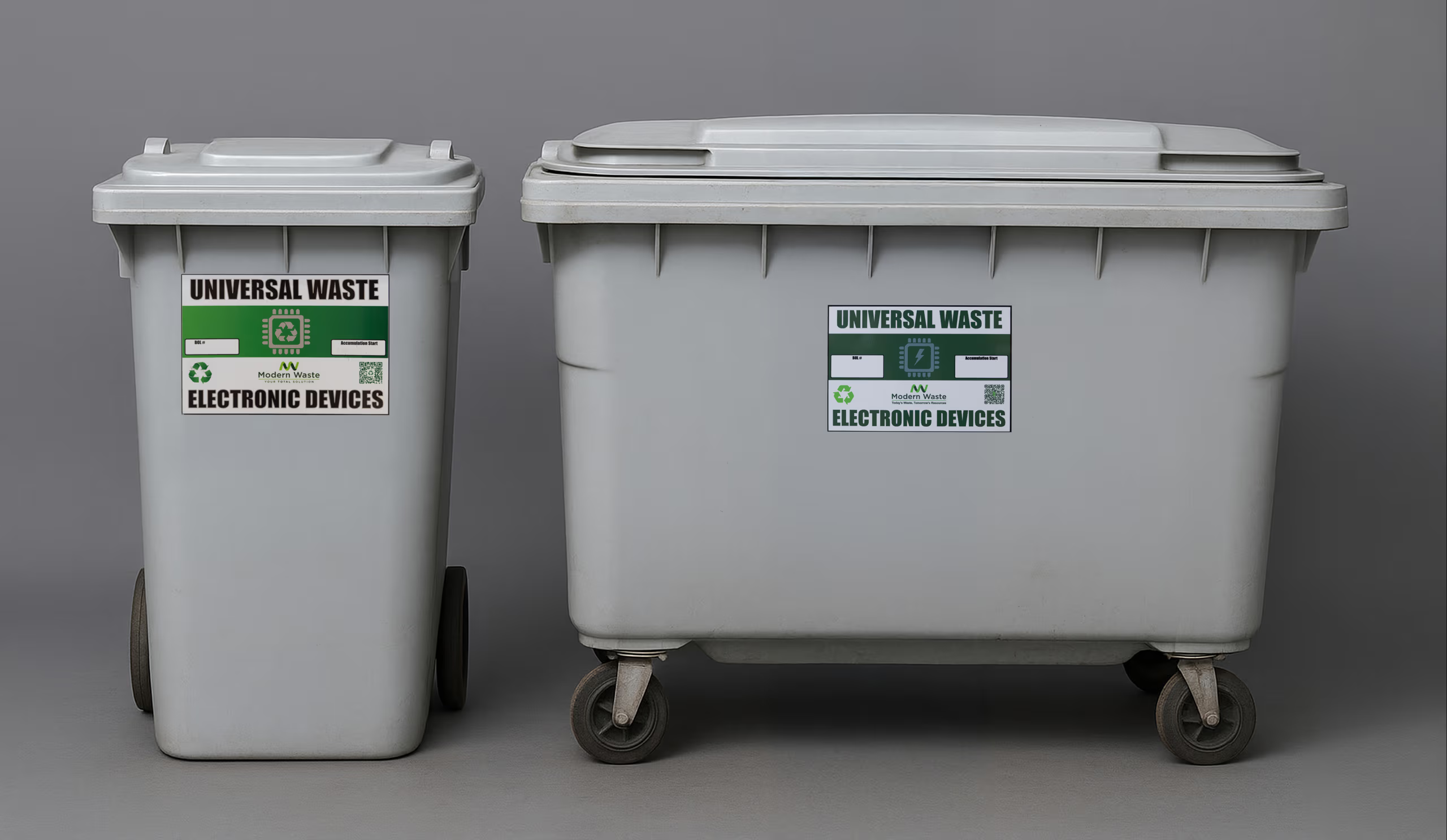
We provide clearly labeled, tamper-resistant containers to ensure safe and compliant collection of electronic waste and batteries at your location.

Modern Waste Solutions has served businesses and communities across California with dependable, environmentally responsible recycling solutions for over two decades.
We adhere to all California and federal regulations, ensuring your electronic and battery waste is managed with complete transparency and environmental responsibility.

Reviews
A little bit off the beaten track in Natomas, but Modern Waste quickly and efficiently helped me recycle my broken Lithium Iron Phosphate batteries at a reasonable $/lb fee (Sac county e-waste will not accept these items). Ramiro and Vincent were very friendly and helpful.

Chris was awesome! He came in and picked up all of the e-waste we had ready for him. He was polite and professional throughout the entire process. He handled the equipment with care, including the site equipment that was already in place. I am very happy with his service and appreciate the great job he did.

Aaron and Vincent were awesome, excellent customer service!

Great guys, excellent customer service, highly recommend!

Polite, quick and easy.

Chris from modern waste was the most outstanding respectful person I ever met my life when he was done he offered to sweep the floors. He offered so much even though he was limited on time he went out of his way and he’s over beyond best guy I ever met thank you so much for your service services Dan ITG.

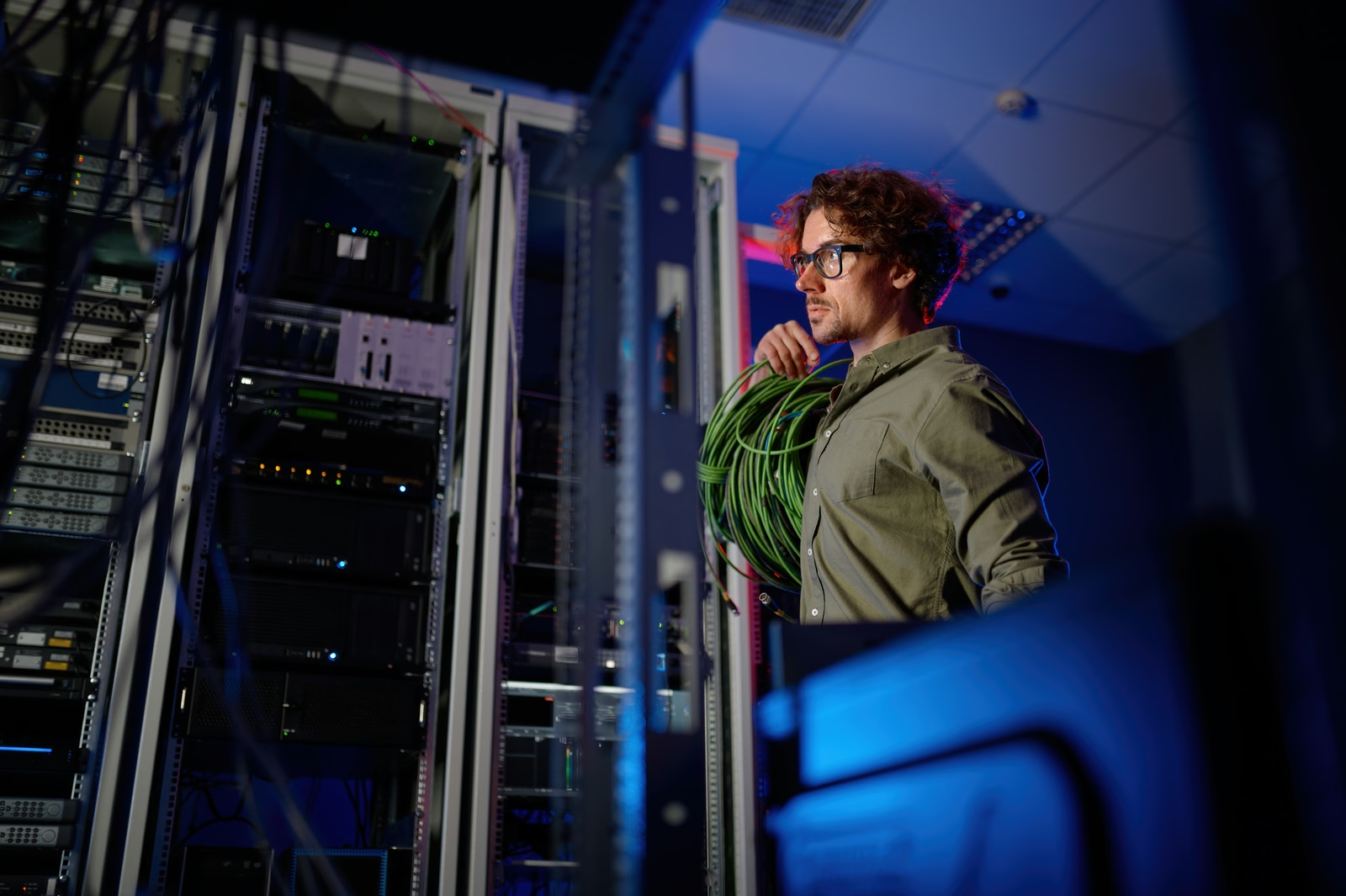
Data center decommissioning is a controlled change project that retires workloads, infrastructure, and records without interrupting systems that must remain live. Here is the full process, from go/no-go to final reconciliation.
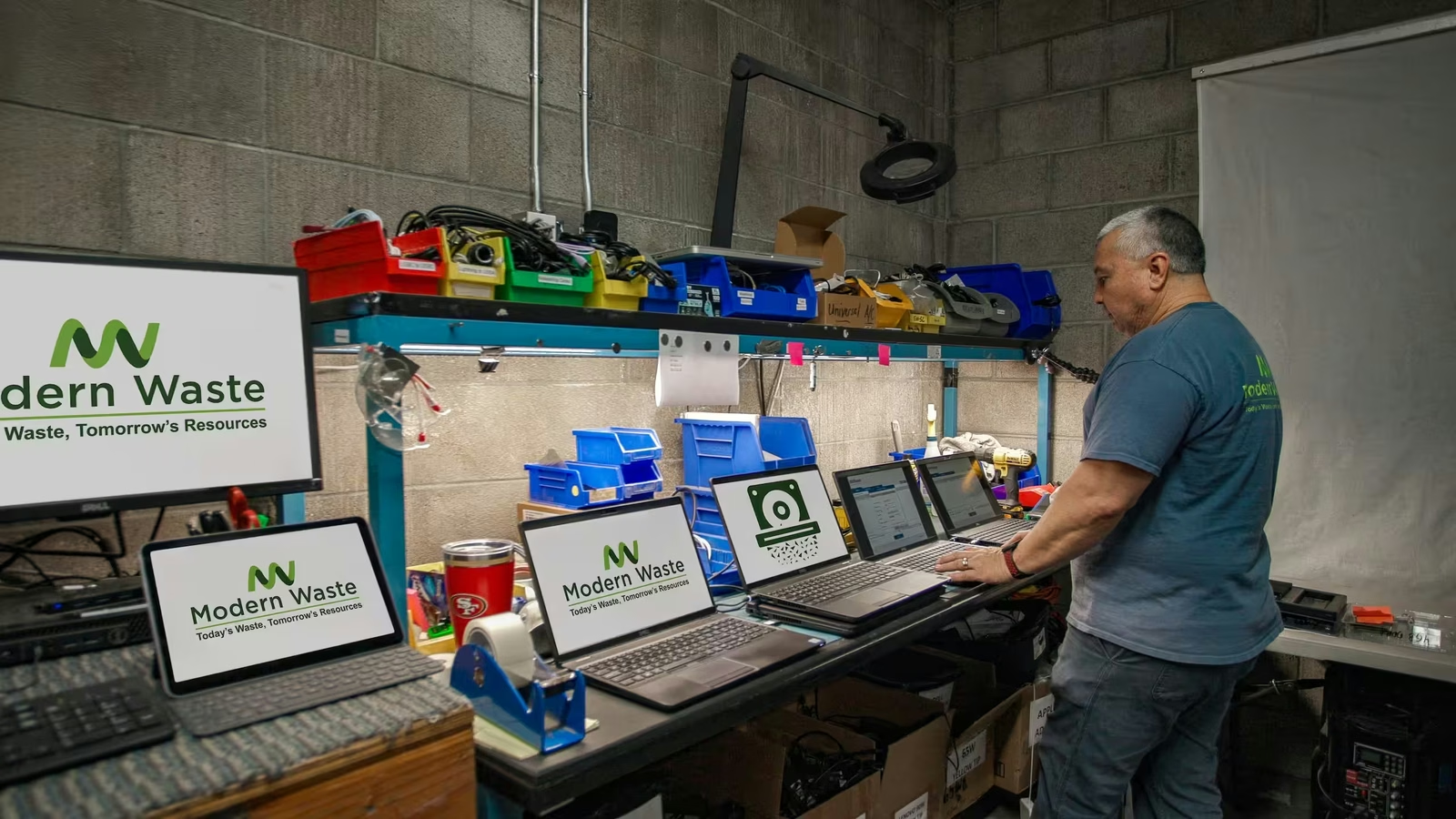
A mature ITAD program connects asset ownership, data security, environmental compliance, logistics, financial recovery, and reconciliation. Here is how the process works, what it costs, and how to evaluate a provider.
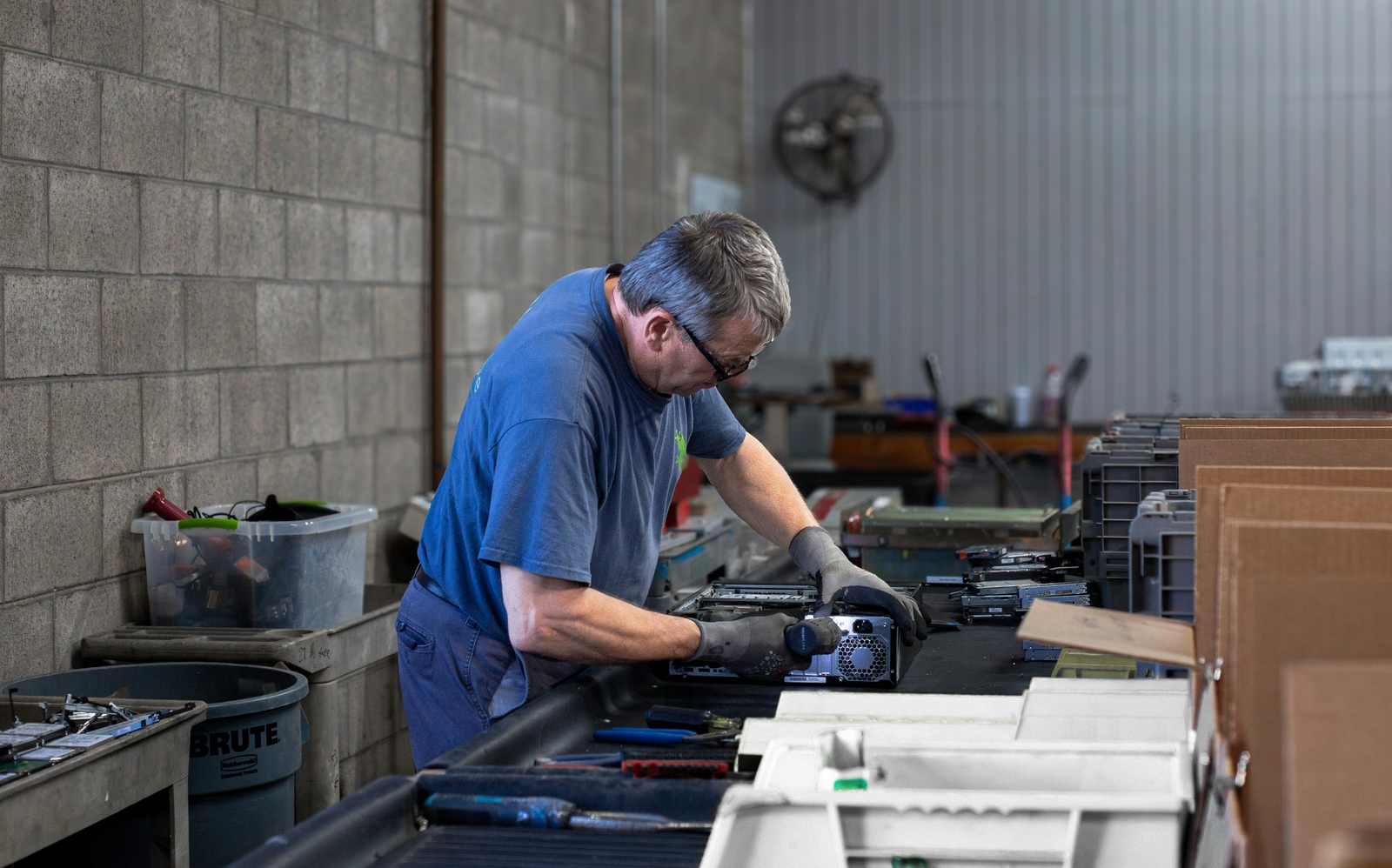
IT equipment liquidation converts marketable retired assets into documented financial recovery while routing nonmarketable equipment to responsible recycling. Here is how to decide which path fits each asset.