

Published September 20, 2026 · 6 min read · Updated September 27, 2026
Lead-Acid & UPS Battery Recycling for Business
Lead-acid and UPS backup batteries are among the most recyclable materials a facility produces, and they become hazardous waste the moment they are spent. Here is where they hide, how to move them safely and how to stay compliant in California.
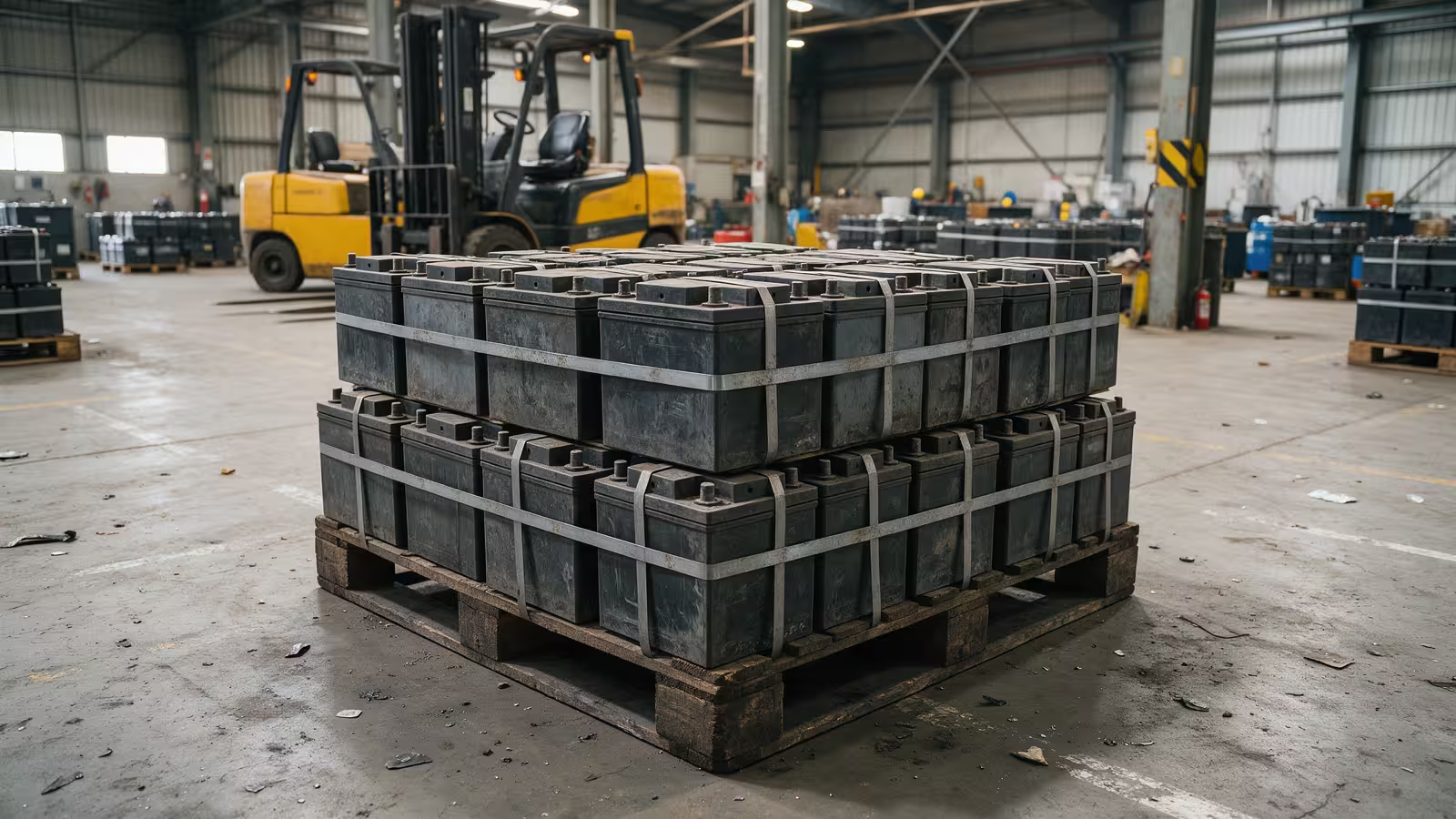
A dead UPS battery on a shelf or a swapped-out forklift battery on a pallet is easy to ignore until it leaks acid onto the floor, shorts against a metal rack or turns up in an audit as unmanaged hazardous waste. Lead-acid batteries are among the most recyclable products a business handles, since nearly every component can go back into a new battery. Once spent, the same battery is a package of lead and sulfuric acid that California does not allow in the trash.
Modern Waste Solutions has operated since 1999 from its Sacramento facility and collects, transports and recycles batteries for organizations throughout California. This article covers lead-acid battery recycling for businesses: where lead-acid and UPS batteries turn up, why the material is both recyclable and hazardous, how to handle and store it, what DTSC Universal Waste compliance requires and how to set up scheduled pickups.
Most companies file lead-acid under car batteries. In practice it is spread across the facility, often inside equipment nobody thinks of as a battery until it fails. Anything that needs stored power when the grid drops is a likely place to look.
| Where it shows up | Typical battery format | What to watch for |
|---|---|---|
| UPS units & data-center backup | Sealed lead-acid (VRLA/AGM) strings and cabinets | Many small-to-midsize units; batteries age out on a cycle |
| Telecom & network closets | VRLA backup batteries | Often forgotten in remote rooms until failure |
| Forklifts & material handling | Large flooded lead-acid traction batteries | Very heavy; require equipment to move |
| Construction & heavy equipment | Flooded starting batteries in loaders, lifts and generators | Stored outdoors or in yards; corrosion and cracked cases |
| Fleet & vehicles | Flooded automotive/SLI batteries | Free-flowing acid; must stay upright |
| Alarm, access & emergency systems | Small sealed lead-acid cells | High unit count spread across a building |
Lead-acid rarely arrives as one obvious pile. It builds up a few units at a time across departments, which is how batteries end up parked in hallways or tossed in general waste by someone who does not know the rules. A battery that no longer holds a charge, shows heavy terminal corrosion or has a cracked case is ready to be pulled from service and staged for recycling.
At a permitted facility, a lead-acid battery is separated and almost entirely reused. That is why used batteries have recovery value.
- Lead plates and terminals are smelted and refined into new battery-grade lead.
- Polypropylene cases are cleaned, reground and molded into new battery casings.
- The sulfuric acid electrolyte is neutralized or reprocessed.
The chemistry that makes recycling worthwhile also makes the battery dangerous. Lead is a toxic heavy metal that builds up in the body and the environment, and the electrolyte is corrosive acid. A cracked case leaks acid, a damaged or overcharged battery can vent flammable hydrogen gas, and terminals bridged by a wrench or a metal shelf can arc. California treats spent batteries as universal waste and keeps them out of landfills for these reasons.
Weight and reactive contents drive every handling decision. A small sealed UPS cell weighs a few pounds, a forklift traction battery can weigh hundreds, and the acid inside a flooded battery moves when the battery does.
Match the method to the mass. Use team lifts, pallet jacks or battery-handling equipment for large units, and never carry a heavy battery by its terminals or by a cracked case. Banding batteries on pallets protects people and product in storage and on the truck.
Store batteries upright on a sealed, acid-resistant surface, with secondary containment for flooded units, and keep an acid-neutralizing spill kit and PPE nearby. Keep batteries from touching each other or bare metal so terminals cannot bridge, and isolate any unit that is swollen, cracked or leaking. The storage area should be cool, ventilated and away from ignition sources, because charging and damaged batteries can release flammable gas.
Store lead-acid separately from lithium-ion and other chemistries. Each has different hazards, handling rules and recycling paths, and mixing them complicates both safety and documentation. If your facility also collects lithium cells, our guide to lithium-ion battery recycling for business explains how that stream is managed.
Under California's Universal Waste Rule, administered by the Department of Toxic Substances Control (DTSC), spent batteries, including lead-acid, are prohibited from regular trash and must go to an authorized recycler or handler. The business that generates them is responsible from the moment they are discarded until they reach that destination. An in-house program needs four habits:
- Keep spent batteries in sturdy, closed, non-leaking containers or on banded pallets, separate from active inventory.
- Label accumulations with the universal waste battery wording and the date accumulation began, and stay within the allowed on-site accumulation time.
- Move material only with a hauler and recycler equipped to handle lead-acid and backup batteries lawfully.
- Keep the chain-of-custody records and the certificate of recycling.
Without a chain of custody and a certificate, a business cannot show where its batteries went if DTSC or a local agency asks.
A pickup schedule stops batteries from piling up and takes the guesswork away from the people who swap them out. A managed program usually runs like this:
- Count volume and formats across UPS, telecom, forklift, fleet, construction and alarm systems so containers and pickup frequency fit what you actually generate.
- Stage large units on pallets with banding and small sealed cells in sturdy bins, all in one designated area.
- Set recurring or on-call pickups sized to how fast the material builds up, so nothing sits past its accumulation window.
- File the weights, chain of custody and certificate of recycling from each collection.
Modern Waste Solutions provides lead-acid and UPS battery recycling across California, with collection, compliant transportation and a certificate of recycling for your records. When a whole server room is being retired, the UPS strings are handled as part of data center and UPS decommissioning. As an ISO 9001, ISO 14001 and ISO 45001 certified operator, we size the program to your volume, formats and locations. When you are ready, request a quote and we will set up a pickup schedule.
Can businesses throw lead-acid or UPS batteries in the trash in California?
No. Spent lead-acid and sealed UPS batteries are universal waste under DTSC rules and are prohibited from regular trash and landfills. They must go to an authorized battery recycler or handler.
Are sealed UPS batteries recycled the same way as automotive batteries?
Yes. Sealed lead-acid (VRLA/AGM) batteries from UPS units and backup systems contain the same recyclable lead, plastic and electrolyte as flooded batteries and follow the same recycling path.
How should we store used lead-acid batteries before pickup?
Keep them upright on a sealed, acid-resistant surface in a cool, ventilated area. Protect the terminals from shorting, keep a spill kit and PPE on hand and isolate any cracked, swollen or leaking unit.
What documentation should we keep for lead-acid battery recycling?
Keep the chain of custody from pickup through processing and the certificate of recycling from your provider. Those records show lawful handling if a regulator asks.
Lead-acid and UPS batteries are recyclable material and regulated hazardous waste at once. Managed on a schedule, they leave your site as a documented recycling stream; left until a spill or an audit, they become a cost. If your organization accumulates lead-acid or backup batteries, talk to Modern Waste Solutions about a compliant collection and recycling program.
- California DTSC, Universal Waste: dtsc.ca.gov/universal-waste
- U.S. EPA, Used Household Batteries: epa.gov/recycle/used-household-batteries
- CalRecycle, Battery Stewardship: calrecycle.ca.gov/epr/batteries
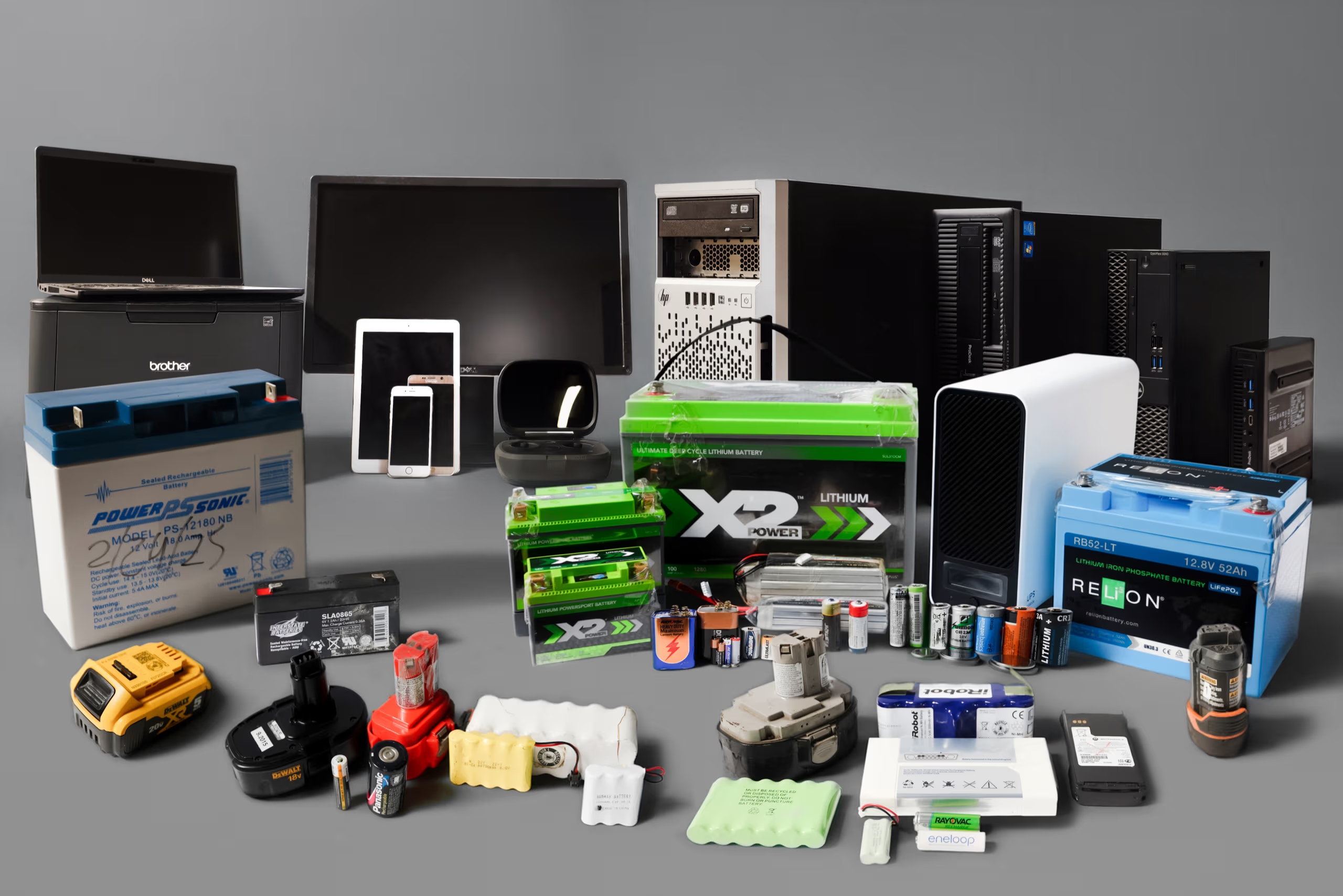

Simplify your compliance and disposal process with bundled recycling services that handle both electronic devices and batteries in one streamlined solution.

Our scheduled, route-based pickups cover all major regions of California—ensuring efficient, on-time service no matter where you operate.
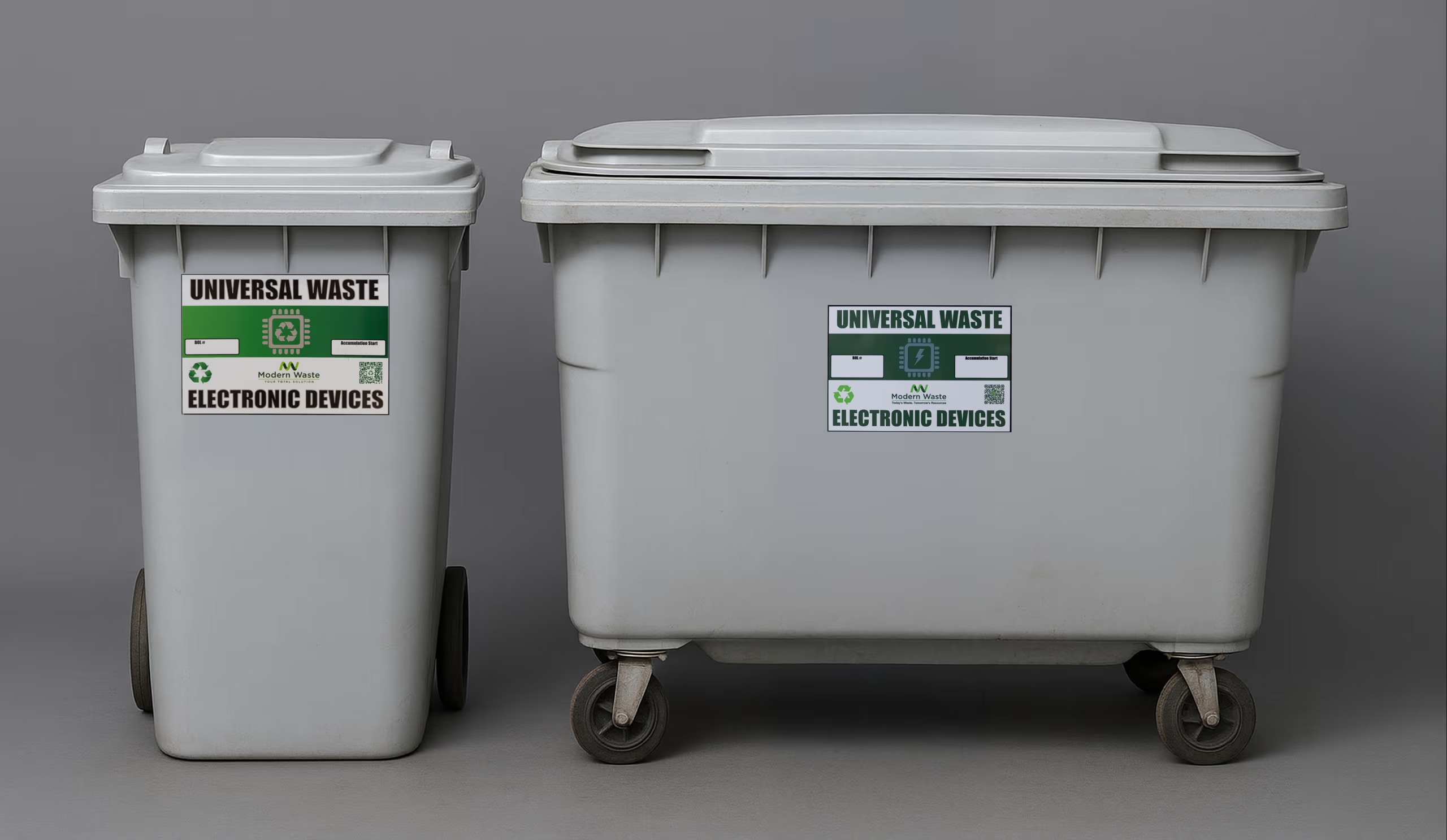
We provide clearly labeled, tamper-resistant containers to ensure safe and compliant collection of electronic waste and batteries at your location.

Modern Waste Solutions has served businesses and communities across California with dependable, environmentally responsible recycling solutions for over two decades.
We adhere to all California and federal regulations, ensuring your electronic and battery waste is managed with complete transparency and environmental responsibility.

Reviews
A little bit off the beaten track in Natomas, but Modern Waste quickly and efficiently helped me recycle my broken Lithium Iron Phosphate batteries at a reasonable $/lb fee (Sac county e-waste will not accept these items). Ramiro and Vincent were very friendly and helpful.

Chris was awesome! He came in and picked up all of the e-waste we had ready for him. He was polite and professional throughout the entire process. He handled the equipment with care, including the site equipment that was already in place. I am very happy with his service and appreciate the great job he did.

Aaron and Vincent were awesome, excellent customer service!

Great guys, excellent customer service, highly recommend!

Polite, quick and easy.

Chris from modern waste was the most outstanding respectful person I ever met my life when he was done he offered to sweep the floors. He offered so much even though he was limited on time he went out of his way and he’s over beyond best guy I ever met thank you so much for your service services Dan ITG.


Data center decommissioning is a controlled change project that retires workloads, infrastructure, and records without interrupting systems that must remain live. Here is the full process, from go/no-go to final reconciliation.
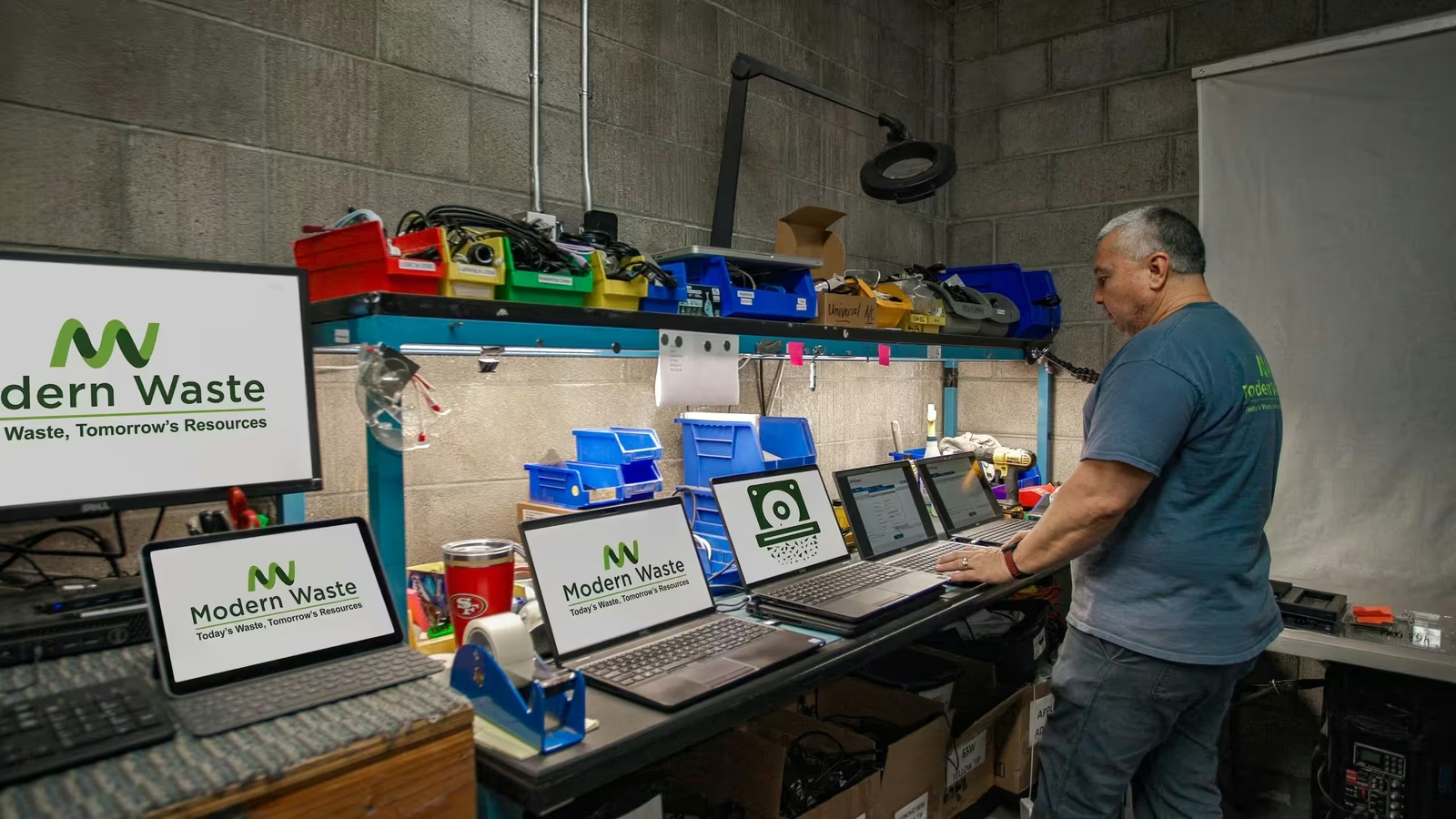
A mature ITAD program connects asset ownership, data security, environmental compliance, logistics, financial recovery, and reconciliation. Here is how the process works, what it costs, and how to evaluate a provider.

IT equipment liquidation converts marketable retired assets into documented financial recovery while routing nonmarketable equipment to responsible recycling. Here is how to decide which path fits each asset.