
Published September 20, 2026 · 6 min read · Updated September 27, 2026
EV Battery Recycling: How It Works & What to Know
Electric-vehicle and large lithium battery packs are heavy, high-voltage and hazardous when damaged. This guide explains how EV battery recycling works and what California fleets, dealerships and facilities need to handle packs safely and within the rules.
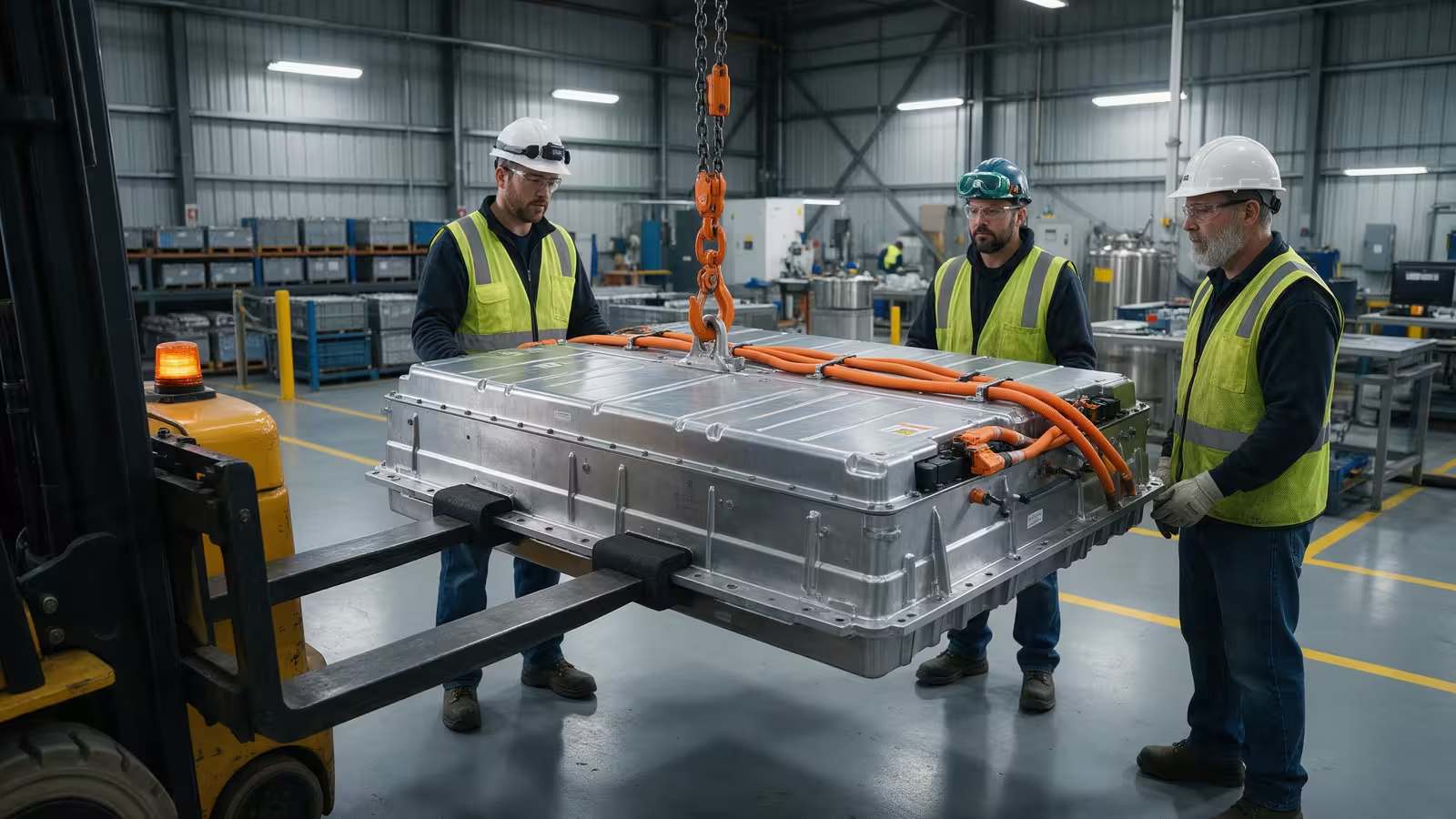
Fleet operators, auto dealerships, repair shops and facility teams in California now store battery packs that weigh hundreds of pounds and hold a dangerous charge long after the vehicle is retired. A few years ago the same teams dealt with the occasional laptop or power-tool battery. An EV traction pack cannot go in the trash or be handled like a consumer battery, and a damaged one is among the most hazardous items that can sit on a lot.
Modern Waste Solutions has collected, transported and recycled batteries for California organizations since 1999 from its Sacramento facility, and holds ISO 9001, ISO 14001 and ISO 45001 certifications. This article explains how EV battery recycling works, from high-voltage handling and discharge through dismantling and material recovery. It also covers how second-life reuse differs from recycling, the transport rules for large and damaged packs, and what to check before a pack leaves your site. For smaller cells, see our guide to lithium-ion battery recycling for business.
An EV battery is an assembly of hundreds or thousands of lithium-ion cells wired into modules and sealed in a steel or aluminum case with cooling components, wiring and a battery management system. Three properties make it specialist work.
- Traction packs commonly operate at 400 volts or more, enough to cause serious injury or death. Treat them as live electrical equipment until they have been discharged.
- A pack that looks dead still holds charge. A crushed, punctured or short-circuited cell can go into thermal runaway, a self-sustaining reaction that releases intense heat and flammable gas.
- Packs are heavy and awkward to move. Handling them takes lifting equipment, purpose-built containers and trained people, which a standard collection bin cannot replace.
Recycling a large lithium pack happens in stages, and each early stage removes a hazard before the valuable materials are recovered.
Before anything is opened, qualified technicians test the pack and discharge it fully with equipment rated for high voltage. No later step is safe until this one is done.
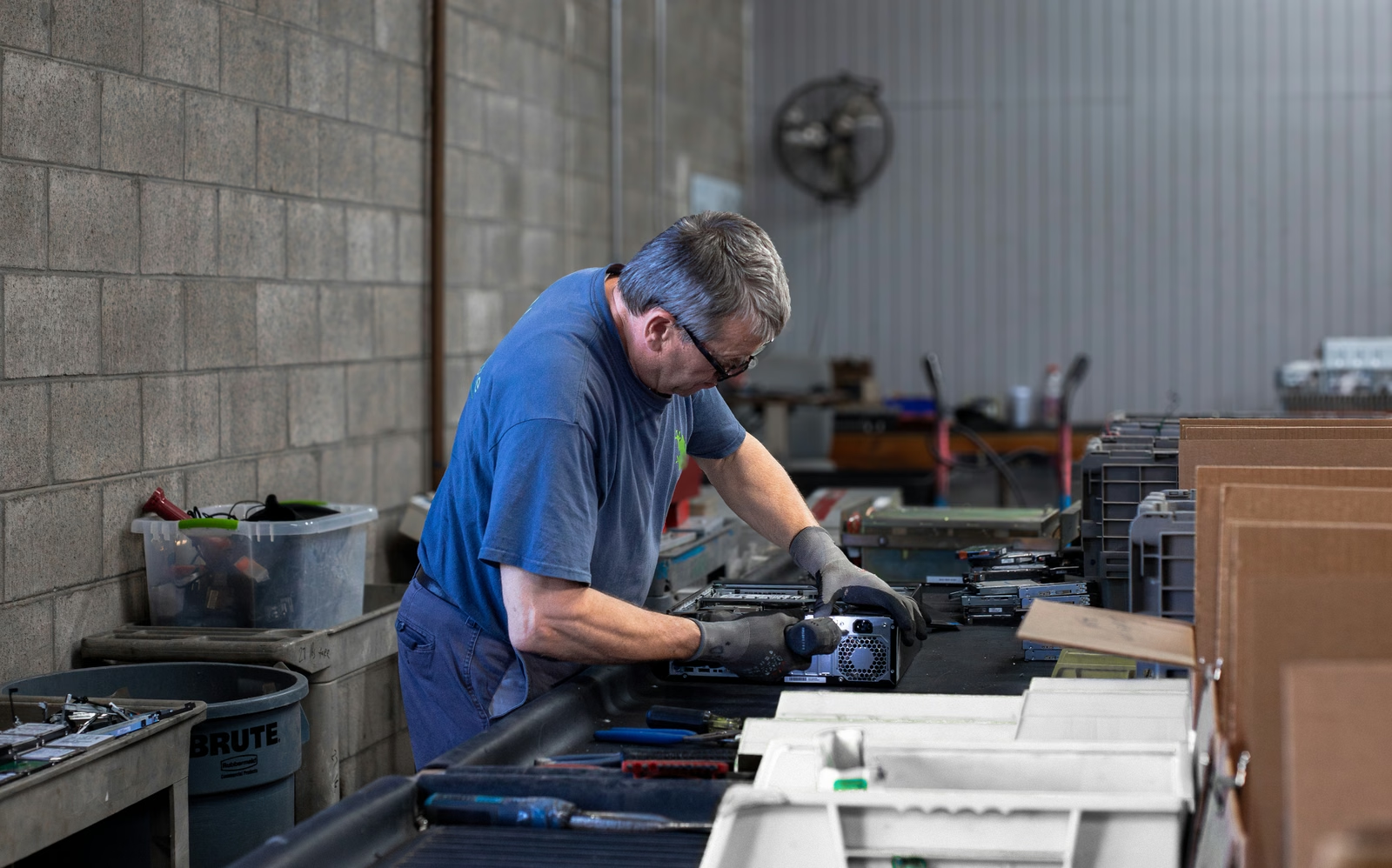
The de-energized pack is disconnected and taken apart. The case, wiring, cooling parts and battery management system come away from the cells and modules, and each component and chemistry is sorted to its own downstream process. When a pack is damaged or swollen, Modern Waste Solutions performs an on-site safety tear-down: the pack is inspected, stabilized and separated into its component cells before transport instead of being shipped intact.
The cells and modules are then processed to recover raw materials. Mechanical shredding produces a concentrated mixture called "black mass," and hydrometallurgical or pyrometallurgical refining extracts the individual metals so they can return to manufacturing.
| Material recovered | Where it comes from | Why it matters |
|---|---|---|
| Lithium | Cell cathodes | Critical mineral; energy-intensive to mine from scratch |
| Cobalt | Cell cathodes | High value and supply-constrained; toxic if landfilled |
| Nickel | Cell cathodes | High value and recoverable at scale |
| Copper & aluminum | Wiring, current collectors, casing | Readily recyclable base metals |
| Steel | Pack housing and structure | Standard metal recycling stream |
A pack pulled from a vehicle may be too worn for driving and still useful for lighter work. The U.S. Department of Energy's Alternative Fuels Data Center notes that an EV battery that has not failed or been damaged could keep at least 70% of its initial capacity at the end of its vehicle life, and that second use in stationary grid or backup power is technically feasible. Whether a pack is reused or recycled depends on its condition and safety status.
- Healthy, undamaged packs can be tested and redeployed into stationary storage, such as backup power or grid support, and recycled later.
- Packs that are damaged, recalled, degraded or otherwise unfit for reuse go to material recovery so their metals are not lost.
Damaged, defective and recalled packs are never second-life candidates. They need specialized handling from the moment someone identifies them.
Under U.S. Department of Transportation rules, large lithium batteries are Class 9 dangerous goods with requirements for packaging, labeling and documentation. Damaged, defective and recalled packs face stricter requirements and may need specialized containers. Shipping them incorrectly is dangerous and unlawful.
In California, spent batteries are also universal or hazardous waste under Department of Toxic Substances Control (DTSC) rules. The business that generates the waste is responsible for it from the moment it is set aside until it reaches an authorized destination. For that reason EV packs should be collected by a provider equipped to package, label, transport and document them, and should not go onto a general hauler's truck.
If your organization stores EV or large lithium packs, these practices keep people safe and keep the paperwork in order.
- Assume every pack holds charge, and keep packs away from heat, moisture and combustibles until pickup.
- Segregate any swollen, leaking, crushed or recalled pack as soon as it is found and flag it for special handling. Do not stack it or store it with sound packs.
- Move high-voltage packs only with qualified people, lifting gear and approved containers. Modern Waste Solutions trains customer staff on handling and storing battery systems as part of its program.
- Keep the chain of custody and certificate of recycling, which show the material was managed lawfully.
- Use one provider for collection, compliant transport and final processing so custody never breaks between vendors.
Modern Waste Solutions provides EV and lithium battery recycling for California businesses, with collection, compliant transportation and a certificate of recycling for your records. Packs that come out of a data center or UPS decommissioning go through the same battery stream.
Can EV batteries be recycled?
Yes. EV and large lithium battery packs are discharged, dismantled and processed to recover metals such as lithium, cobalt, nickel, copper and steel for use in new products.
What metals are recovered from EV battery recycling?
Lithium, cobalt and nickel come from the cells. Copper and aluminum come from wiring and current collectors, and steel from the pack housing. Recovering them reduces the need for newly mined material.
Is it safe to store a used EV battery on site?
For a limited time and with precautions. Keep packs away from heat and combustibles, treat them as energized, isolate any damaged unit and arrange prompt pickup by a qualified recycler. A damaged pack is a fire risk and needs special handling.
What is the difference between second-life use and recycling?
Second life means testing a healthy retired pack and redeploying it for lighter work, such as stationary energy storage. Recycling means breaking the pack down to recover its raw materials. Damaged or recalled packs always go to recycling.
What happens to a damaged EV pack before it is transported?
It is isolated and assessed first. Modern Waste Solutions performs on-site safety tear-downs of damaged or swollen packs, stabilizing them and separating them into component cells so they do not travel intact.
EV battery recycling recovers lithium, cobalt, nickel and other metals from a heavy, high-voltage pack, provided the pack is discharged, handled, transported and processed correctly. For a California fleet, dealership or facility, that means a managed program that removes packs from the site and documents where they went. If your organization is retiring EV or large lithium batteries, request a quote and Modern Waste Solutions will build a collection and recycling program around your volume and chemistries.
- U.S. EPA, Used Lithium-Ion Batteries: epa.gov/recycle/used-lithium-ion-batteries
- U.S. EPA, Lithium-Ion Battery Recycling: epa.gov/hw/lithium-ion-battery-recycling
- U.S. Department of Energy, Alternative Fuels Data Center, Batteries for Electric Vehicles: afdc.energy.gov/vehicles/electric-batteries
- California DTSC: dtsc.ca.gov
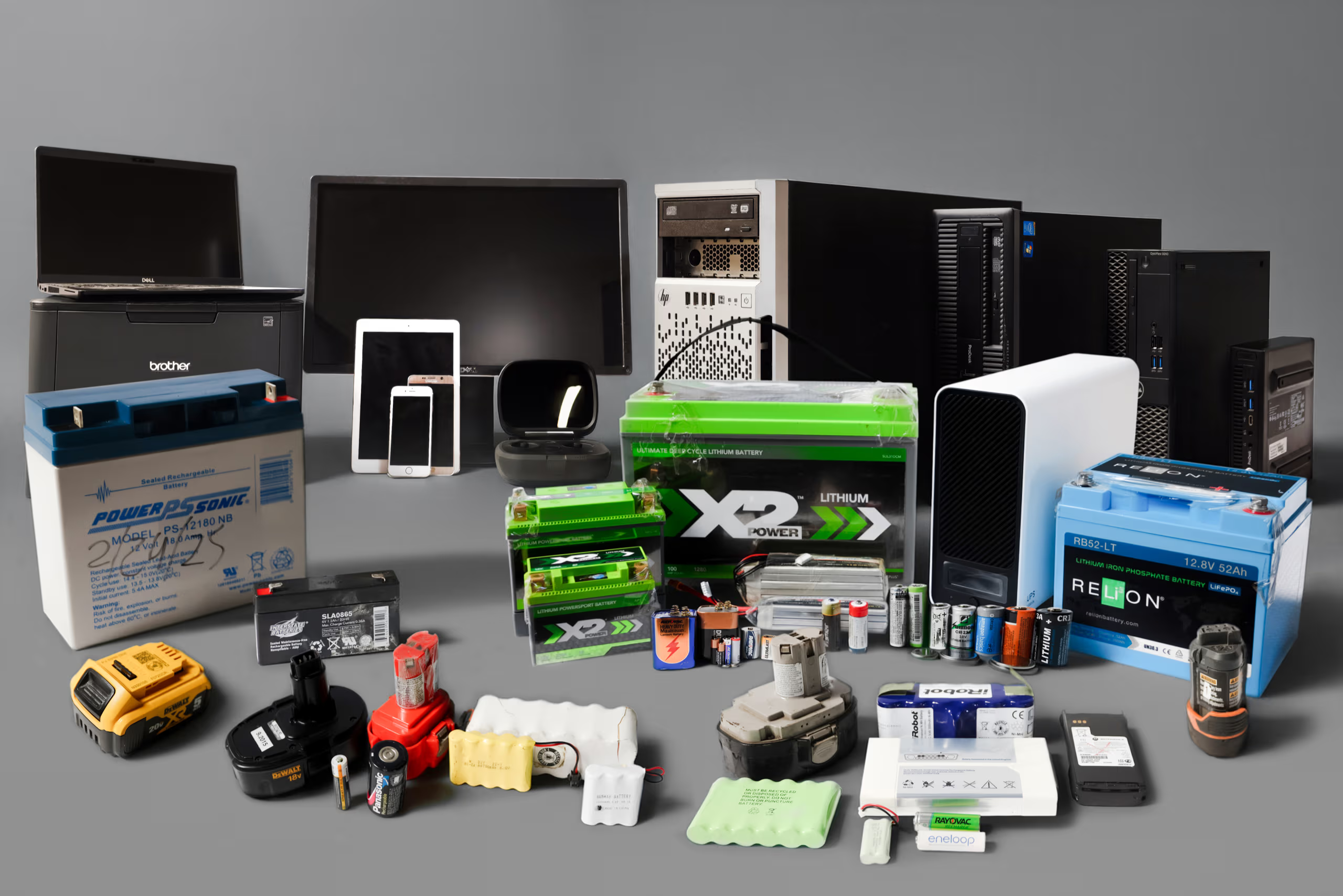

Simplify your compliance and disposal process with bundled recycling services that handle both electronic devices and batteries in one streamlined solution.

Our scheduled, route-based pickups cover all major regions of California—ensuring efficient, on-time service no matter where you operate.
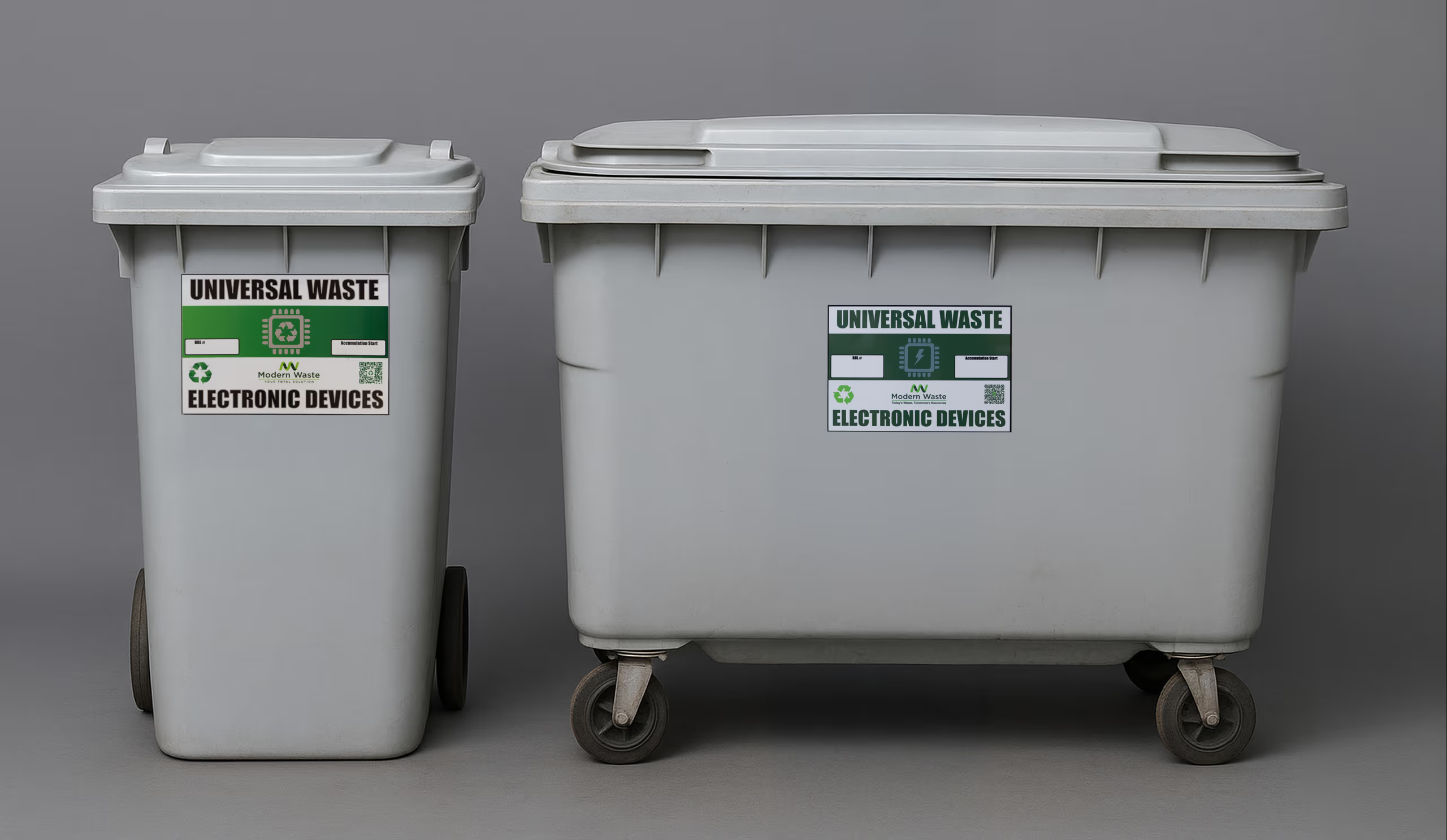
We provide clearly labeled, tamper-resistant containers to ensure safe and compliant collection of electronic waste and batteries at your location.

Modern Waste Solutions has served businesses and communities across California with dependable, environmentally responsible recycling solutions for over two decades.
We adhere to all California and federal regulations, ensuring your electronic and battery waste is managed with complete transparency and environmental responsibility.

Reviews
A little bit off the beaten track in Natomas, but Modern Waste quickly and efficiently helped me recycle my broken Lithium Iron Phosphate batteries at a reasonable $/lb fee (Sac county e-waste will not accept these items). Ramiro and Vincent were very friendly and helpful.

Chris was awesome! He came in and picked up all of the e-waste we had ready for him. He was polite and professional throughout the entire process. He handled the equipment with care, including the site equipment that was already in place. I am very happy with his service and appreciate the great job he did.

Aaron and Vincent were awesome, excellent customer service!

Great guys, excellent customer service, highly recommend!

Polite, quick and easy.

Chris from modern waste was the most outstanding respectful person I ever met my life when he was done he offered to sweep the floors. He offered so much even though he was limited on time he went out of his way and he’s over beyond best guy I ever met thank you so much for your service services Dan ITG.

Data center decommissioning is a controlled change project that retires workloads, infrastructure, and records without interrupting systems that must remain live. Here is the full process, from go/no-go to final reconciliation.
A mature ITAD program connects asset ownership, data security, environmental compliance, logistics, financial recovery, and reconciliation. Here is how the process works, what it costs, and how to evaluate a provider.
IT equipment liquidation converts marketable retired assets into documented financial recovery while routing nonmarketable equipment to responsible recycling. Here is how to decide which path fits each asset.