
Published September 20, 2026 · 5 min read · Updated September 27, 2026
Server & IT Equipment Disposal for Businesses
Retiring servers and IT gear is a data security and logistics job before it is a recycling one. Here is how California businesses find data-bearing devices, choose reuse or recycling, destroy data properly and keep the records that prove it.
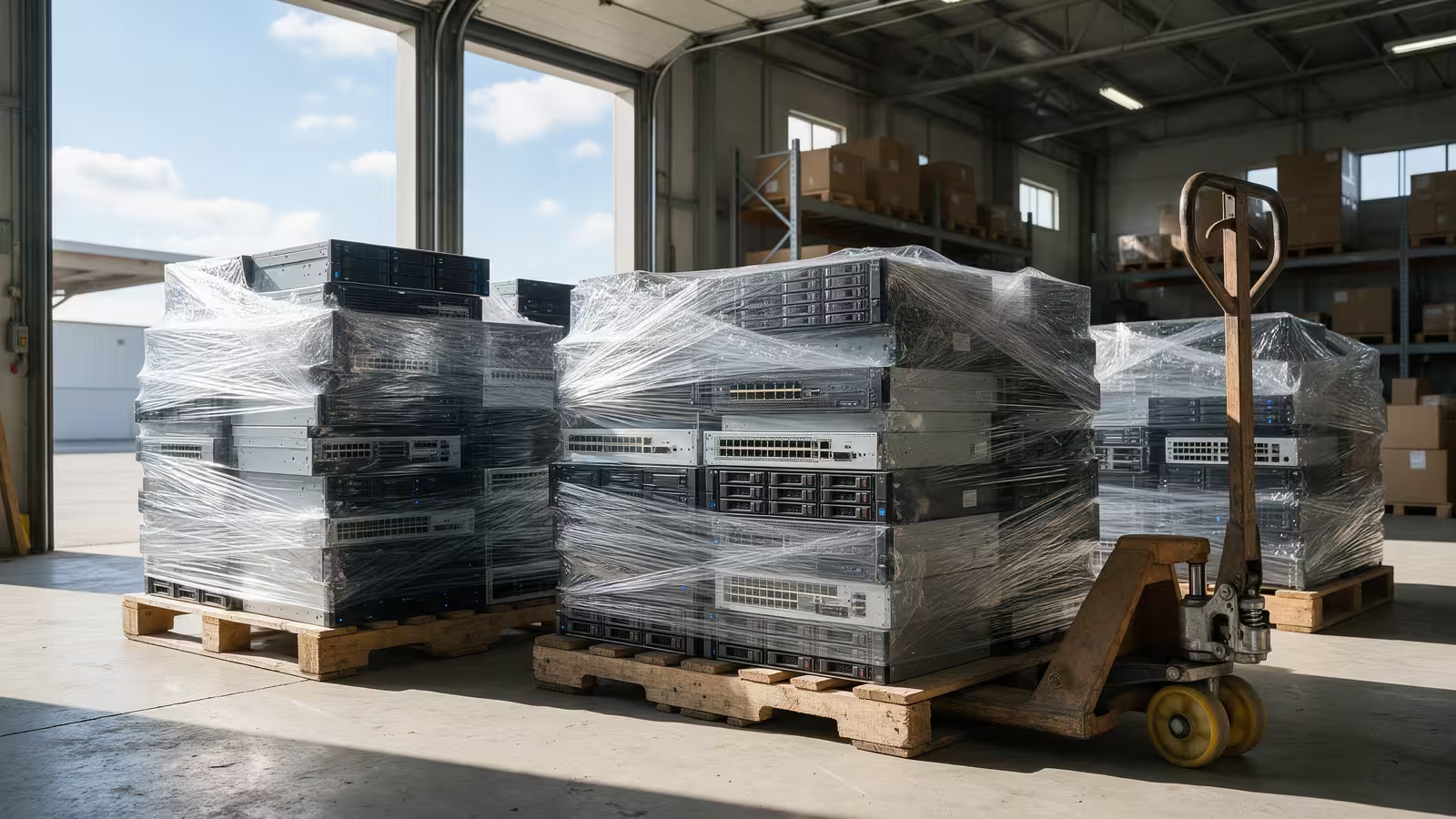
Retiring a rack of servers takes more planning than getting rid of an old desktop. Servers, storage arrays and networking gear are heavy and densely built, and their drives keep your data long after the power is off. A careless disposal exposes the organization to a data breach and an environmental violation, and it scraps equipment whose resale could have offset part of the refresh.
Modern Waste Solutions has handled business electronics recycling, secure data destruction and IT equipment collection for California organizations since 1999 from its Sacramento facility, and holds ISO 9001, ISO 14001 and ISO 45001 certifications. This guide walks through a compliant server disposal: finding the data-bearing devices, choosing between resale and recycling, wiping or destroying drives, moving heavy rack gear safely and keeping the right records. Server disposal is one workflow inside a larger IT asset disposition (ITAD) program.
Before anything leaves the room, list every component that can store data. In a typical server or IT refresh that covers much more than the obvious hard drives:
- Server and storage drives: spinning HDDs, SSDs, NVMe modules and hot-swap trays in SAN and NAS arrays.
- RAID controllers and cache modules that keep configuration and data.
- Switches, routers and firewalls holding saved configurations, credentials and logs.
- Backup tapes, boot USB sticks and other removable media stored with the rack.
- Multifunction printers, thin clients and appliances with internal storage.
Tag each data-bearing item on the asset list and keep it apart from hardware with no storage, such as empty chassis, rails and power supplies. That list becomes the basis of your chain-of-custody record and tells your provider exactly which items need certified destruction.
Enterprise servers, switches and drives often keep resale value, and the U.S. EPA's waste management hierarchy ranks reuse above recycling. The decision usually turns on the hardware's age and market demand, its physical condition and whether the data risk can be fully resolved first.
Equipment with remaining value can be wiped, tested and resold, sometimes offsetting part of the refresh cost. Hardware that is too old, damaged or sensitive to resell goes to recycling for materials recovery. In both cases the data has to be dealt with before the asset changes hands. Units that will not be resold go through electronic waste recycling, which recovers metals and plastics and keeps regulated components out of California landfills.
Software erasure (wiping) removes the data and leaves the drive reusable. Physical destruction leaves the drive unusable. Which one fits depends on whether you want to keep resale value and how sensitive the data is.
| Method | Best for | Outcome | Record produced |
|---|---|---|---|
| Certified wiping / erasure | Drives with resale or reuse value | Data overwritten, drive stays usable | Erasure report per serial number |
| Degaussing | Magnetic HDDs and backup tape | Magnetic data destroyed | Certificate of destruction |
| Shredding / physical destruction | SSDs, failed drives, high-sensitivity data | Drive physically destroyed | Certificate of destruction |
Degaussing does not work reliably on SSDs and flash media, so shredding is the dependable option there. For regulated data, such as health information, financial records or customer personal information, many organizations require physical destruction whatever the resale value. Modern Waste Solutions provides secure data destruction with a certificate tied to each device, at our facility or at your site with on-site hard drive shredding. Drives headed for resale can go through our NIST 800-88 data wiping service.
A fully populated rack can weigh several hundred pounds, the cabling is dense and server rooms are rarely next to a loading dock. A managed pickup handles the physical work without putting your staff or building at risk:
- Power down, label and photograph the rack before disconnecting anything.
- De-rack heavy units and palletize them instead of dragging them through hallways.
- Put data-bearing devices into sealed, tracked containers the moment they are pulled.
- Use trained handlers and proper lifting equipment for staging and transport, in line with OSHA workplace safety practices.
Scheduling the pickup with your IT team keeps the work in order and makes sure nothing with data on it leaves the building unrecorded.
If a regulator, auditor or client asks where your equipment and data went, your records are the answer. A complete server disposal should produce:
- An itemized asset inventory taken at pickup, ideally by serial number.
- A chain-of-custody record tracking the material from your site to its final destination.
- A certificate of data destruction for every data-bearing device.
- A certificate of recycling for the material sent to materials recovery.
Keep them together in the project file. Without them, an organization cannot show that its data was destroyed and its hardware handled lawfully.
What is the difference between server disposal and IT asset disposition (ITAD)?
Server disposal is the physical retirement, data sanitization and recycling of specific hardware. IT asset disposition is the wider program that governs how all retired assets are inventoried, sanitized, resold or recycled and documented. Server disposal is one workflow inside it.
Is deleting files or reformatting a drive enough to protect our data?
No. Deleted files and quick reformats can be recovered with widely available tools. Wipe to a verified standard or physically destroy the drive, and keep the certificate.
Do switches, routers and firewalls need data destruction too?
Yes. Networking devices store configurations, credentials and logs that can expose your network if they leave intact. Put them on your data-bearing inventory and sanitize or destroy their storage.
Does California regulate how businesses dispose of servers and IT equipment?
Yes. Electronic equipment contains materials regulated as hazardous or universal waste under DTSC rules, so it cannot go to a landfill. An authorized recycler keeps you compliant and documents the outcome.
A well-run server disposal protects your data, recovers value where there is some, keeps regulated material out of landfills and leaves you with paperwork for each of those outcomes. A rushed one saves a little effort and leaves the business holding the breach and compliance risk. If your organization is planning a server or IT refresh, request a quote from Modern Waste Solutions and we will plan a secure, documented disposal around your equipment and data.
- U.S. EPA, Sustainable Materials Management: Non-Hazardous Materials and Waste Management Hierarchy: epa.gov/smm
- NIST SP 800-88 Rev. 2, Guidelines for Media Sanitization: csrc.nist.gov/pubs/sp/800/88/r2/final
- California DTSC: dtsc.ca.gov
- CalRecycle: calrecycle.ca.gov
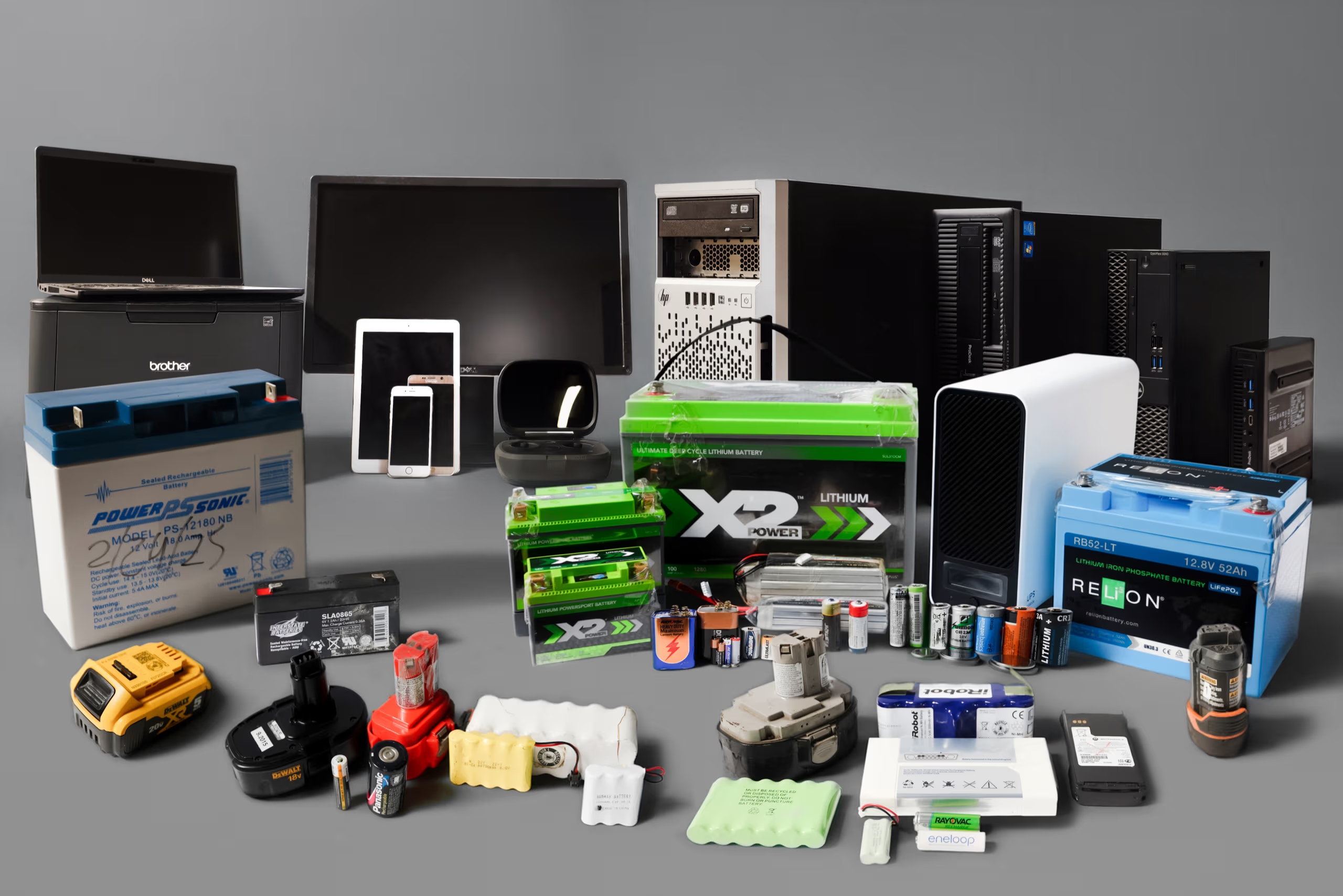

Simplify your compliance and disposal process with bundled recycling services that handle both electronic devices and batteries in one streamlined solution.
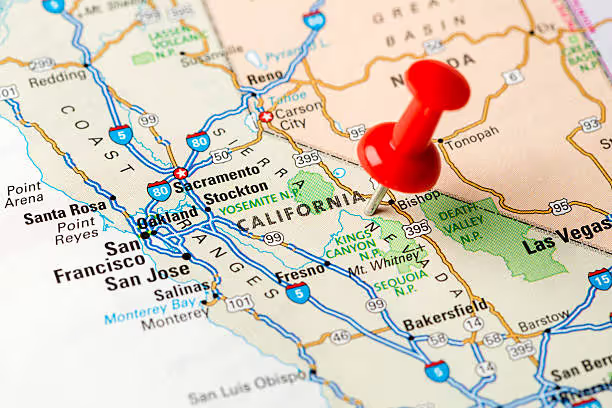
Our scheduled, route-based pickups cover all major regions of California—ensuring efficient, on-time service no matter where you operate.
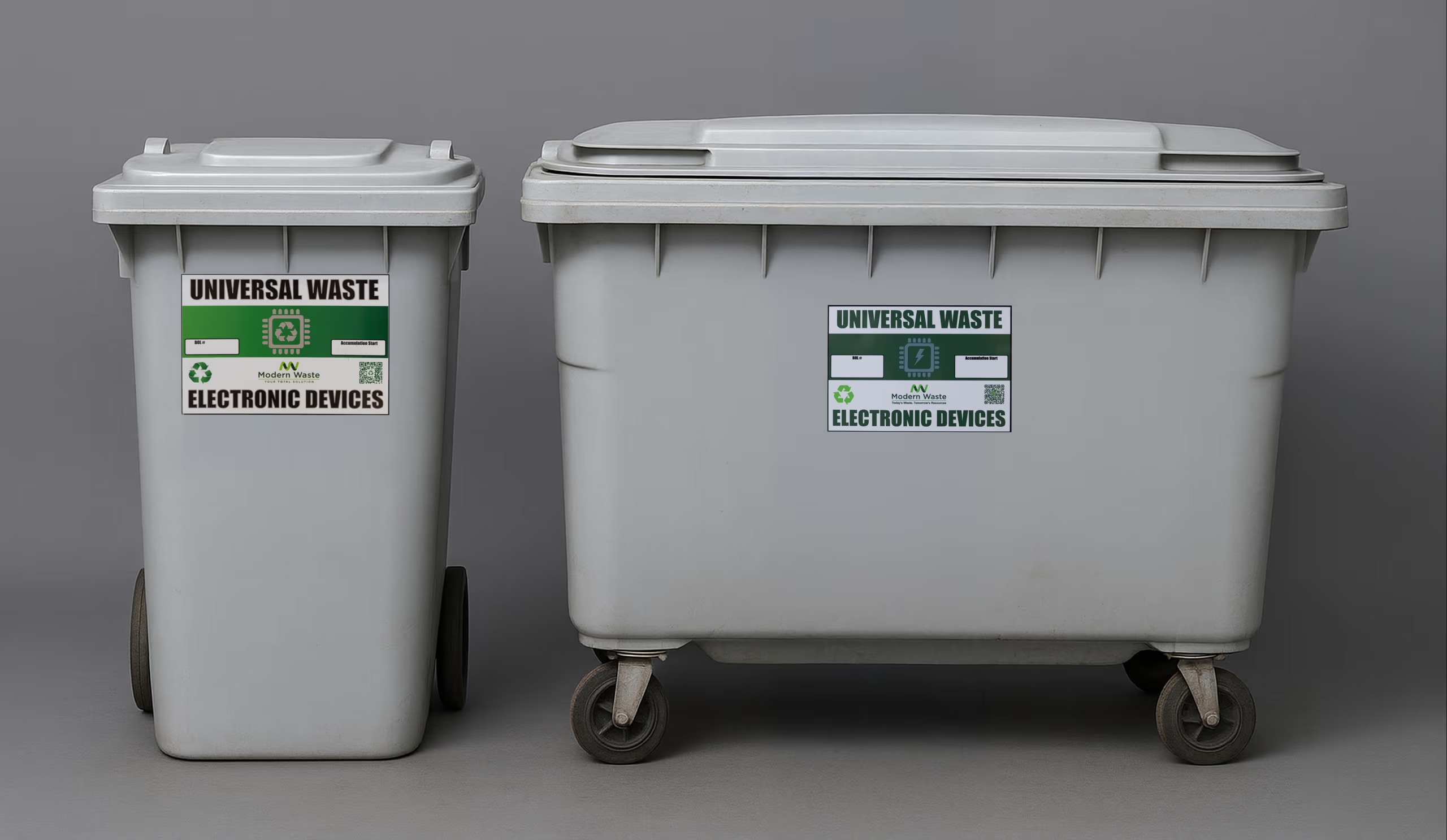
We provide clearly labeled, tamper-resistant containers to ensure safe and compliant collection of electronic waste and batteries at your location.

Modern Waste Solutions has served businesses and communities across California with dependable, environmentally responsible recycling solutions for over two decades.
We adhere to all California and federal regulations, ensuring your electronic and battery waste is managed with complete transparency and environmental responsibility.

Reviews
A little bit off the beaten track in Natomas, but Modern Waste quickly and efficiently helped me recycle my broken Lithium Iron Phosphate batteries at a reasonable $/lb fee (Sac county e-waste will not accept these items). Ramiro and Vincent were very friendly and helpful.

Chris was awesome! He came in and picked up all of the e-waste we had ready for him. He was polite and professional throughout the entire process. He handled the equipment with care, including the site equipment that was already in place. I am very happy with his service and appreciate the great job he did.

Aaron and Vincent were awesome, excellent customer service!

Great guys, excellent customer service, highly recommend!

Polite, quick and easy.

Chris from modern waste was the most outstanding respectful person I ever met my life when he was done he offered to sweep the floors. He offered so much even though he was limited on time he went out of his way and he’s over beyond best guy I ever met thank you so much for your service services Dan ITG.

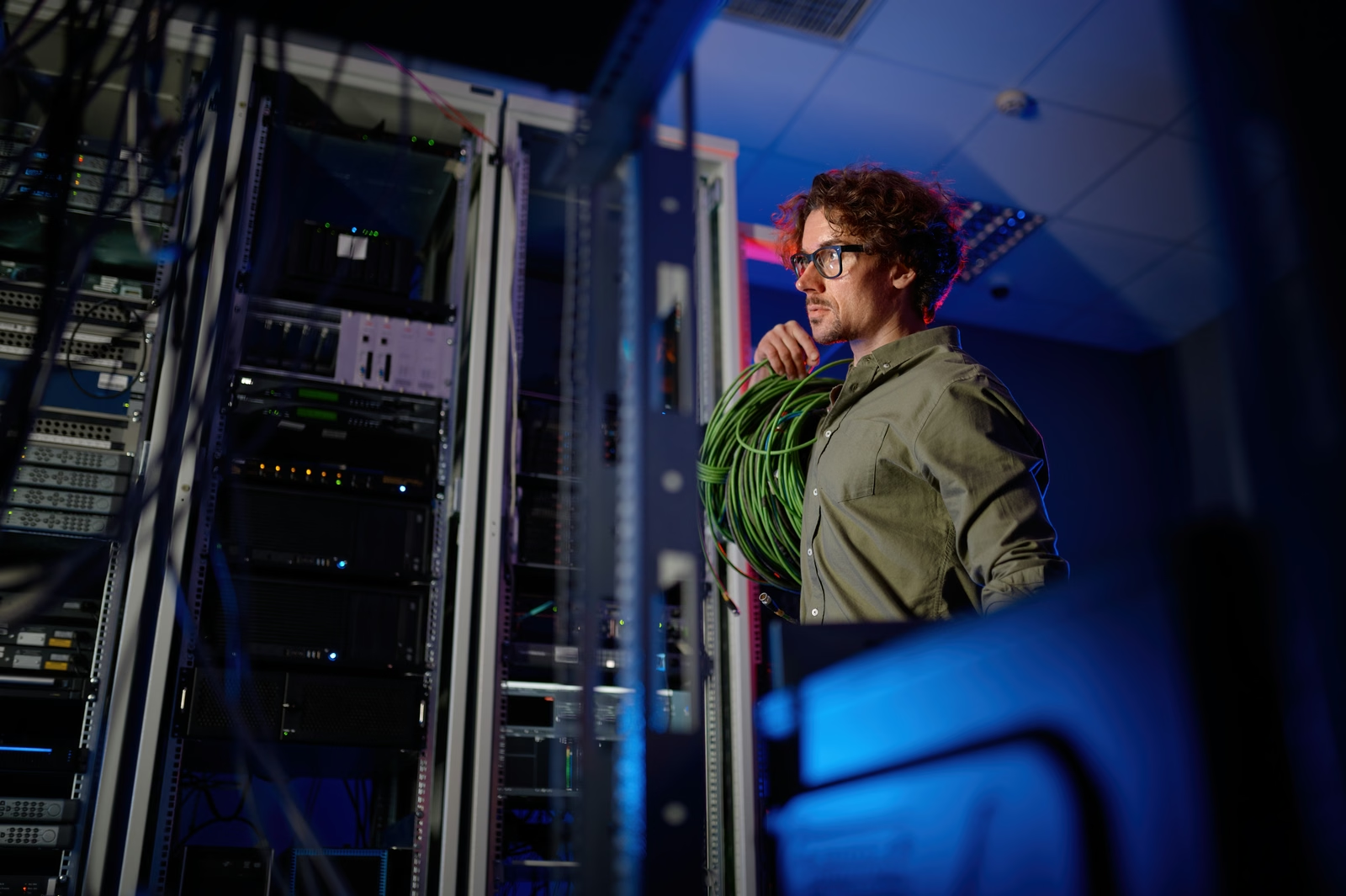
Data center decommissioning is a controlled change project that retires workloads, infrastructure, and records without interrupting systems that must remain live. Here is the full process, from go/no-go to final reconciliation.
A mature ITAD program connects asset ownership, data security, environmental compliance, logistics, financial recovery, and reconciliation. Here is how the process works, what it costs, and how to evaluate a provider.
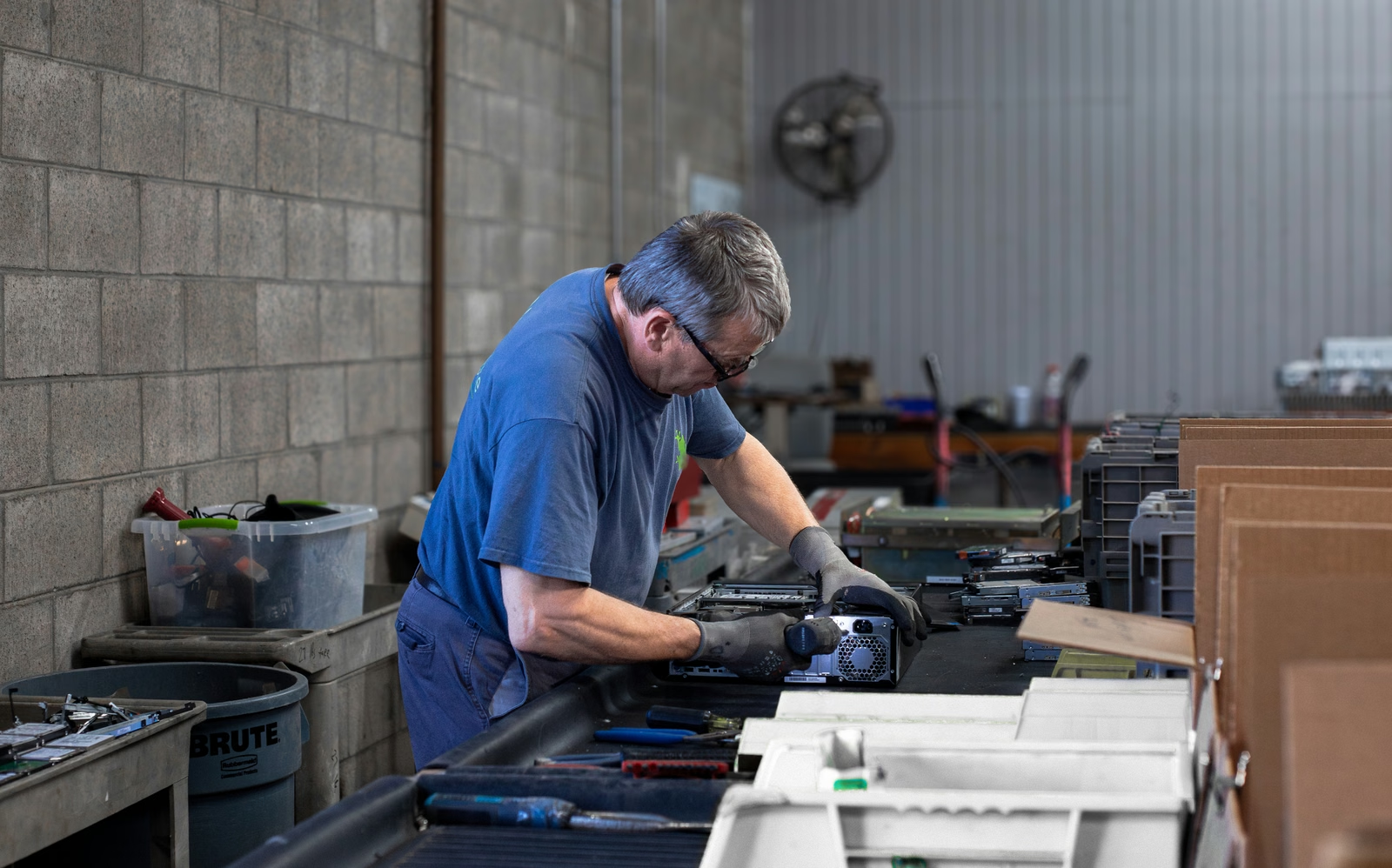
IT equipment liquidation converts marketable retired assets into documented financial recovery while routing nonmarketable equipment to responsible recycling. Here is how to decide which path fits each asset.