Published August 15, 2025 · 5 min read
· Updated September 27, 2026
How California businesses tell whether a waste is hazardous, which everyday streams usually are, and what changes once the answer is yes.
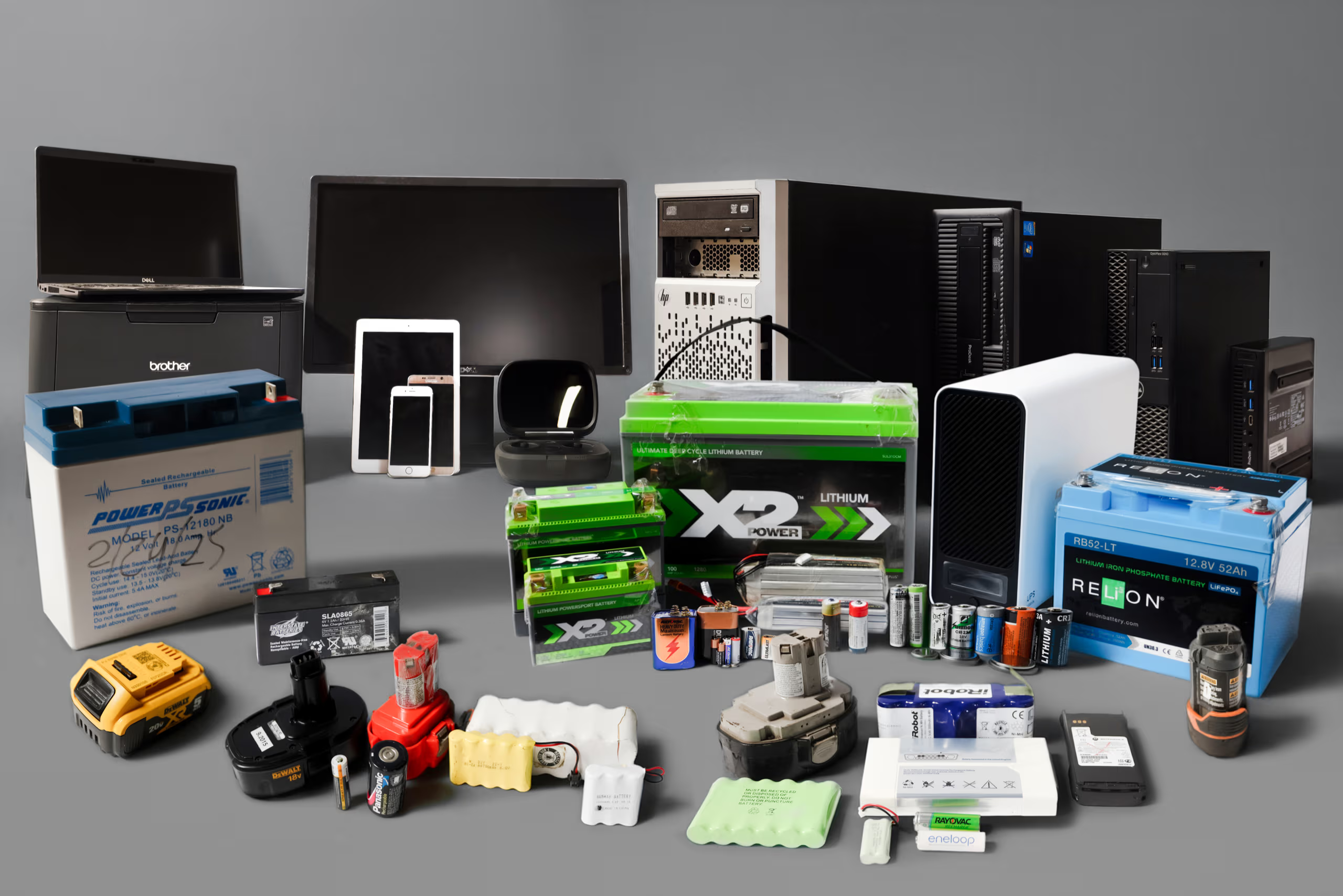
Nobody sets out to generate hazardous waste. It shows up as a box of dead batteries in the maintenance shop, a pallet of fluorescent tubes from a lighting upgrade, a cabinet of half-used cleaning products, or a pile of laptops after a refresh. The moment a business decides to throw any of those away, it has to answer a legal question: is this hazardous waste?
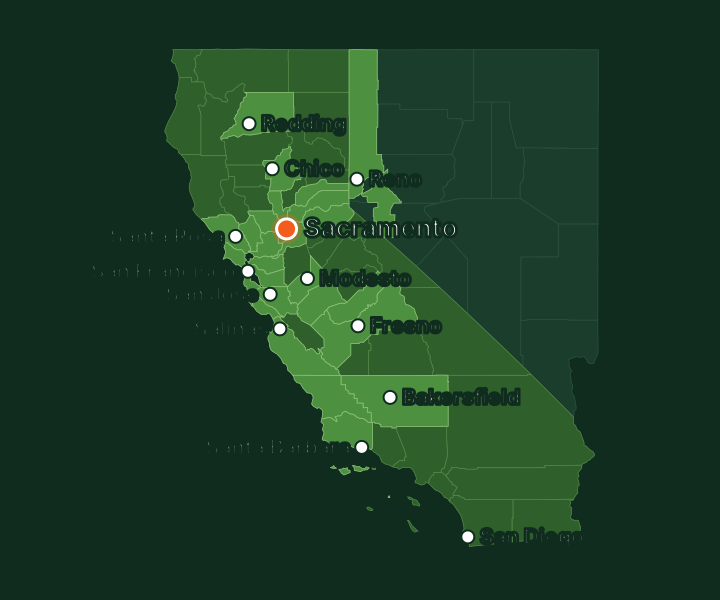
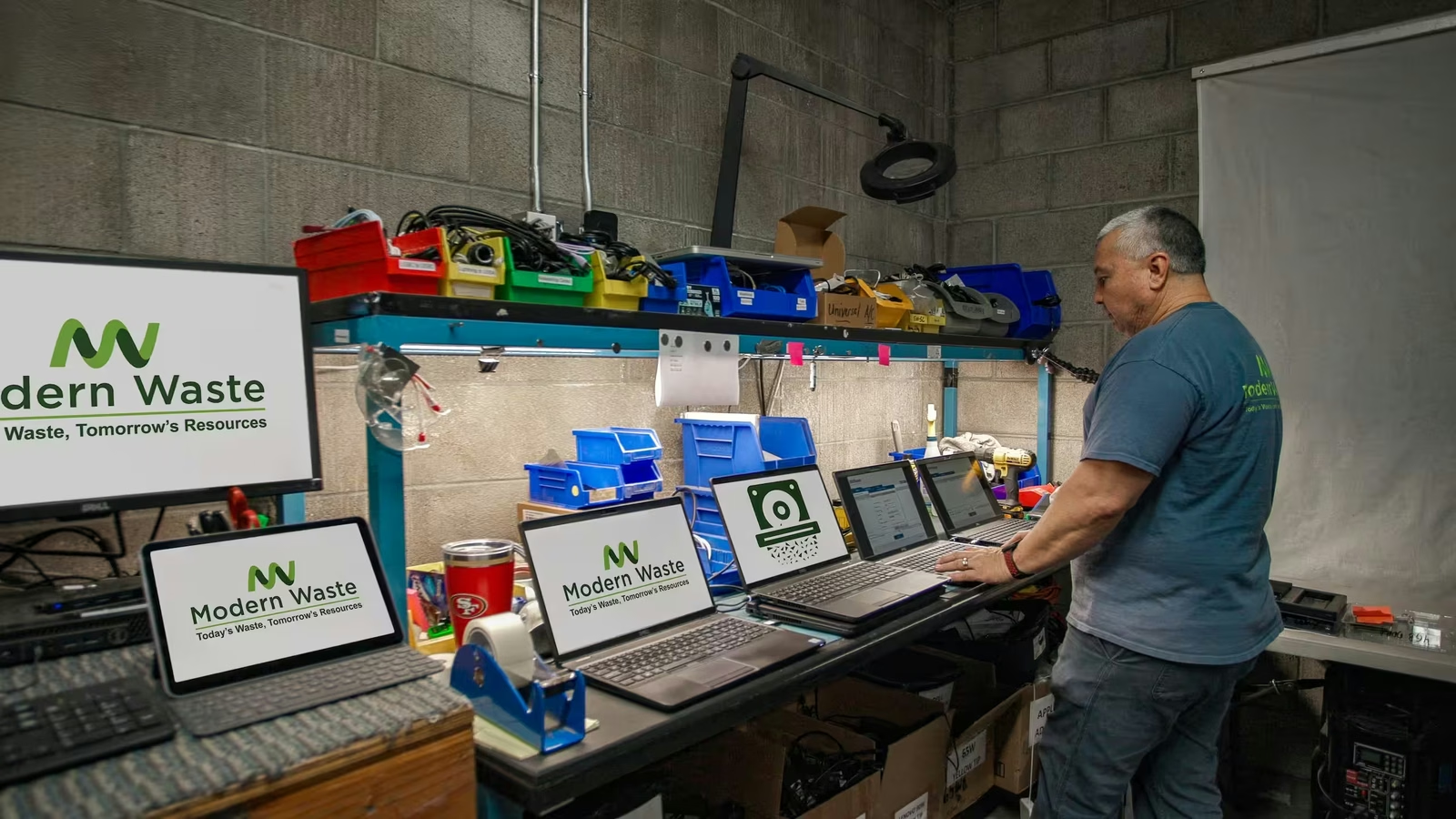
Modern Waste Solutions has operated since 1999 from its Sacramento facility and recycles several of the most common hazardous streams, including electronics, batteries and solar panels, for organizations throughout California. This article explains when business waste becomes hazardous, how the determination works, which streams from ordinary operations usually qualify, and what the rules require afterward.
When does business waste become hazardous?
Two things have to be true. First, the material has to be a waste: something you have decided to discard, not a product you still intend to use. Second, it has to meet the definition of hazardous. Under the federal rules, the U.S. EPA treats a waste as hazardous if it appears on one of its lists or shows one of four characteristics:
- Ignitability: it can catch fire easily, such as solvents, fuels and many aerosols.
- Corrosivity: it is strongly acidic or alkaline, such as battery acid and some cleaners.
- Reactivity: it is unstable and can react violently, including some lithium batteries when damaged.
- Toxicity: it can leach harmful substances such as lead or mercury.
California goes further. DTSC regulates "non-RCRA" or California-only hazardous wastes that federal criteria don't catch, and its toxicity tests cover more substances than the federal test does. A waste that would pass federal screening can still be hazardous in California.
Who decides whether a waste is hazardous?
The business that generates it. California regulations (title 22, section 66262.11) require generators to make an accurate hazardous waste determination. You can do that by testing the waste or by applying knowledge of the materials and processes that produced it. Product labels and Safety Data Sheets are the usual starting point: a flammable, corrosive or toxic warning on the product generally carries through to the waste.
Write the determination down, especially when you conclude a waste is not hazardous. That record is what you will point to if an inspector disagrees.
Which hazardous waste from business operations is most common?
Most businesses don't run chemical processes, yet nearly all of them generate some hazardous waste through normal operations. The table covers the usual streams and where each one should go.
We don't collect paint, solvents, oil or lab chemicals. Those need a licensed hazardous waste hauler with the right manifests. Keeping them out of your electronics and battery containers avoids problems for both vendors.
What does enforcement look like for ordinary businesses?
California regulators regularly find hazardous waste in business trash. In 2023 the Attorney General announced a $49 million settlement with Kaiser after undercover inspections of dumpsters at 16 facilities found hundreds of items of hazardous and medical waste, including aerosols, cleansers, sanitizers, batteries and electronic waste, along with paper records containing patient information. The settlement required years of independent trash audits. The items at issue were ordinary supplies and equipment that went into the wrong container.
What changes once a waste is hazardous?
The answer determines how you store it, how long you can keep it and who can take it away. California sorts generators by monthly volume:
- Very small quantity generator: less than 100 kg of non-acute hazardous waste and less than 1 kg of acutely hazardous waste in a calendar month.
- Small quantity generator: less than 1,000 kg per month.
- Large quantity generator: 1,000 kg or more per month.
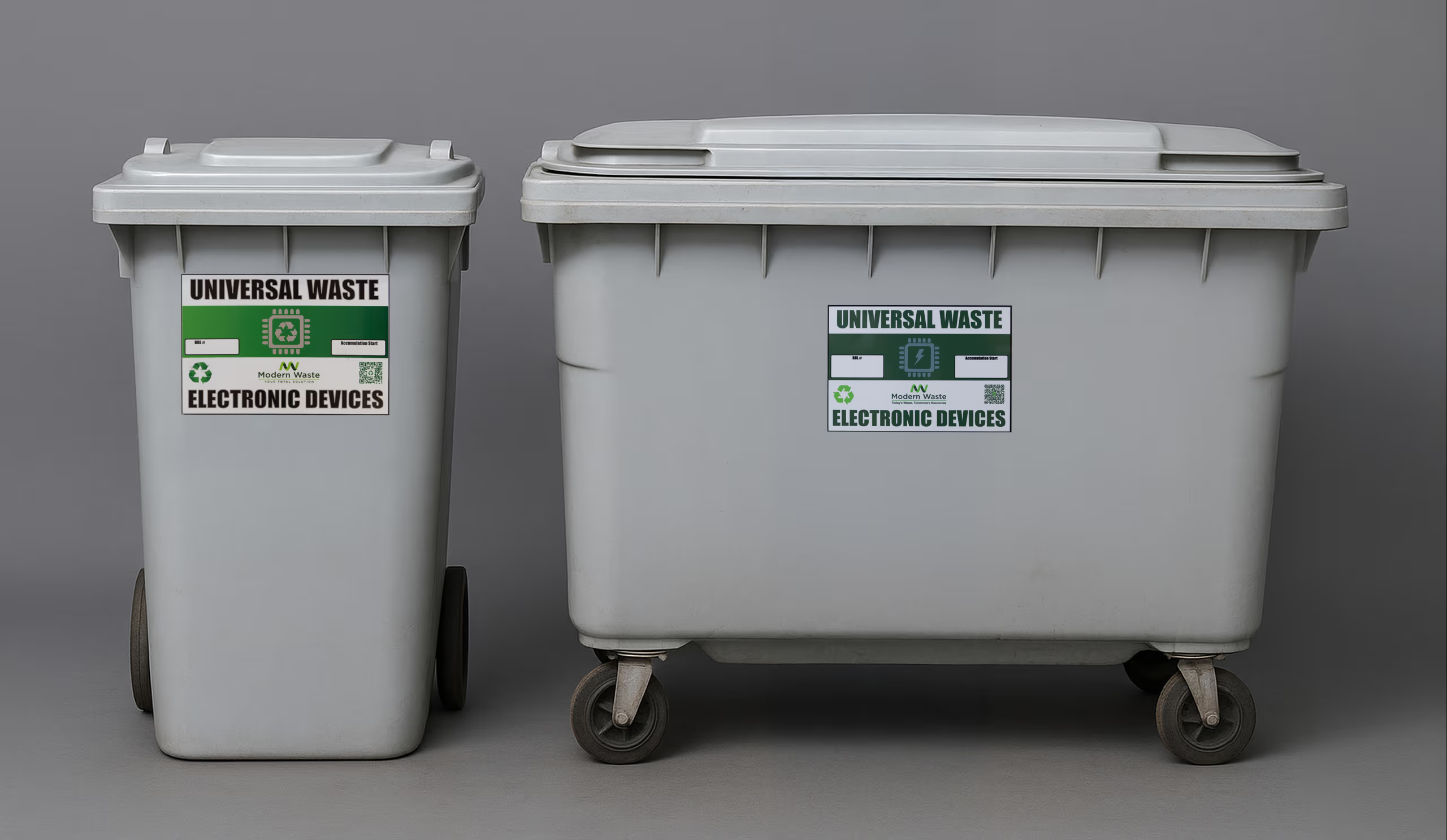
DTSC has not adopted the federal exemption for very small quantity generators, so even small California businesses have generator requirements. Universal wastes such as batteries, electronics and lamps are the exception that makes life easier: they can be managed under the simpler universal waste rules with labeled containers, a one-year accumulation limit, training and shipping records.
Frequently Asked Questions
Is e-waste hazardous waste in California?
Electronic devices that exhibit a hazardous characteristic are hazardous waste, and California lets businesses manage them as universal waste. Either way they can't go in the trash.
Do small businesses have to follow hazardous waste rules?
Yes. California did not adopt the federal very small quantity generator exemption, so small generators still have requirements. Universal waste rules simplify things for batteries, electronics and lamps.
Can we mix hazardous waste with regular recycling?
No. Mixing can make a whole load hazardous and create fire or chemical risks. Keep each stream in its own labeled container.
Does Modern Waste Solutions take paint and solvents?
No. We handle electronics, batteries and solar panels. Paint, solvents and chemicals should go to a licensed hazardous waste transporter.
The bottom line
Business waste becomes hazardous when you decide to discard something that is listed or has a hazardous characteristic, and in California that net is wider than the federal one. Make the determination, write it down, and route each stream to the right handler. For the streams we cover, including batteries and electronics, request a quote and we will set up collection with the records you need.
Sources
Landon Goodman , President
Landon Goodman is the founder and President of Modern Waste Solutions, which he has led since 1999. From the company's Sacramento facility he oversees an ISO-certified operation providing electronics recycling, battery recycling, and secure data destruction to businesses across California.