

Published October 2, 2026 · 11 min read · Updated October 2, 2026
UPS and Backup Battery Disposal for Businesses
UPS batteries eventually lose capacity or become unsafe, and disposal must account for chemistry, cabinet design, electrical condition, weight, and the records needed after recycling. Here is how to plan the project safely.
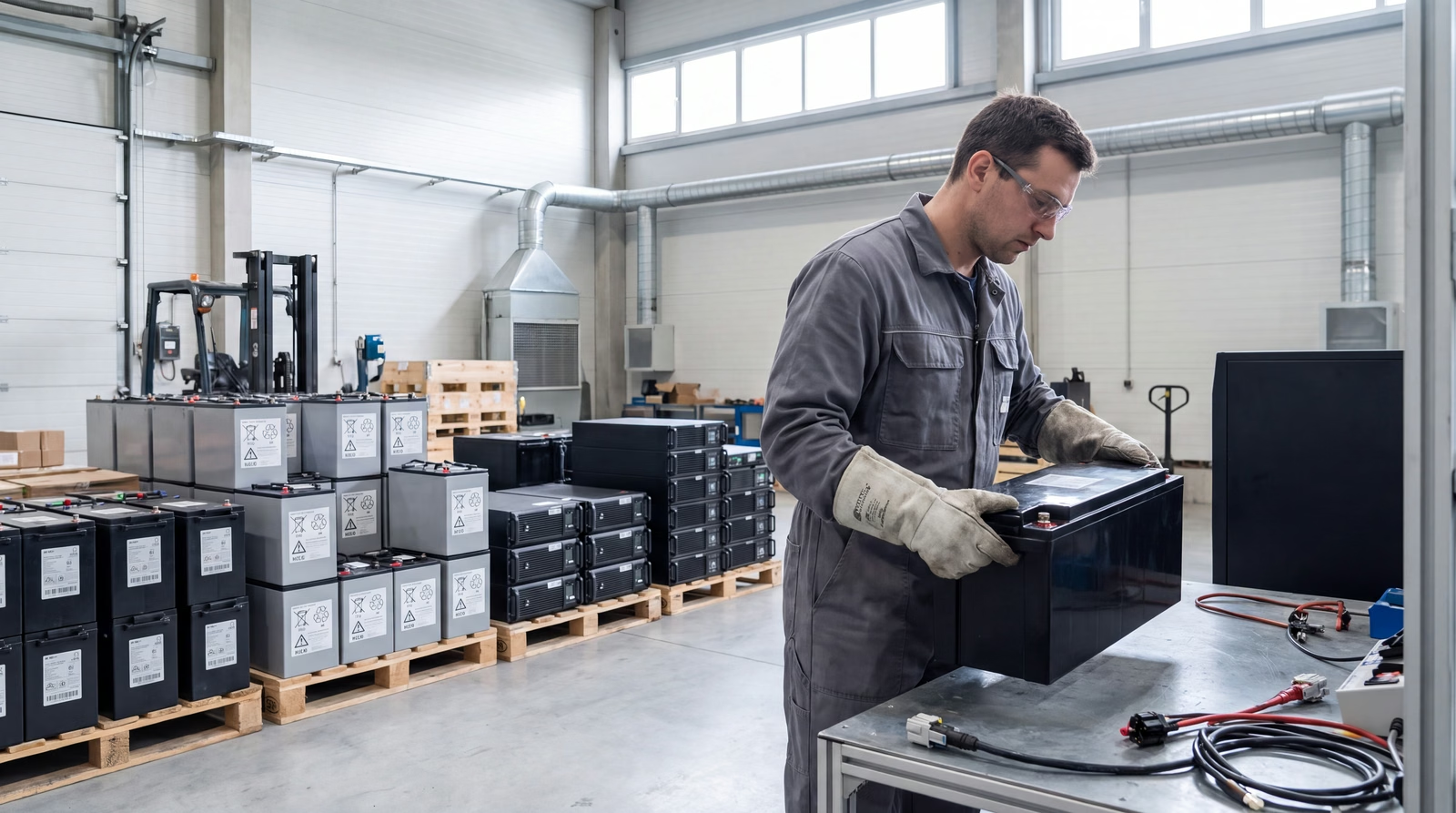
Uninterruptible power supplies protect servers, network equipment, medical systems, security devices, and other critical loads, but their batteries eventually lose capacity or become unsafe. A business disposal project must account for the battery chemistry, cabinet design, electrical condition, weight, transportation rules, data-bearing management modules, and the records needed after recycling. The following framework helps facilities, IT, EHS, and procurement teams plan the work without treating every UPS as the same type of equipment.
Many small and medium UPS units use sealed lead-acid batteries, often described as valve-regulated lead-acid, or VRLA. The cells may sit inside a removable replacement battery cartridge or inside a larger cabinet. Although the word “sealed” suggests simple handling, these batteries remain heavy, contain lead and electrolyte, and can develop cracks, leaks, heat damage, or swollen cases. A cartridge may also contain wiring, connectors, fuses, and a plastic enclosure that affect safe removal and processing.
Lithium-ion batteries are increasingly used where lower weight, longer service life, high power density, or reduced maintenance is important. They require careful identification because damaged, defective, or recalled lithium batteries can present a greater fire and transportation risk than intact batteries. Labels, model numbers, safety data, manufacturer instructions, and equipment records can help identify the chemistry. A recycler should not rely on appearance alone.
Rack-mounted systems may use internal modules, external battery packs, or rows of battery cabinets. Three-phase installations can include large strings, bus connections, monitoring electronics, and energized components. Deinstallation may therefore involve qualified electrical personnel, lockout or shutdown authorization, mechanical handling equipment, and a planned sequence. The recycling pickup is only one part of the project.
| UPS or battery format | Common characteristics | Planning concern |
|---|---|---|
| Small UPS with internal battery | Desktop or network device, removable cover | Model-specific access and connector isolation |
| Replacement battery cartridge | Cells assembled in a manufacturer housing | Cartridge eligibility and return packaging |
| Rack UPS with external packs | Multiple modules connected to one unit | Weight, cable identification, rack access |
| Battery cabinet or string | Large quantity of connected cells | Electrical isolation, lifting, segregation |
| Lithium-ion UPS module | High energy density and electronic management | Damage screening and transport classification |
| Three-phase UPS installation | Facility-scale equipment and heavy components | Qualified deinstallation and project engineering |
Chemistry, state of charge, condition, and weight influence packaging and transportation. Manufacturer and carrier requirements can also differ. APC publishes a return route for certain eligible replacement battery cartridges, while other systems require a local recycling arrangement. California businesses should identify every battery population before requesting service so the provider can select suitable containers, labor, equipment, and downstream facilities.
UPS battery disposal should begin with authorization, not removal. The system owner must confirm that protected loads have been migrated or shut down and that the UPS can be isolated. Only trained personnel working within their qualifications should open equipment, disconnect modules, or handle energized systems. Facility procedures for electrical safety, lockout/tagout, lifting, and emergency response remain applicable.
- Confirm the scope. Record the UPS model, battery part number, chemistry, count, location, approximate weight, and whether batteries are internal, rack-mounted, or in cabinets.
- Authorize shutdown and isolation. Coordinate IT, facilities, operations, and electrical staff. Follow manufacturer procedures and site electrical controls.
- Inspect before movement. Look for heat damage, swelling, cracks, leaking electrolyte, corrosion, loose connectors, recall status, or unusual odor. Stop normal handling when a unit appears unsafe.
- Protect terminals and connectors. Prevent contact with metal tools, shelving, other batteries, or conductive debris. Use packaging and insulation appropriate to the chemistry and transport plan.
- Segregate and label. Keep battery chemistries and condition categories separated. Identify damaged or suspect units for specialist review rather than placing them in a general pallet.
- Stage in a suitable area. Use a dry, secure, controlled location away from heat, ignition sources, traffic, and incompatible materials. Protect heavy batteries from tipping or falling.
- Arrange an approved recycling route. Provide accurate details to the recycler and carrier. Do not place UPS batteries in municipal trash, ordinary mixed recycling, or an undocumented scrap stream.
- Close the records. Reconcile the released count or weight with receiving and recycling documentation, and resolve condition or quantity exceptions.
OSHA's warehousing guidance emphasizes controls for material handling, storage, forklifts, ergonomics, and hazardous conditions. Those principles matter because UPS modules may be too heavy for one person and can create crush, strain, and dropped-load hazards. The lifting plan should consider module weight, rack height, stairs, elevators, carts, and dock access.
If a battery is swollen, leaking, hot, smoking, hissing, or otherwise unstable, keep people away and activate the facility's emergency plan. Do not improvise disassembly, discharge, puncturing, firefighting, or transport. Contact emergency services when conditions warrant and obtain direction from qualified safety, fire, manufacturer, carrier, or hazardous-material professionals.
APC describes a recycling option for eligible replacement battery cartridges in the United States. The practical workflow begins before the old cartridge is removed: identify the UPS model and the exact replacement cartridge, confirm that the product and location remain eligible under APC's current instructions, and review any weight or shipping limitations. Manufacturer programs can change, so the current APC FAQ and the documentation supplied with the replacement should control.
- Purchase or receive the correct APC replacement battery cartridge for the UPS model.
- Keep the new cartridge's shipping materials in usable condition.
- Install the replacement according to the product instructions and the organization's electrical-safety procedures.
- Place the spent eligible cartridge in the replacement packaging, including required protective materials.
- Obtain or use the return label specified by APC and follow the carrier instructions.
- Retain shipment tracking and any return confirmation with the maintenance record.
Reusing the replacement packaging is important because it was designed for that cartridge format. Improvised boxes may not restrain a heavy battery assembly or protect terminals correctly. The package should not be altered merely to make an ineligible item fit. If the old cartridge is damaged, leaking, swollen, recalled, heavier than the program allows, or different from the eligible product, stop and request specific instructions.
Manufacturer return programs are not universal collection programs. Batteries purchased elsewhere, loose cells removed from cabinets, mixed brands, and complete UPS units may need another route. APC also directs customers with three-phase systems toward specialized support rather than treating those installations like a small replacement cartridge. A facility-scale UPS can require shutdown planning, electrical deinstallation, rigging, battery segregation, and recycling of the equipment enclosure and electronics.
Businesses should preserve evidence that connects the replacement activity to the returned cartridge: equipment ID, model, cartridge part number, maintenance ticket, removal date, package tracking, and responsible employee. A prepaid label proves that a package entered a carrier network, but it may not by itself establish final recycling. If the organization requires a certificate, serialized reconciliation, or downstream report, confirm that the manufacturer program supplies the needed evidence. Otherwise, use a recycling provider whose reporting scope matches the business requirement.
A battery replacement makes sense when the UPS remains supported, correctly sized, reliable, and compatible with the load, and when inspection shows no material fault beyond normal battery aging. Whole-system removal becomes more reasonable when the equipment has repeated failures, obsolete controls, unavailable parts, inadequate capacity, physical damage, poor efficiency, expired support, or a configuration that no longer fits the facility.
| Option | Appropriate situation | Important limitation |
|---|---|---|
| Replace battery only | Supported UPS, correct capacity, healthy electronics | Does not correct age-related inverter or control faults |
| Refurbish the UPS | Valuable supported system with repairable components | Requires qualified testing, parts, and warranty clarity |
| Reuse complete system | Functional equipment with a verified new application | Load, voltage, runtime, software, and support must match |
| Deinstall and remarket | Current system with documented condition and demand | Electrical work, testing, freight, and buyer risk reduce value |
| Deinstall and recycle | Obsolete, unsafe, damaged, unsupported, or uneconomic system | Requires separate handling for batteries and electronics |
Age alone should not be the only criterion. Review service history, alarms, battery replacement frequency, runtime tests, load profile, bypass performance, cooling, firmware, network-management support, and manufacturer end-of-life status. A system that still powers on may nevertheless be unsuitable for critical service. Conversely, a planned battery replacement may extend useful life when the remaining equipment is sound.
Project economics should include more than the price of a cartridge. Compare battery parts, technician labor, downtime, testing, expected remaining UPS life, energy losses, future maintenance, and the risk of another interruption. For whole-system removal, include electrical isolation, rack or cabinet work, lifting, access, packing, freight, data treatment for management cards, and recycling. Any resale estimate should be net of testing, repair, sales fees, and returns.
Capacity changes often drive retirement. Consolidated servers may reduce the load, while new equipment may require more runtime or a different power architecture. A facility closure, data-center migration, lease exit, or generator redesign can make the existing UPS unnecessary even if it remains functional. The disposition plan should then separate reusable equipment, data-bearing modules, batteries by chemistry and condition, and nonmarketable electronics.
Modern Waste Solutions provides data center and UPS removal for scoped California projects. A site survey can identify electrical boundaries, cabinet weights, access, equipment condition, battery streams, labor, and reporting before the business decides between limited battery service and full deinstallation.
Documentation should connect the business's release decision to the material received and processed. A weight-only receipt may be sufficient for a low-risk homogeneous battery lot under a defined policy, but a data-center or multi-site project often needs model, location, condition, and asset-level information. The required level should be stated before pickup.
| Record | Useful fields |
|---|---|
| Equipment inventory | Asset ID, UPS model, serial, location, owner, support status |
| Battery inventory | Chemistry, part number, count, weight, cabinet or cartridge association |
| Condition report | Intact, swollen, leaking, damaged, recalled, heat affected, exception action |
| Work authorization | Shutdown approval, electrical scope, released assets, responsible parties |
| Chain of custody | Date, time, pickup location, releasing party, driver, vehicle, seal or container |
| Carrier or shipping record | Carrier, tracking, package count, relevant classification and instructions |
| Receiving report | Facility, receipt date, count or weight, discrepancy, condition exception |
| Recycling certificate | Client, service date, material scope, facility, quantity, certificate identifier |
| Asset reconciliation | Released, received, reused, recycled, missing, extra, and resolved records |
Condition exceptions require their own trail. If a technician finds an unlisted damaged battery, the record should show where it was found, who authorized handling, how it was isolated, and which qualified party selected the final route. A handwritten note that simply says “bad battery” is not enough for a meaningful safety or compliance file.
UPS units may include network cards, configuration memory, service logs, IP addresses, credentials, or other operational information. The asset inventory should identify those modules and apply the organization's data and configuration policy. The battery certificate should not be treated as proof that a management card was sanitized. Equipment and media outcomes may need separate records even when collected on the same project.
Review documentation for internal consistency. Counts should match or have explained conversion to weight. Pickup and receiving dates should be plausible. Facility names should match the provider and processing scope. The final report should distinguish batteries reused, returned under a manufacturer program, and recycled. It should not claim the full weight of an intact UPS as battery recycling if the enclosure and electronics followed different routes.
Modern Waste Solutions describes load tracking, battery sorting, preparation, pickup, and reporting through its battery recycling service. Businesses should specify retention periods, certificate fields, serial-level needs, and correction procedures in the purchase order or statement of work.
A complete checklist should cover operational release, electrical safety, battery condition, logistics, recycling, and evidence. It should be reviewed jointly by the system owner, facilities, safety, information security when management modules are present, procurement, and the service provider.
| Check | Completion evidence |
|---|---|
| UPS and protected loads identified | Current inventory and single-line or rack reference |
| Shutdown and isolation approved | Change ticket and authorized personnel |
| Chemistry and battery format confirmed | Labels, part numbers, manufacturer information |
| Condition screened | Intact population plus separate exception list |
| Handling and lifting planned | Method, labor, carts, rigging, route, access |
| Terminals protected and streams segregated | Packaging and staging inspection |
| Manufacturer return eligibility checked | Current instructions, label, tracking when used |
| Recycler and carrier scope approved | Quote, route, facility, insurance, credentials |
| Pickup documented | Counts, vehicle, parties, time, seals or containers |
| Receipt and recycling reconciled | Receiving report, certificate, closed exceptions |
| UPS data modules addressed | Sanitization, removal, reuse, or destruction record |
The checklist should name stop-work conditions. Heat, smoke, hissing, strong odor, leakage, severe swelling, crushed cases, exposed conductors, or signs of thermal damage require isolation of the area and escalation under the facility emergency plan. Employees should not puncture, open, discharge, cool, package, or move a suspect battery unless their training, equipment, and qualified instructions specifically authorize the action.
For routine intact batteries, good preparation improves both cost and control. Consolidate accurate inventories, schedule an authorized outage, clear the movement route, reserve suitable staging space, identify equipment needed for heavy modules, and agree on reporting before service. For a manufacturer return, preserve approved packaging and tracking. For a recycler pickup, define who may approve quantity or condition changes at the site.
The final review should compare the maintenance release, pickup, receipt, certificate, and asset records. Resolve every difference rather than adjusting the original inventory to match the final number. Retain documentation according to the organization's environmental, maintenance, financial, contract, and records policies.
California businesses can request a project-specific pickup assessment through Modern Waste Solutions' battery recycling or data center and UPS removal services. Accurate model, chemistry, count, weight, condition, location, and access information will produce a safer and more useful scope.
- APC, How to recycle an APC battery: apc.com/us/en/faqs/FA349374
- California DTSC, Discarded Battery Management Fact Sheet: dtsc.ca.gov/discarded-battery-management-fact-sheet
- OSHA, Warehousing Hazards and Solutions: osha.gov/warehousing/hazards-solutions
- Modern Waste Solutions: Battery Recycling
- Modern Waste Solutions: Data Center and UPS Removal
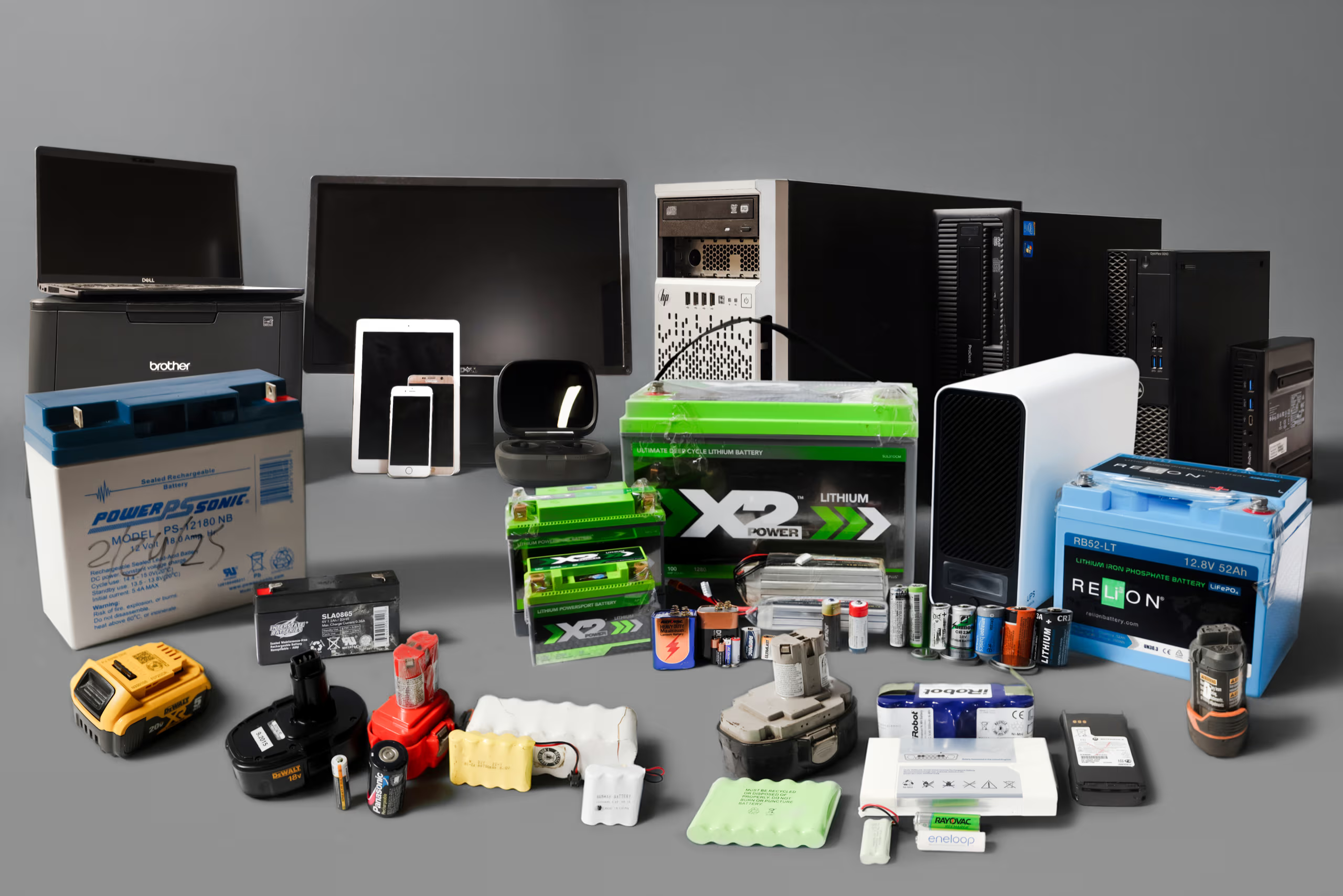

Simplify your compliance and disposal process with bundled recycling services that handle both electronic devices and batteries in one streamlined solution.

Our scheduled, route-based pickups cover all major regions of California—ensuring efficient, on-time service no matter where you operate.
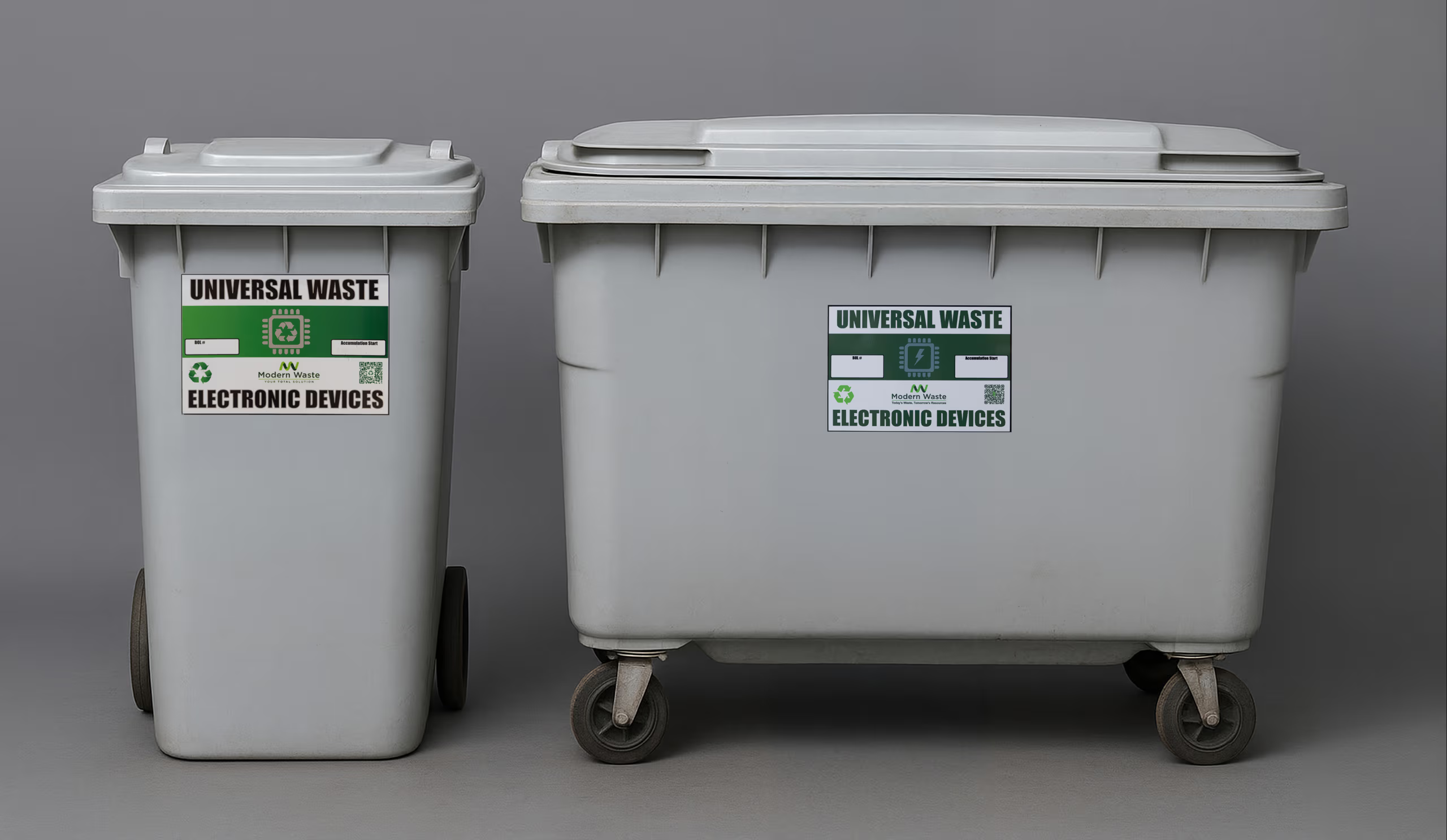
We provide clearly labeled, tamper-resistant containers to ensure safe and compliant collection of electronic waste and batteries at your location.

Modern Waste Solutions has served businesses and communities across California with dependable, environmentally responsible recycling solutions for over two decades.
We adhere to all California and federal regulations, ensuring your electronic and battery waste is managed with complete transparency and environmental responsibility.



Reviews
A little bit off the beaten track in Natomas, but Modern Waste quickly and efficiently helped me recycle my broken Lithium Iron Phosphate batteries at a reasonable $/lb fee (Sac county e-waste will not accept these items). Ramiro and Vincent were very friendly and helpful.

Chris was awesome! He came in and picked up all of the e-waste we had ready for him. He was polite and professional throughout the entire process. He handled the equipment with care, including the site equipment that was already in place. I am very happy with his service and appreciate the great job he did.

Aaron and Vincent were awesome, excellent customer service!

Great guys, excellent customer service, highly recommend!

Polite, quick and easy.

Chris from modern waste was the most outstanding respectful person I ever met my life when he was done he offered to sweep the floors. He offered so much even though he was limited on time he went out of his way and he’s over beyond best guy I ever met thank you so much for your service services Dan ITG.


Data center decommissioning is a controlled change project that retires workloads, infrastructure, and records without interrupting systems that must remain live. Here is the full process, from go/no-go to final reconciliation.
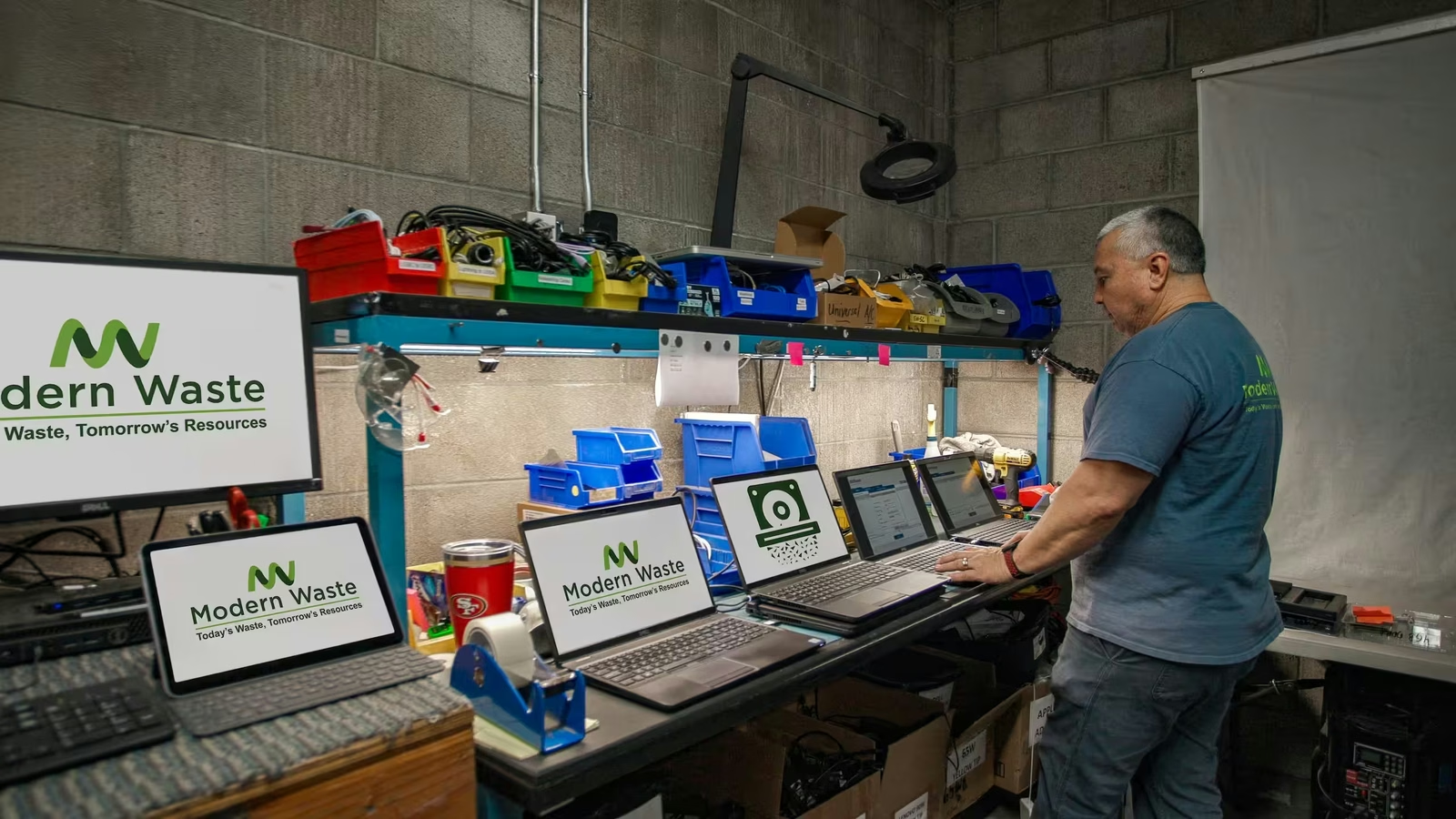
A mature ITAD program connects asset ownership, data security, environmental compliance, logistics, financial recovery, and reconciliation. Here is how the process works, what it costs, and how to evaluate a provider.

IT equipment liquidation converts marketable retired assets into documented financial recovery while routing nonmarketable equipment to responsible recycling. Here is how to decide which path fits each asset.