
Published October 2, 2026 · 11 min read · Updated October 2, 2026
On-Site Mobile Hard Drive Shredding Process and Costs
On-site hard drive shredding keeps intact media under your control until it is destroyed. Here is how the process works, what drives the cost per drive, and what proof a vendor should provide.
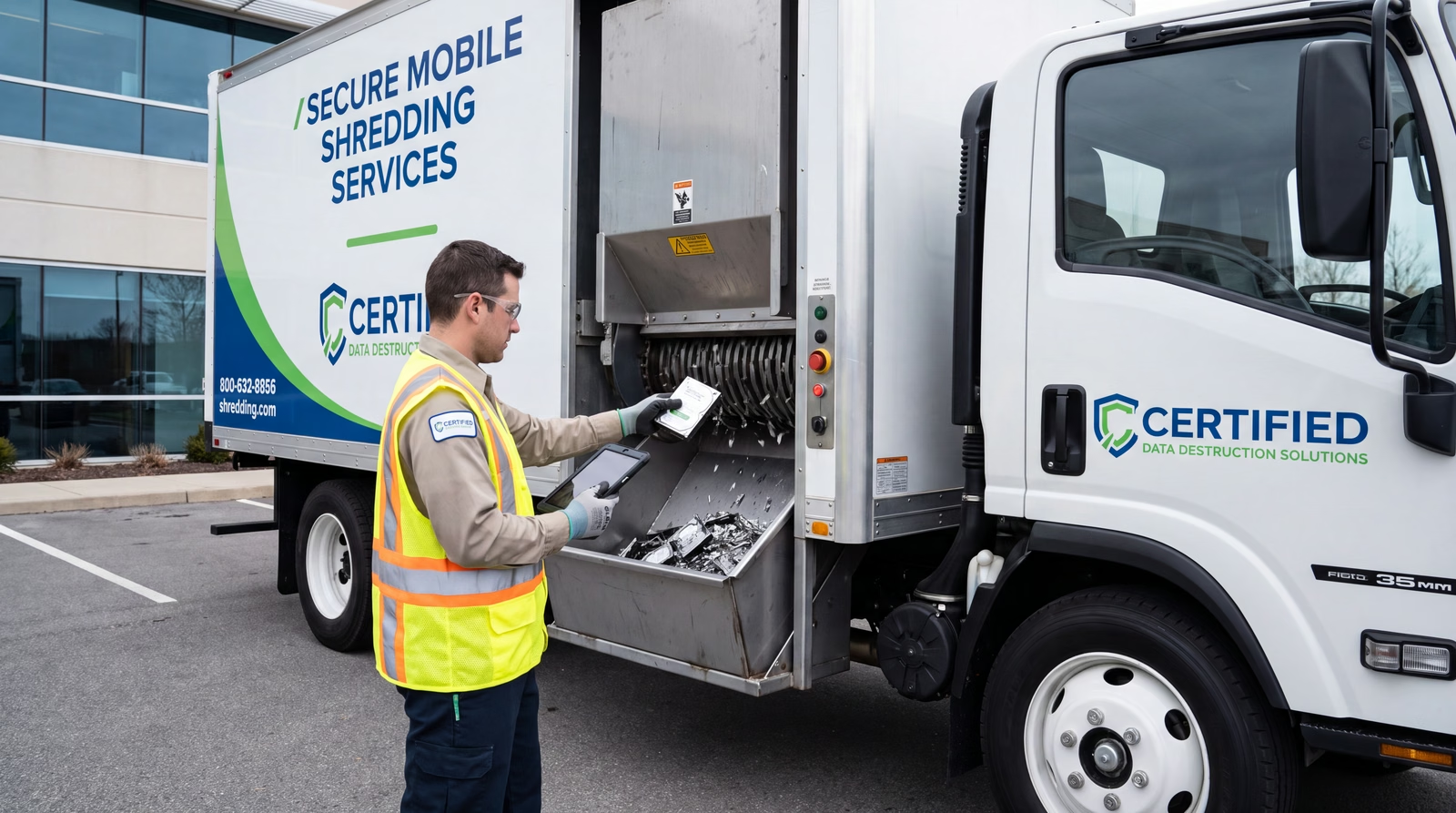
On-site hard drive shredding brings controlled destruction equipment to the business location so authorized staff can maintain custody and, when required, witness media being physically destroyed. The service is useful for sensitive data, large technology refreshes, strict contractual requirements, and sites that do not permit intact media to leave before destruction.
The security benefit depends on planning. Drives must be inventoried, removed safely, staged securely, reconciled at the shredder, and tied to a final certificate. Modern Waste Solutions provides mobile hard drive shredding and downstream electronics recycling throughout its California service area.
Mobile hard drive shredding is a physical media-destruction service performed at or immediately adjacent to the client's site. A mobile unit processes hard disk drives and other approved media into fragments so the devices cannot be reused. The scope may include drive removal, barcode or serial capture, witnessed destruction, debris containment, transportation of processed material, recycling, and certificate delivery.
On-site service is appropriate when policy requires intact media to remain under the organization's direct control until destruction. Healthcare, financial, public-sector, legal, research, and technology organizations may use this model for protected, proprietary, export-controlled, or contract-restricted data. It can also be efficient during a large refresh when hundreds of drives are already staged at one location.
| Situation | Why on-site shredding may fit | Control still required |
|---|---|---|
| Witness requirement | Authorized personnel can observe the process | Define who witnesses and how completion is recorded |
| High data sensitivity | Intact drives do not travel to an off-site facility | Protect custody before the shredder and after processing |
| Large refresh | Mobile throughput can reduce repeated transport | Confirm daily capacity, staging, power, parking, and access |
| Failed or unreadable drives | Physical destruction avoids reliance on logical access | Verify media type and acceptable destruction result |
| Remote or controlled facility | Service can be coordinated around site restrictions | Complete safety, vehicle, escort, and work-area review |
| Mixed media | Several approved media types may be processed in one event | Confirm the shredder is suitable for each medium |
On-site destruction is not automatically necessary for every device. A lower-risk drive that can be sanitized and reused may have more value. Off-site destruction can be appropriate when secure transport, facility controls, and reporting meet the organization's risk requirements. The decision should be documented through data classification, media condition, custody risk, reuse plans, and contract terms.
NIST SP 800-88 Rev. 2 treats Destroy as one sanitization outcome. The organization must still determine whether the physical process is suitable for the media and confidentiality. The word “shredded” alone does not establish fragment size, treatment of flash chips, or completeness of the asset population.
Modern Waste Solutions’ on-site service is designed for destruction at the client's location. A quote should identify media types, quantities, security procedures, witnessing, serial reporting, debris handling, and certificate requirements.
The process begins several days or weeks before the truck arrives. The business must define the media population, remove legal holds, approve destruction, and reconcile drives removed from computers, servers, arrays, printers, copiers, and other devices. Loose media should enter a secured staging area with controlled additions and removals.
- Create the authorized destruction list by asset tag and serial number or approved lot identifier.
- Confirm media type, size, quantity, condition, and whether drives remain installed in equipment.
- Resolve legal holds, lease obligations, warranty returns, and ownership.
- Select a safe work area with vehicle access, level parking, clearance, noise controls, and authorized observers.
- Establish a discrepancy process for unreadable serials, missing drives, unexpected media, and drives not on the list.
The vendor and client verify the opening count or scan list. Each drive is presented to the shredder under controlled custody. Serial or barcode capture may occur before destruction. The operator confirms that the machine accepts the media and monitors jams, rejected items, and incomplete processing. The witness should observe the defined process without entering unsafe equipment zones.
| Control point | Responsible party | Evidence |
|---|---|---|
| Authorized media release | Client information-security or asset owner | Approved list |
| Identity capture | Vendor operator and client coordinator | Scan file or lot record |
| Physical processing | Trained vendor operator | Machine log and observation |
| Exception isolation | Vendor and client | Exception ticket and secured item |
| Witness confirmation | Named client representative | Signed or electronic attestation |
| Debris transfer | Vendor | Weight, container, or custody record |
Processed fragments are secured for transport to an appropriate downstream recycler. The vendor reconciles the destroyed population against the opening inventory and identifies missing, extra, rejected, or reprocessed items. The client reviews the report before accepting closure.
The final package should include the service date and location, media type, count, asset or serial list when required, destruction method, operator, witness, exceptions, certificate number, and recycling disposition. Modern Waste Solutions can coordinate on-site shredding with electronics recycling so chassis and processed media do not become disconnected waste streams.
There is no responsible universal price per drive. A mobile project combines variable processing with fixed mobilization and site costs. Two projects with the same drive count can price differently when one has dock access and a prepared scan list while the other requires drive removal, multiple floors, escorts, weekend work, serial capture, and custom reports.
| Cost driver | Lower-complexity condition | Higher-complexity condition |
|---|---|---|
| Quantity | Large prepared batch at one location | Small batch that still requires mobilization |
| Media | Standard loose HDDs accepted by the unit | Mixed HDDs, SSDs, tapes, phones, or unusual devices |
| Preparation | Drives removed, inventoried, and staged | Vendor must remove drives or reconcile equipment |
| Access | Ground-level loading and reserved work zone | Stairs, elevators, escorts, restricted parking, remote site |
| Reporting | Lot-level certificate | Serial capture, witness signatures, custom fields, portal upload |
| Scheduling | Normal route and business hours | Rush, after-hours, weekend, or fixed shutdown window |
| Security | Standard controlled staging | Dedicated vehicle, continuous escort, special screening |
| Recycling | Standard downstream material processing | Additional equipment, batteries, or regulated components |
Per-drive pricing should be read together with minimum service charges, mobilization, labor, data capture, and recycling. A very low unit price may exclude the work needed to remove drives or create serialized reports. A higher unit price may include those services. Compare complete scopes rather than a single line.
Public contract schedules, including commercial price lists available through GSA Advantage, can illustrate how destruction services are structured, but they are not a Modern Waste Solutions quote and may reflect a different vendor, contract date, geography, media, quantity, and terms. They should not be used as a fixed market promise.
For an accurate quote, provide drive count, media dimensions, installed or loose status, site address, loading conditions, floor and elevator details, parking, desired date, business hours, serial-reporting requirement, witness count, certificate fields, and additional electronics. State whether the project needs on-site destruction only or also deinstallation, packing, pickup, and recycling.
The business should also value avoided internal work. A prepared project reduces staff time, asset-search effort, repeated pickups, and audit reconciliation. Cost control therefore begins with inventory accuracy and staging discipline, not only negotiation over the unit rate.
Both models can be secure when designed correctly. On-site destruction keeps intact media at the client location until it enters the shredder. Off-site destruction transfers intact media through a documented chain of custody to a controlled facility. The right choice depends on data risk, contract requirements, site constraints, volume, reuse strategy, scheduling, and cost.
| Decision factor | On-site destruction | Off-site destruction |
|---|---|---|
| Intact-media custody | Remains at client site until processing | Transfers to secured transport and facility |
| Witnessing | Direct observation is straightforward | May require video, scheduled visit, or process evidence |
| Site impact | Requires vehicle, work zone, noise, safety controls | Faster pickup with less equipment on site |
| Scheduling | Tied to mobile unit and site availability | Facility can process within agreed service window |
| Throughput | Efficient for prepared batches | Facility may support broader equipment and media handling |
| Cost structure | Mobilization plus processing and reporting | Pickup, transport, facility processing, and reporting |
| Reuse option | Physical destruction eliminates reuse | Facility can sanitize and test approved assets before recycling |
| Exceptions | Resolved with client present | Managed through facility exception workflow |
Choose on-site when a customer contract prohibits intact-media transport, an authorized witness is required, a controlled campus has a large prepared batch, or the organization wants immediate visual assurance. Choose off-site when secure containers and transport satisfy policy, site access is difficult, the load includes mixed equipment needing triage, or some assets may be sanitized and reused.
A hybrid approach can work well. High-risk drives are shredded on-site, while lower-risk equipment is transported for testing, sanitization, resale, or recycling. The inventory must identify the route for each asset. Otherwise a drive intended for witnessed destruction may enter the off-site stream by mistake.
Neither model removes the need for validation. For on-site service, verify that every authorized drive reached the shredder and that fragments were controlled. For off-site service, verify seals, custody events, receiving reconciliation, processing location, method, and exceptions. In both cases, review the final certificate and serialized report against the release list.
Site safety can decide the question. A mobile truck may not fit a garage, loading zone, secured perimeter, or hospital campus without permits and traffic controls. Conversely, transport risk may be unacceptable for certain media. A documented assessment makes the choice defensible.
Proof should cover population, custody, method, completion, exceptions, and downstream disposition. A polished certificate is not enough if it cannot be reconciled to the drives released by the business. Define required fields in the statement of work and test a sample before the event.
| Evidence | Key fields | Validation question |
|---|---|---|
| Authorized inventory | Asset tag, serial, media type, owner | Did the business approve every item? |
| Custody record | Date, time, location, releasing and accepting parties | Is there an unexplained custody gap? |
| Processing record | Method, equipment, operator, count, result | Was each accepted item processed? |
| Witness record | Witness identity and scope observed | What exactly did the witness confirm? |
| Exception report | Missing, extra, rejected, jammed, unreadable, reprocessed | Is every exception resolved? |
| Certificate of destruction | Client, location, date, scope, method, certificate ID | Does it match the inventory and service? |
| Recycling record | Fragment weight or lot, downstream route | Were processed materials managed responsibly? |
Serialized reporting is valuable for high-risk drives, but scan data must be accurate. Ask how duplicate serial numbers, unreadable labels, missing labels, and drives inside multi-drive equipment are handled. If the vendor uses a lot-level certificate, confirm whether that meets policy and contractual obligations.
The destruction method should be specific. “Securely destroyed” gives less assurance than a statement identifying physical shredding, media type, service location, equipment or process reference, and completion result. When NIST terminology is used, the document should state the intended Destroy outcome without claiming private NIST certification.
Witnessing does not replace records. A person may observe drives entering a machine but cannot remember hundreds of serial numbers or prove that every authorized asset was present. The witness record should supplement scans and reconciliation.
Ask about downstream processing. Hard-drive fragments contain metals, circuit boards, magnets, and in some media, glass or other materials. The vendor should explain how fragments are secured, transported, and recycled. Review certifications by actual processing site and service scope. Modern Waste Solutions states that it tracks customer loads and downstream materials and provides certificates and reports as needed.
Finally, test accessibility. Confirm when reports will be issued, how corrections are controlled, how long portal records remain available, and whether the business can export them. An audit package is useful only if it can be retrieved and understood later.
Budget from the full project scope rather than multiplying drive count by an assumed unit price. Mobilization, labor, access, media mix, serial reporting, witnessing, scheduling, recycling, and exception handling can materially change the total. Good preparation can reduce cost while improving security.
| Quote input | Information to provide |
|---|---|
| Media population | Count, type, size, condition, installed or loose status |
| Location | Full address, floor, dock, elevator, parking, access restrictions |
| Timing | Preferred dates, business hours, shutdown window, urgency |
| Security | Escort, background checks, witnessing, restricted areas |
| Inventory | Asset tags, serial requirements, barcode format, reconciliation tolerance |
| Service | Drive removal, shredding, equipment recycling, debris handling |
| Reporting | Certificate fields, serialized file, portal or format, delivery deadline |
| Exceptions | Process for unknown, missing, rejected, or damaged media |
Prepare the approved inventory and secure staging before the crew arrives. Remove non-project material from the work area. Confirm who can authorize a newly discovered drive and who can resolve a missing serial. These steps reduce paid waiting time and prevent rushed decisions.
Evaluate the quote against service controls. Confirm that the mobile unit can process the listed media, that the vendor will document exceptions, and that fragments enter a responsible recycling route. Require written assumptions and exclusions. A price that omits serial reporting or drive removal is not comparable to a complete service.
Create separate budget lines for the base event and possible exceptions. The base can cover mobilization, an agreed quantity range, normal processing, and standard documentation. Contingencies can address overtime, drives still installed in equipment, additional locations, failed barcode labels, special media, access delays, or a return visit. This structure makes bids easier to compare and prevents an inexpensive unit rate from hiding a costly set of exclusions.
After service, compare the invoice with the signed scope, actual media count, arrival and completion times, and approved changes. Do not close the purchase order until the serialized report, certificate, exception record, and recycling evidence meet the agreed requirements. Historical data from completed events can then improve quantity estimates, staging labor, and scheduling for the next refresh cycle.
Modern Waste Solutions can provide a project-specific quote for on-site hard drive shredding. Supply accurate quantities, media, site conditions, access, witness needs, and report requirements to receive a usable scope rather than a generic estimate.
- NIST SP 800-88 Rev. 2, Guidelines for Media Sanitization: csrc.nist.gov/pubs/sp/800/88/r2/final
- GSA Advantage, public commercial destruction pricing example: gsaadvantage.gov
- Modern Waste Solutions: On-Site Hard Drive Shredding
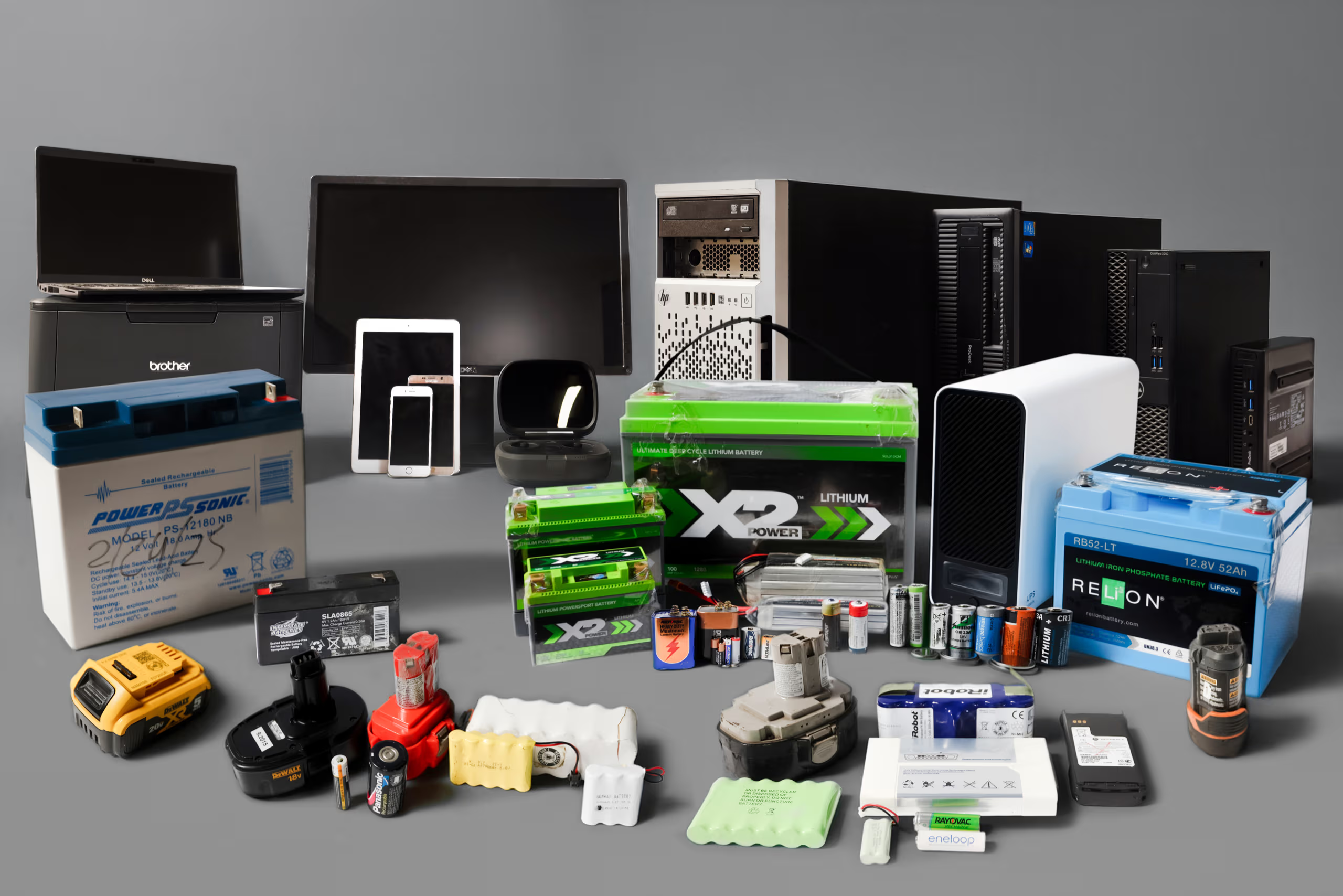

Simplify your compliance and disposal process with bundled recycling services that handle both electronic devices and batteries in one streamlined solution.

Our scheduled, route-based pickups cover all major regions of California—ensuring efficient, on-time service no matter where you operate.
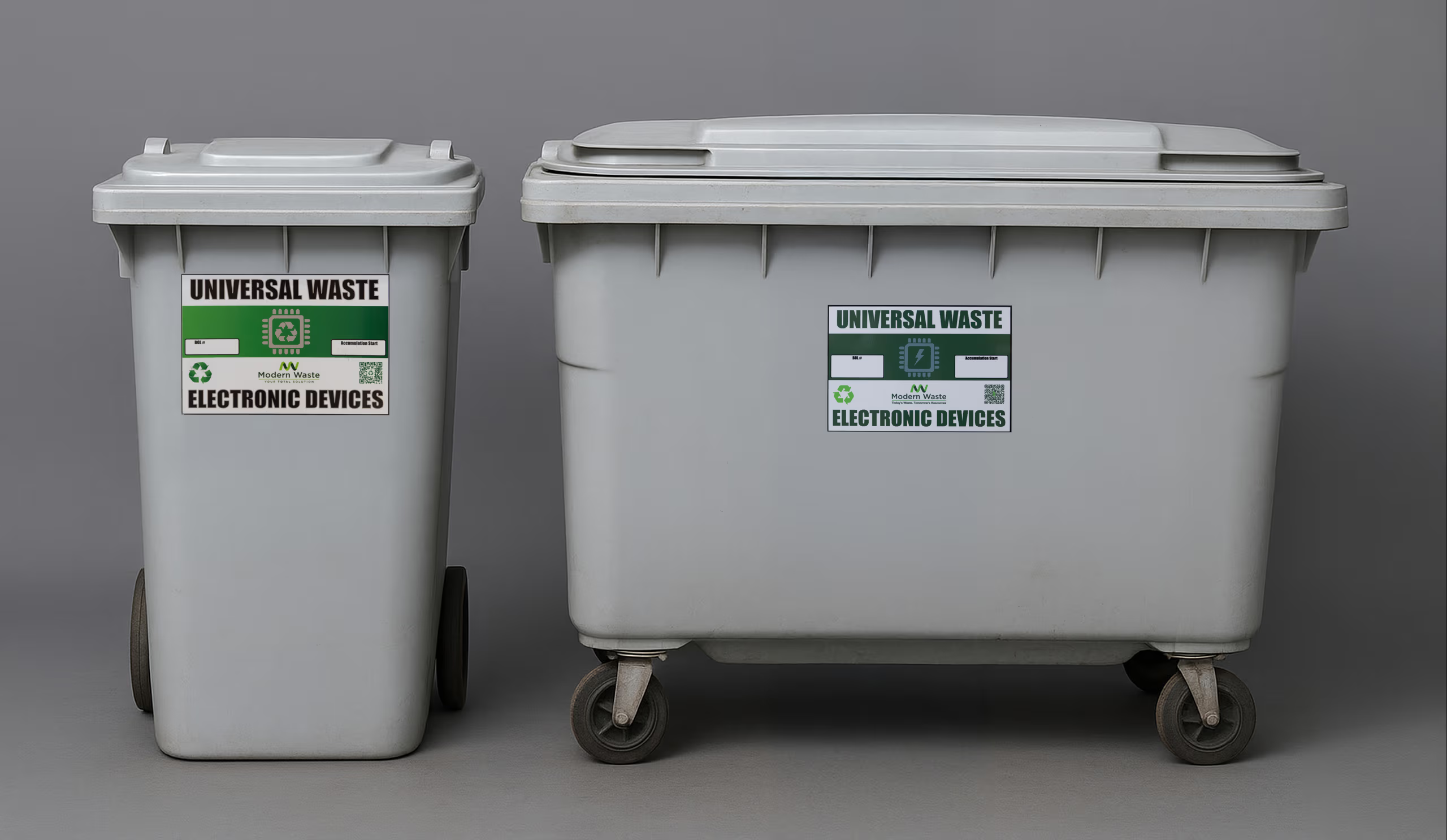
We provide clearly labeled, tamper-resistant containers to ensure safe and compliant collection of electronic waste and batteries at your location.

Modern Waste Solutions has served businesses and communities across California with dependable, environmentally responsible recycling solutions for over two decades.
We adhere to all California and federal regulations, ensuring your electronic and battery waste is managed with complete transparency and environmental responsibility.


Reviews
A little bit off the beaten track in Natomas, but Modern Waste quickly and efficiently helped me recycle my broken Lithium Iron Phosphate batteries at a reasonable $/lb fee (Sac county e-waste will not accept these items). Ramiro and Vincent were very friendly and helpful.

Chris was awesome! He came in and picked up all of the e-waste we had ready for him. He was polite and professional throughout the entire process. He handled the equipment with care, including the site equipment that was already in place. I am very happy with his service and appreciate the great job he did.

Aaron and Vincent were awesome, excellent customer service!

Great guys, excellent customer service, highly recommend!

Polite, quick and easy.

Chris from modern waste was the most outstanding respectful person I ever met my life when he was done he offered to sweep the floors. He offered so much even though he was limited on time he went out of his way and he’s over beyond best guy I ever met thank you so much for your service services Dan ITG.


Data center decommissioning is a controlled change project that retires workloads, infrastructure, and records without interrupting systems that must remain live. Here is the full process, from go/no-go to final reconciliation.
A mature ITAD program connects asset ownership, data security, environmental compliance, logistics, financial recovery, and reconciliation. Here is how the process works, what it costs, and how to evaluate a provider.

IT equipment liquidation converts marketable retired assets into documented financial recovery while routing nonmarketable equipment to responsible recycling. Here is how to decide which path fits each asset.