
Published August 27, 2026 · 12 min read · Updated September 27, 2026
Secure Data Destruction Methods and Compliance Standards for Businesses
The right data destruction method depends on the media, how sensitive the data is, whether the device will be reused and what evidence you need. Here is how to choose, document and verify Clear, Purge and Destroy outcomes under NIST SP 800-88.
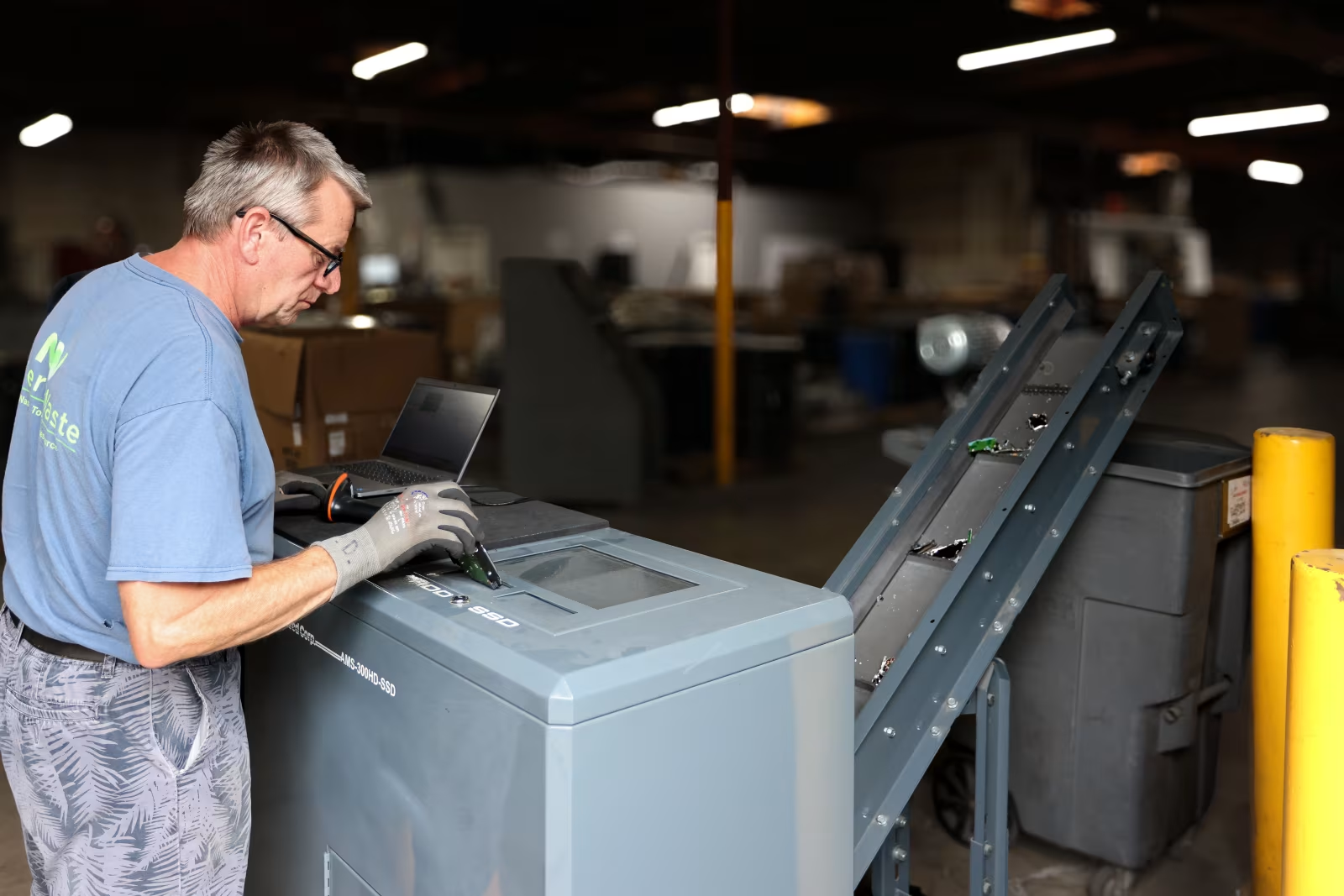
Secure data destruction is the controlled removal of information from media so the organization can reuse, transfer, recycle, or dispose of the asset at an acceptable level of risk. The correct method depends on media technology, confidentiality, reuse plans, available tools, and evidence requirements. A method that is effective for a magnetic hard disk may be ineffective for an SSD, tape, phone, copier, or paper file.
Modern Waste Solutions has provided facility-based and on-site data destruction, electronics recycling, asset tracking and certificates to California organizations since 1999. This guide compares data destruction methods by media type and explains the policy and records that make a method defensible: authorization, chain of custody, validation, exception handling and final documentation.
Method selection begins with the storage technology and the required sanitization outcome. “Delete,” “format,” “wipe,” and “destroy” are not interchangeable. The organization should use current manufacturer information and NIST SP 800-88 Rev. 2 to determine whether a technique can address all user-addressable and non-user-addressable storage areas for the specific device.
| Media | Methods that may be appropriate | Important limitation |
|---|---|---|
| Magnetic HDD | Validated overwrite, approved purge technique, degaussing, shredding or other physical destruction | Overwrite must complete and verify; degaussing usually makes the drive unusable |
| SSD and flash storage | Manufacturer-supported sanitize command, cryptographic erase when prerequisites are met, shredding or pulverization | Simple overwrite may not reach overprovisioned or remapped cells; degaussing does not erase flash |
| Magnetic tape | Approved overwrite where supported, degaussing, shredding | Method depends on tape format, drive availability, and reuse decision |
| Mobile device | Enterprise erase, cryptographic erase, manufacturer reset plus validation, or physical destruction | Factory reset alone may be insufficient without encryption and management-state review |
| Optical media | Grinding, shredding, pulverization, or other destruction that makes data recovery infeasible | Surface scratching or bending is not a controlled method |
| Paper records | Cross-cut shredding, pulping, pulverizing, or another contract-approved process | Bin collection and transport remain custody risks before destruction |
Overwriting writes a defined pattern or data across accessible storage. It can support a Clear outcome on compatible magnetic media, but the tool must report completion and failures. Cryptographic erase destroys the ability to decrypt data by sanitizing the relevant keys; it is effective only when strong encryption protected the target data before the decision and when keys and copies are fully addressed.
Degaussing exposes magnetic media to a sufficiently strong magnetic field. It does not work on semiconductor storage such as SSDs and USB flash drives. The organization must know the media’s coercivity and the degausser’s capability. Shredding, crushing, disintegration, and pulverization physically damage media, but fragment size and process control determine the result. Crushing a drive case without addressing platters or flash packages is not automatically adequate.
Paper destruction should be treated as an information-security service, not ordinary recycling. Locked collection, authorized pickup, secure processing, documented completion, and recycling of destroyed paper can form one chain. For every medium, the method record should identify the asset or lot, technology, outcome, operator, date, tool or equipment, verification, validation, and final disposition.
A policy should explain when information may be destroyed, who authorizes the action, which methods are approved, and what evidence must survive after the data is gone. The retention schedule and the destruction process belong together. Without retention rules, employees may delete too early or store indefinitely; without destruction rules, expired data may remain on retired systems, backups, devices, or paper.
Assign an executive owner and operating roles for legal, records management, information security, privacy, IT asset management, facilities, procurement, and audit. The policy should cover employees, contractors, cloud services, leased devices, removable media, backups, test systems, printers, mobile devices, paper, and vendor-held information. It should also state which business units may impose longer or stricter requirements.
- Classify the information and identify the system or media.
- Confirm that the retention period has expired.
- Check legal holds, investigations, audits, regulatory preservation, and contractual restrictions.
- Select reuse, return, transfer, recycling, or disposal as the asset outcome.
- Choose Clear, Purge, or Destroy and an approved technique for the media.
- Authorize internal work or release to an approved vendor.
- Verify and validate the result; route failures to an exception process.
| Policy element | Required decision | Evidence |
|---|---|---|
| Scope | Data, systems, media, locations, and third parties covered | Approved policy and asset/data map |
| Retention trigger | Event that starts and ends retention | Retention schedule and legal basis |
| Hold control | Who can place and release a hold | Hold register and release approval |
| Method standard | Approved outcome and technique by media | Sanitization matrix |
| Vendor control | Security, chain of custody, subcontractors, insurance, and audit rights | Due-diligence file and contract |
| Exceptions | Failure, missing asset, damaged media, or method deviation | Incident ticket and disposition approval |
| Evidence retention | Which records survive and for how long | Certificate and report schedule |
The policy should require enough evidence to reproduce the decision without retaining the destroyed information itself. Suitable records include asset identifiers, media type, data classification, authorization, method, tool or equipment, operator, location, date, verification result, validator, custody events, exceptions, and final disposition.
Test the policy with real scenarios: an SSD that fails a sanitize command, a copier at lease return, a missing drive, a litigation hold, a phone with an unknown account lock, and a box of mixed backup tapes. If the policy does not tell staff who decides, what happens next, and what gets recorded, it is not operational.
NIST SP 800-88 Rev. 2 organizes media sanitization around three outcomes: Clear, Purge, and Destroy. These are levels of protection, not brand names for tools. The organization chooses an outcome based on information confidentiality, media type, reuse plans, threats, and risk. It then selects a technique that can achieve that outcome on the specific media.
Clear applies logical techniques to sanitize data in user-addressable storage against simple, noninvasive recovery using the same interface normally available to the user. A validated overwrite may be an example for compatible media. Clear can support internal reuse when policy and risk allow, but it may not address hidden, remapped, or damaged areas.
Purge uses logical or physical techniques that make recovery infeasible even with advanced laboratory methods while preserving the media for potential reuse when possible. Examples can include a properly implemented cryptographic erase, a device-specific sanitize command, or degaussing for compatible magnetic media. The technique must be supported by the media and implemented under valid prerequisites.
Destroy renders media unusable and makes data recovery infeasible through physical destruction. Shredding, disintegration, pulverization, melting, or another controlled process may achieve the outcome when the resulting particles and components meet the organization’s risk requirements. “Destroyed” should describe the result, not merely that a drive was bent or struck.
| Outcome | Typical reuse status | Selection focus | Evidence focus |
|---|---|---|---|
| Clear | Media remains usable | Low-to-moderate risk, compatible media, controlled reuse | Tool completion, error review, sample or full verification |
| Purge | Media may remain usable | Higher confidentiality, advanced recovery threat, media-supported technique | Prerequisites, technique result, verification and validation |
| Destroy | Media is not reusable | Media failure, very high risk, policy mandate, no reliable logical method | Custody, physical process, fragment/result inspection, certificate |
Rev. 2 distinguishes verification from validation. Verification checks whether the sanitization technique completed as expected and whether errors occurred. Validation is the responsible determination that the result is acceptable for the intended disposition and risk. A successful tool message should not close the process if the wrong method was chosen, prerequisites were unmet, or the asset identity is uncertain.
Final disposition must also be documented. A sanitized asset may be returned to inventory, sold, donated, recycled, or destroyed. The record should connect the outcome, method, verification, validation, and disposition. This prevents a technical wipe log from becoming detached from the physical device and business decision.
NIST guidance, laws, contracts, sector rules, and certification standards serve different purposes. NIST SP 800-88 provides a technical and program framework for media sanitization, but it is not a universal law and NIST does not certify private destruction vendors through a generic “NIST certified” label. A contract may incorporate NIST methods, a regulator may require reasonable safeguards, and an industry certification may audit operational controls. The business must identify which obligations actually apply.
| Requirement source | What it can establish | What it does not prove by itself |
|---|---|---|
| NIST SP 800-88 Rev. 2 | Sanitization outcomes, technique selection, verification, validation, documentation | Compliance with every privacy or sector law |
| Federal or state law | Binding duties for covered entities, data, and jurisdictions | That one named technical method fits every medium |
| Customer contract | Specific methods, witnessing, reporting, locations, and retention | Statutory compliance outside the contract scope |
| e-Stewards certification | Audited controls for electronics reuse/recycling and data practices within certificate scope | That every service, site, or subcontractor is automatically covered |
| Chain-of-custody record | Who transferred the asset, when, where, and in what quantity | Successful sanitization or recycling outcome |
| Sanitization report | Asset, technique, result, verification, and exception data | Environmental disposition unless linked to recycling records |
| Certificate of destruction | Attestation that a defined service occurred | A complete process if asset detail and custody are missing |
The compliance record should begin with authorization and end with disposition. Between them, keep the release inventory, custody events, receiving reconciliation, method record, verification, validation, exception resolution, certificate, and downstream outcome. When assets are serialized, those records should share a stable identifier.
Vendor review should cover facility security, staff authorization, vehicles, insurance, incident response, tools, equipment maintenance, subcontractors, downstream processors, and certificate scope. Ask how failed wipes, unreadable serials, unexpected media, and missing assets are handled. A good answer describes a controlled exception queue, not a promise that exceptions never happen.
Avoid labels that overstate assurance. “HIPAA certified,” “NIST certified,” or “fully compliant” may be misleading when no such universal certification exists. The defensible statement names the method, standard version, asset scope, result, and evidence. Legal compliance remains the covered organization’s responsibility and may require counsel or regulator guidance.
The GDPR can matter to a California organization when it processes personal data within the regulation’s territorial scope, including certain activities involving people in the European Economic Area. The question is not where the company’s headquarters are located but whether the processing, establishment, offering, monitoring, or other facts bring the activity within scope. Organizations should obtain privacy counsel for that determination.
At a high level, GDPR principles support keeping personal data no longer than necessary for the purpose and protecting it with appropriate security. Data-subject rights and erasure duties include exceptions; legal claims, statutory retention, public interest, and other lawful grounds may require continued retention. A destruction policy therefore needs both a deletion trigger and a hold/exception process.
| Governance issue | GDPR-oriented question | California/U.S. comparison point |
|---|---|---|
| Scope | Does the processing fall within GDPR territorial and material scope? | Which state, federal, sector, and contractual rules apply? |
| Retention | Is the period necessary and documented for the purpose? | Does the records schedule reflect legal and business needs? |
| Erasure | Can data be located and deleted across active systems and vendors? | Which consumer, patient, employee, or customer rights apply? |
| Legal holds | Is an exception supported and controlled? | Are litigation, investigation, and regulatory holds enforced? |
| Media disposal | Are devices sanitized before reuse, return, or recycling? | Is the method reasonable for the data and media? |
| Evidence | Can the organization show policy, authorization, completion, and exceptions? | Do certificates and logs connect to the actual assets? |
GDPR data destruction is broader than shredding retired hardware. Personal data may exist in production systems, backups, archives, cloud services, SaaS platforms, mobile devices, email, paper, and processors. The policy needs deletion workflows for logical systems and sanitization workflows for media. A certificate from a recycler addresses only the media and assets within that service.
NIST SP 800-88 can support technical method selection for media, but it does not determine GDPR scope, lawful basis, or retention period. The organization should connect privacy records, retention schedules, system deletion, vendor obligations, and IT asset disposition through common identifiers and approvals.
A defensible approach is to document the purpose and retention rule, freeze records subject to holds, apply approved deletion or sanitization methods, validate exceptions, and retain limited proof that the action occurred. The proof should not recreate the personal data that was meant to be removed.
Choose the outcome before choosing the vendor or tool. Start with data classification, legal holds, media technology, reuse plans, and likely recovery capability. Then select a Clear, Purge, or Destroy technique that is supported for the media and can be verified. If the technique fails or the media cannot be identified, move the asset to a controlled exception route.
| Media or situation | Defensible starting point | Final record |
|---|---|---|
| Reusable magnetic HDD | Validated Clear or Purge method appropriate to risk | Asset, tool, result, verification, validation, disposition |
| Reusable SSD | Device-supported purge or cryptographic method with valid prerequisites | Device identity, command/method, key conditions, result |
| Failed or high-risk drive | Controlled physical destruction | Custody, equipment/method, operator, result, certificate |
| Magnetic tape | Supported overwrite, degaussing, or destruction | Tape set, method, verification, disposition |
| Mobile or embedded storage | Enterprise/manufacturer method or destruction | Device, account/lock status, method, result |
| Paper | Secure collection and contract-approved destruction | Container/pickup record and certificate |
Require separation of duties for high-risk work: one role authorizes, another performs or manages the service, and an accountable reviewer validates results. Test a sample certificate before the first production pickup. It should identify the client, assets or lot, date, location, method, standard version where applicable, verification, exceptions, and final disposition.
Define the fallback route before work starts. Media that cannot be read, identified, sanitized, or verified should move into secured exception storage with a unique record and a deadline for resolution. The owner then chooses another supported technique or physical destruction. Missing assets, duplicate serial numbers, and unexpected media must be investigated rather than removed from the report. A defensible program shows both successful outcomes and how failures were controlled.
After each project, reconcile three totals: assets authorized for release, assets received by the service provider, and assets with a validated final outcome. Differences should remain visible until corrected. Retain the approved method matrix, tool or equipment maintenance evidence where relevant, operator authorization, custody records, and final certificates according to the organization’s records schedule.
Modern Waste Solutions offers secure data destruction and on-site hard drive shredding, allowing a business to compare facility-based processing with witnessed on-site destruction. Request a scope that states inventory detail, chain of custody, media types, method, witness needs, recycling and report fields.
Is wiping a hard drive as secure as shredding it?
For a working magnetic hard drive, a verified overwrite can meet the NIST Clear outcome and allow reuse. Physical destruction meets the Destroy outcome and is the usual choice for failed drives or the most sensitive data. The right answer depends on the data, the media and whether the device will be reused.
Does degaussing work on SSDs?
No. Degaussing affects magnetic media only. SSDs and flash storage need a supported sanitize command, a properly implemented cryptographic erase, or physical destruction.
Is there such a thing as “NIST certified” data destruction?
No. NIST publishes SP 800-88 as guidance and does not certify vendors. A provider can follow the guidelines and document which outcome was achieved for each asset.
Once you know the outcome each group of media needs, the service choice follows: NIST 800-88 data wiping for equipment you want to reuse, and shredding at our facility or at your location for media that must be destroyed. Request a quote with your media types and volumes and we will propose a method for each.
- NIST SP 800-88 Rev. 2, Guidelines for Media Sanitization: csrc.nist.gov/pubs/sp/800/88/r2/final
- Modern Waste Solutions: Secure Data Destruction
- Modern Waste Solutions: On-Site Hard Drive Shredding
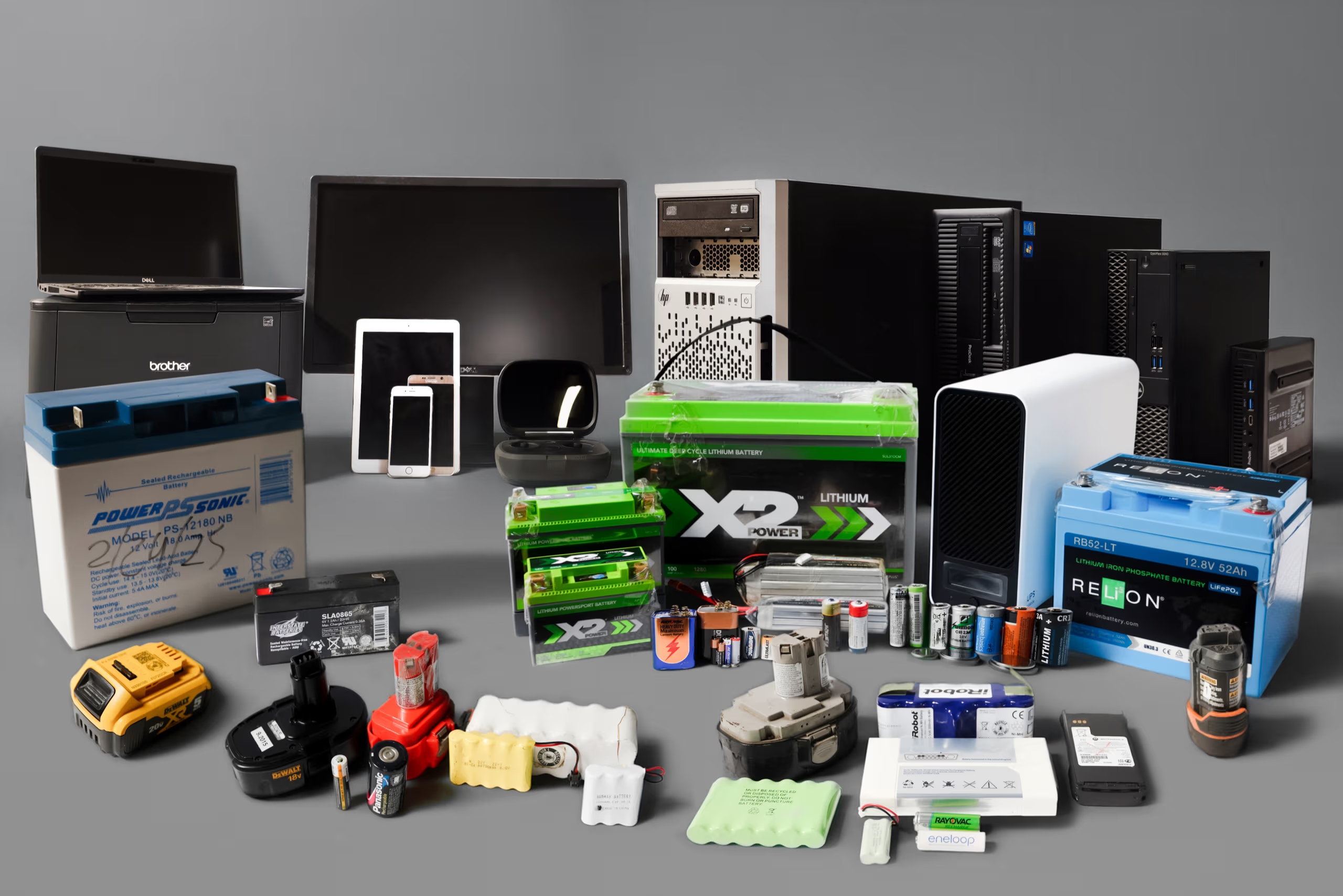

Simplify your compliance and disposal process with bundled recycling services that handle both electronic devices and batteries in one streamlined solution.

Our scheduled, route-based pickups cover all major regions of California—ensuring efficient, on-time service no matter where you operate.
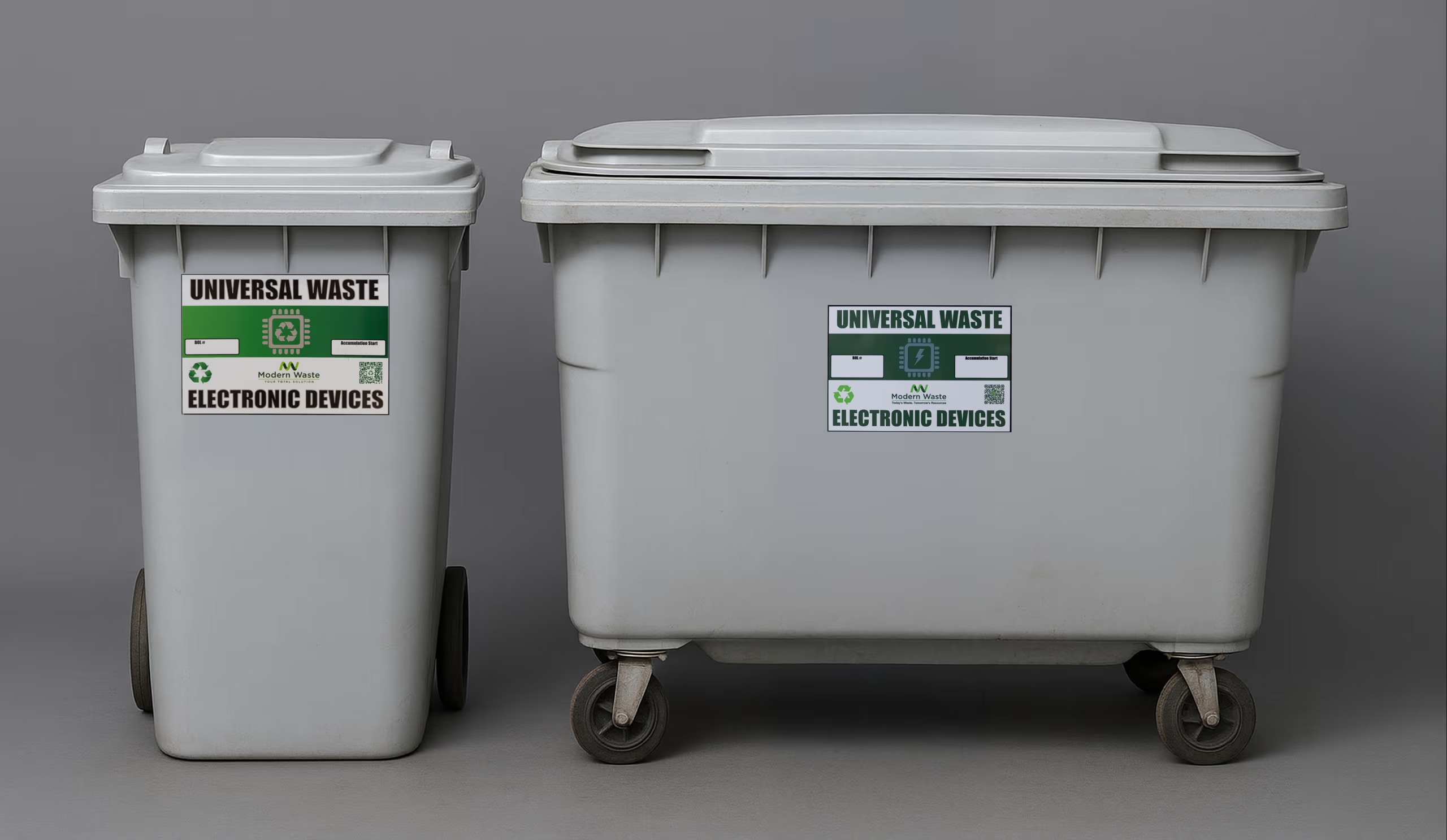
We provide clearly labeled, tamper-resistant containers to ensure safe and compliant collection of electronic waste and batteries at your location.

Modern Waste Solutions has served businesses and communities across California with dependable, environmentally responsible recycling solutions for over two decades.
We adhere to all California and federal regulations, ensuring your electronic and battery waste is managed with complete transparency and environmental responsibility.

Reviews
A little bit off the beaten track in Natomas, but Modern Waste quickly and efficiently helped me recycle my broken Lithium Iron Phosphate batteries at a reasonable $/lb fee (Sac county e-waste will not accept these items). Ramiro and Vincent were very friendly and helpful.

Chris was awesome! He came in and picked up all of the e-waste we had ready for him. He was polite and professional throughout the entire process. He handled the equipment with care, including the site equipment that was already in place. I am very happy with his service and appreciate the great job he did.

Aaron and Vincent were awesome, excellent customer service!

Great guys, excellent customer service, highly recommend!

Polite, quick and easy.

Chris from modern waste was the most outstanding respectful person I ever met my life when he was done he offered to sweep the floors. He offered so much even though he was limited on time he went out of his way and he’s over beyond best guy I ever met thank you so much for your service services Dan ITG.


Data center decommissioning is a controlled change project that retires workloads, infrastructure, and records without interrupting systems that must remain live. Here is the full process, from go/no-go to final reconciliation.
A mature ITAD program connects asset ownership, data security, environmental compliance, logistics, financial recovery, and reconciliation. Here is how the process works, what it costs, and how to evaluate a provider.

IT equipment liquidation converts marketable retired assets into documented financial recovery while routing nonmarketable equipment to responsible recycling. Here is how to decide which path fits each asset.